Patients in their early thirties who come for a consultation often glance around the hallway, as if afraid someone might see them. The first question they ask is, "Am I too young for Botox?" I see this every week. The answer is always the same: the issue is not age, but the condition of the muscles and skin.
Botulinum toxin type A blocks neuromuscular transmission in the target muscle. When the muscle does not contract, the wrinkle does not deepen. This is basic physiology, nothing mystical. However, there is a nuance: after 30, the rate of collagen synthesis decreases by about 1–1.5% each year (data from the British Journal of Dermatology, 2021). This means that the skin recovers worse after repeated muscle contractions, and dynamic wrinkles become static more quickly, meaning they are visible even at rest.
This is where the logic of a preventive approach comes in. If you start correcting muscle hyperactivity before wrinkles "set" in the skin permanently, you need significantly less product and much less frequent maintenance sessions. A study in the Journal of Cosmetic Dermatology (2020, n=320) showed that patients who began botulinum therapy at ages 28–33 had 34% less pronounced wrinkles after 10 years compared to a control group.
At Sandler Wellness Center in Kyiv, botulinum therapy is performed by certified cosmetologists with individualized dosing and technique selection. At 23 Kniaziv Ostrozky St, every protocol begins with a consultation where the type of muscle activity, skin condition, and realistic expectations are assessed. No template doses "according to the price list."
Mechanism of Action of Botox: What Happens Under the Skin
Botulinum toxin type A, known under the brand names Botox, Xeomin, Dysport, is a neurotoxic protein produced by the bacterium Clostridium botulinum. In therapeutic doses, it acts exclusively locally. The drug blocks the release of acetylcholine at the neuromuscular synapse. Without acetylcholine, the "contract" signal from the nerve to the muscle simply does not reach.
The result: the target muscle temporarily relaxes. "Temporarily" means 3–6 months, after which the nerve endings form new synaptic contacts and the muscle function gradually recovers.
There is a detail that patients often do not understand. Botox does not fill wrinkles; it is not a filler. It removes the cause of their formation. Wrinkles that arise purely from muscle contraction almost completely disappear. Static wrinkles, where there is already structural deformation of the dermis, become less pronounced but do not disappear. This is physically impossible without additional methods.
After 30, another pattern becomes relevant: facial muscles in some people compensatorily increase activity due to stress, the habit of frowning, or prolonged screen work. According to a study in Aesthetic Surgery Journal (2022, n=512), 67% of patients aged 30–39 showed signs of chronic hypertonicity in the orbicularis oculi and frontalis muscles even before the appearance of pronounced wrinkles at rest.
Another myth that should be dispelled immediately: Botox does not "stretch" the skin. And it does not cause addiction in the pharmacological sense. A patient can refuse the procedure at any time, and muscle function will fully recover. The wrinkles will simply return to their original state, without "worsening" due to Botox. This is confirmed by a systematic review in JAMA Dermatology (2021).
Indications, Protocols, and Dosing After 30
Patients over 30 usually come with several requests at once. These can be combined into three scenarios.
Scenario 1: Preventive. There are no wrinkles at rest, or they are minimal, but the person frowns, raises their eyebrows, and after active mimicry, the lines remain for 2–3 seconds. This is the ideal moment to start. The dosing here is minimal, and this is precisely why the effect looks natural.
Scenario 2: Correction of Dynamic Wrinkles. Wrinkles are clearly visible during mimicry, and at rest, they begin to "reflect." This is a standard working protocol.
Scenario 3: Correction of Static Wrinkles. Wrinkles are present even at complete rest. Botulinum toxin will be part of the protocol but is usually combined with biorevitalization or contour plasticity.
Now about doses. This is a question patients search for separately, and I understand why. Dosing depends on the area, gender, muscle strength, and the product.
Guidelines for women aged 30–40:
- Glabella: 20–25 units of Botox/Xeomin or 60–80 units of Dysport
- Forehead: 10–15 units of Botox/Xeomin
- "Crow's feet" (corners of the eyes): 10–15 units of Botox/Xeomin on both sides
- Forehead + glabella complex: 30–40 units of Botox/Xeomin
For men, doses are higher by 20–40% due to greater mass and strength of facial muscles. This is not "marketing"; it is anatomy.
Checklist for readiness for the first botulinum toxin procedure:
- There is a consultation with a doctor, not an administrator
- The doctor assessed mimicry in motion and at rest
- The patient is not taking anticoagulants (warfarin, aspirin) for 7+ days
- There is no exacerbation of any infectious disease
- There is no pregnancy or lactation
- No active physical exertion planned for 24 hours after the procedure
The duration of the injection itself: 15–30 minutes depending on the number of areas. The first effect is noticeable on the 3rd–5th day, and the full result forms by the 14th day.
→ See also: Spanish facial massage: technique, mechanism of action, and real results
Results and Scientific Evidence
Botulinum toxin type A is the most clinically researched product in aesthetic medicine. This is not an exaggeration: the number of publications in PubMed under the query "botulinum toxin aesthetics" exceeds 4200 over the last 10 years.
What does the evidence base say specifically for the 30–40 age group?
A study in Aesthetic Surgery Journal (2022, n=512) showed that after 5 years of regular botulinum toxin use, 71% of participants had statistically significantly less pronounced static wrinkles compared to the untreated group—even without any other interventions.
A study in the Journal of Drugs in Dermatology (2019, n=244) adds an important detail: patients who began botulinum therapy at ages 28–35 and maintained an interval between sessions of 4–6 months required 28% fewer units of the product per session by age 45 compared to those who started after 40.
Real-time frames: wrinkle reduction is noticeable from the 3rd–5th day. The full effect is achieved by 14 days. Duration: in most patients aged 30–35, it is 4–6 months; after 35, the effect may shorten to 3–4 months due to changes in tissues.
One thing that needs to be stated honestly: Botox does not stop skin aging. It only affects the muscular component of wrinkle formation. Photoaging, volume loss, changes in bone tissue—these are separate processes that are addressed by other methods. A combined approach is always more effective than monotherapy.
Contraindications and Safety
Botulinum toxin is a drug with a well-studied safety profile, but with clear absolute contraindications.
Relative contraindications require individual assessment: taking anticoagulants (warfarin, apixaban), NSAIDs, aminoglycoside antibiotics, active skin infection outside the injection area.
The most common undesirable effects with proper technique: local hematomas at the injection site (5–10% of cases), mild headache in the first 24–48 hours (8–12%), slight asymmetry with uneven distribution of the product (corrected after 2 weeks). Serious complications, such as eyelid ptosis or excessive relaxation of adjacent muscles, occur in 0.1–1% of cases and are temporary.
A frequent question: is it safe to do Botox frequently? According to a meta-analysis in the Cochrane Database of Systematic Reviews (2020), which included over 2800 patients with follow-up of 10+ years, no cumulative systemic effects or oncological risk were found with regular aesthetic use of botulinum toxin.
One practical caution from daily practice: do not inject Botox into three areas at once during the first visit if it has never been done before. It is better to start with one priority area, assess the individual response, and adjust after 2 weeks if necessary.
Price and Appointment at Sandler Wellness Center, Kyiv
At Sandler Wellness Center, botulinum therapy is performed with Botox, Xeomin, and Dysport—depending on the area and protocol selected by the doctor during the consultation.
Cost of botulinum toxin:
- Botox or Xeomin: 270 UAH per unit
- Dysport: 270 UAH per unit
- Xeomin at a price of 300 UAH per unit
Fixed area packages for women:
- Glabella: 5,500 UAH
- Forehead + glabella: 10,000 UAH
- Eyes ("crow's feet"): 5,500 UAH
- Masseters (chewing muscles): 10,000 UAH
- Nefertiti lift: 15,000 UAH
- Full Face 100 units: 20,000 UAH
- Hyperhidrosis treatment 100 units (Botox/Xeomin): 16,000 UAH
For men, doses are higher, and accordingly, the cost of area packages is higher: glabella 7,200 UAH, forehead + glabella 13,000 UAH, eyes 7,200 UAH.
A consultation with a cosmetologist is mandatory before the procedure (3,500 UAH). If you already have a diagnosis or need a consultation with a dermatologist, the cost of the examination is also 3,500 UAH.
Sandler Wellness Center is located at 23 Kniaziv Ostrozky St, Kyiv. You can make an appointment on the website sandler.com.ua or by calling the administrator.
Prices may change—please check the current cost with the administrator or at sandler.com.ua.
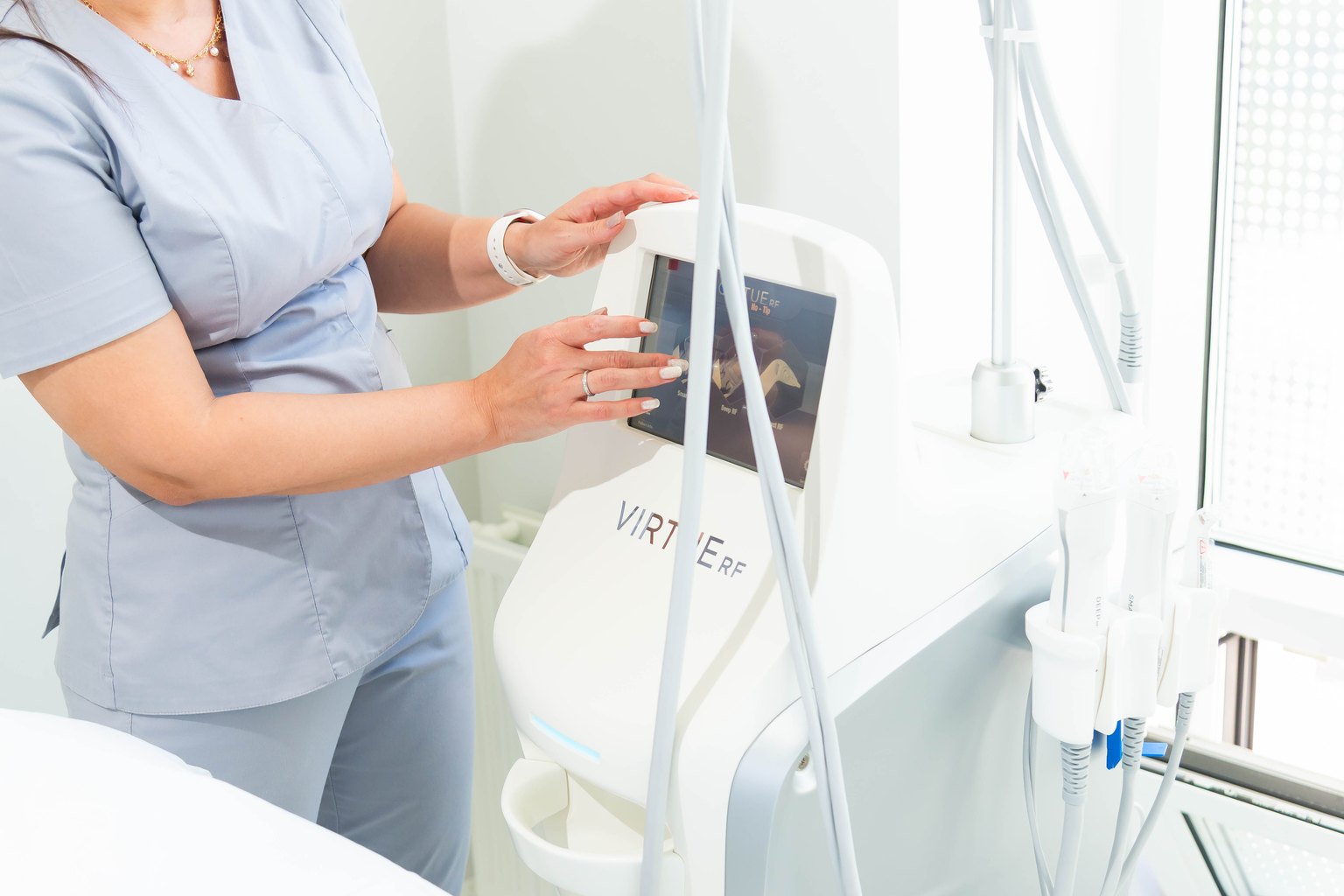
→ See also: RF-Lifting Virtue: Microneedles Against Wrinkles After 35 — Sandler Wellness Center, Kyiv
Frequently Asked Questions (FAQ)
Q: When after 30 is it better to start Botox: is there an ideal age?
A: There is no ideal age. The correct guideline: dynamic wrinkles that remain for 2–3 seconds after active mimicry signal that muscle hyperactivity is present and a preventive protocol is appropriate. For most, this is between 28–34 years, but for some, it may be at 27 or 36. It all depends on skin type, photoactivity, stress load, and genetics.
Q: How many units of Botox are needed for the first time at 30–35 years?
A: For women, the standard starting protocol is: 20–25 units of Botox/Xeomin for the glabella, plus 10–15 units for the forehead or 10–15 for the eyes. The total volume of the first session rarely exceeds 50–60 units. A larger number of units does not mean a better result—it means a risk of excessive relaxation and an unnatural expression.
Q: Does it hurt to get Botox?
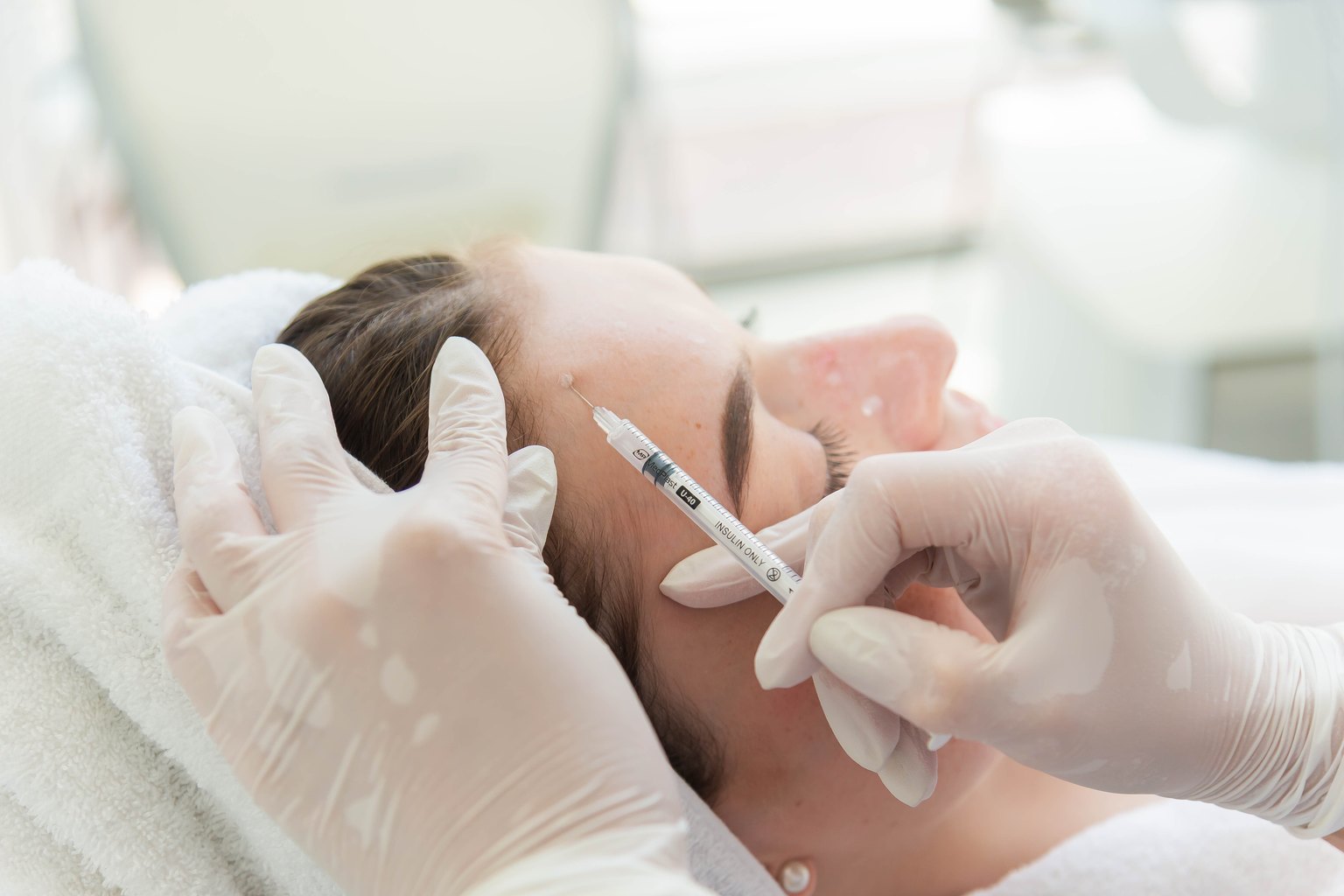
A: Injections are performed with a thin needle of 30–32 gauge. Most patients describe the sensation as a slight prick or pinch. Anesthesia is usually not needed. If desired, a topical anesthetic cream can be applied 30–40 minutes before the procedure.
Q: How long does the effect of Botox last in people over 30?
A: In patients aged 30–35, it usually lasts 4–6 months. After 35–40, the metabolism of the product accelerates, and the effect may shorten to 3–4 months. Regular injections over time can extend the interval: the muscle "gets used" to less activity and recovers its previous tone more slowly.
Q: Can Botox make the face look "frozen" and unnatural?
A: Yes, but this is a result of incorrect dosing or technique, not a property of the drug. An excess of botulinum toxin, especially in the frontalis muscle, can indeed limit eyebrow mobility. A competent doctor leaves part of the muscle's mobility by selecting the dose individually. In our practice, we always start with the minimally effective dose.
Q: Can Botox be combined with other procedures?
A: Yes, and this is often clinically justified. Botox + biorevitalization: injected into different areas without an interval or with a minimal gap. Botox + fillers: usually Botox first, then fillers after 2 weeks, once the full effect is formed. Botox + laser procedures: usually require an interval of 2–4 weeks depending on the type of laser. The specific plan is developed by the doctor during the consultation.
Conclusion
Botox after 30 is not a luxury and not a sign of insecurity. It is a medical procedure with clear mechanisms of action, proven effectiveness, and predictable results. Starting earlier, before wrinkles become static, means using less product, achieving a more natural look, and obtaining a long-lasting effect.
The key is that it is not the age on the passport that matters, but the condition of the muscles and skin of the individual. This is why any protocol begins with a consultation with a doctor, not with a price list.
At Sandler Wellness Center at 23 Kniaziv Ostrozky St in Kyiv, botulinum therapy is performed by doctors with an individualized approach to each patient. Appointments and detailed information can be found at sandler.com.ua. The first step is a consultation where you will receive an honest answer: do you need Botox now, and if so, in what volume.