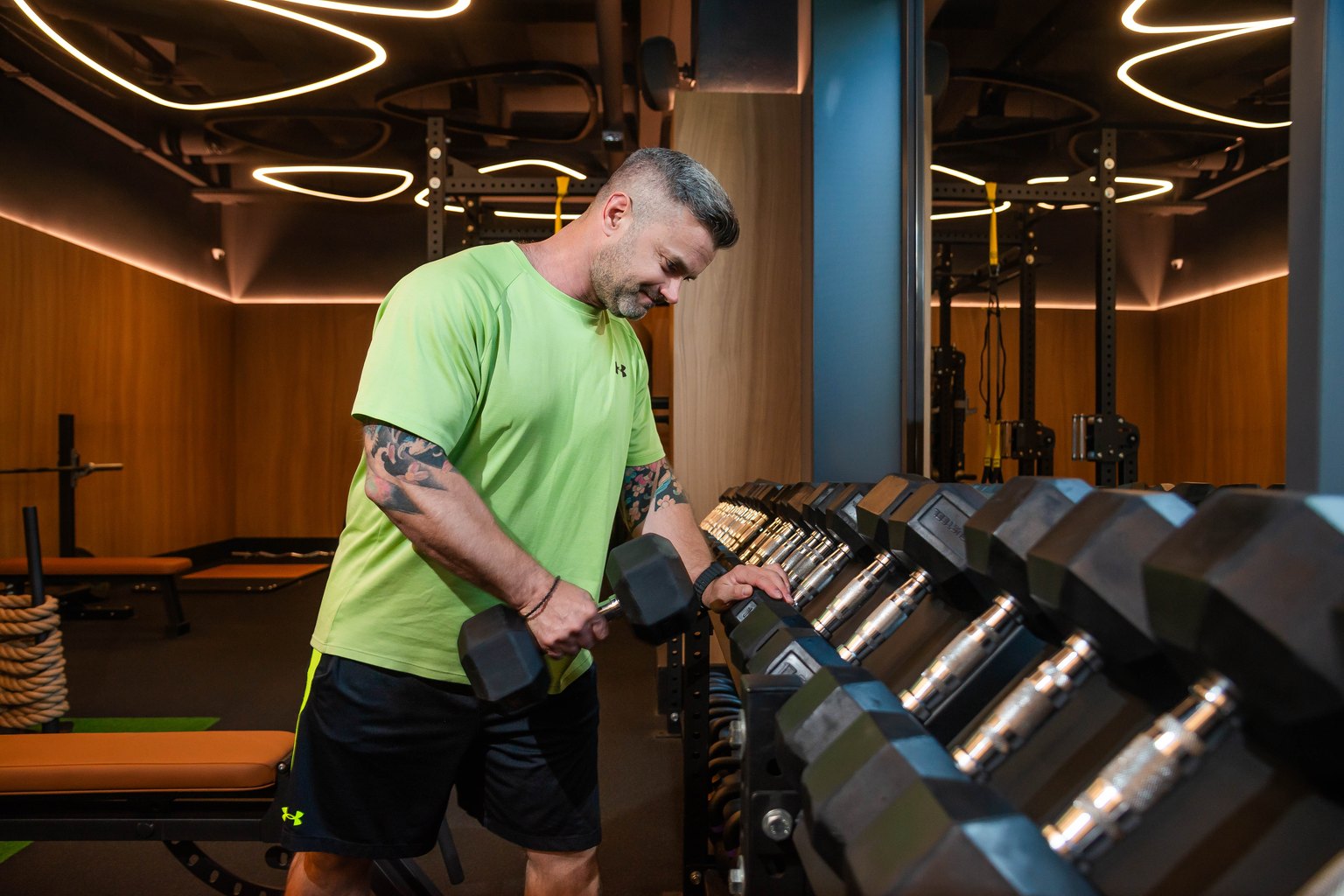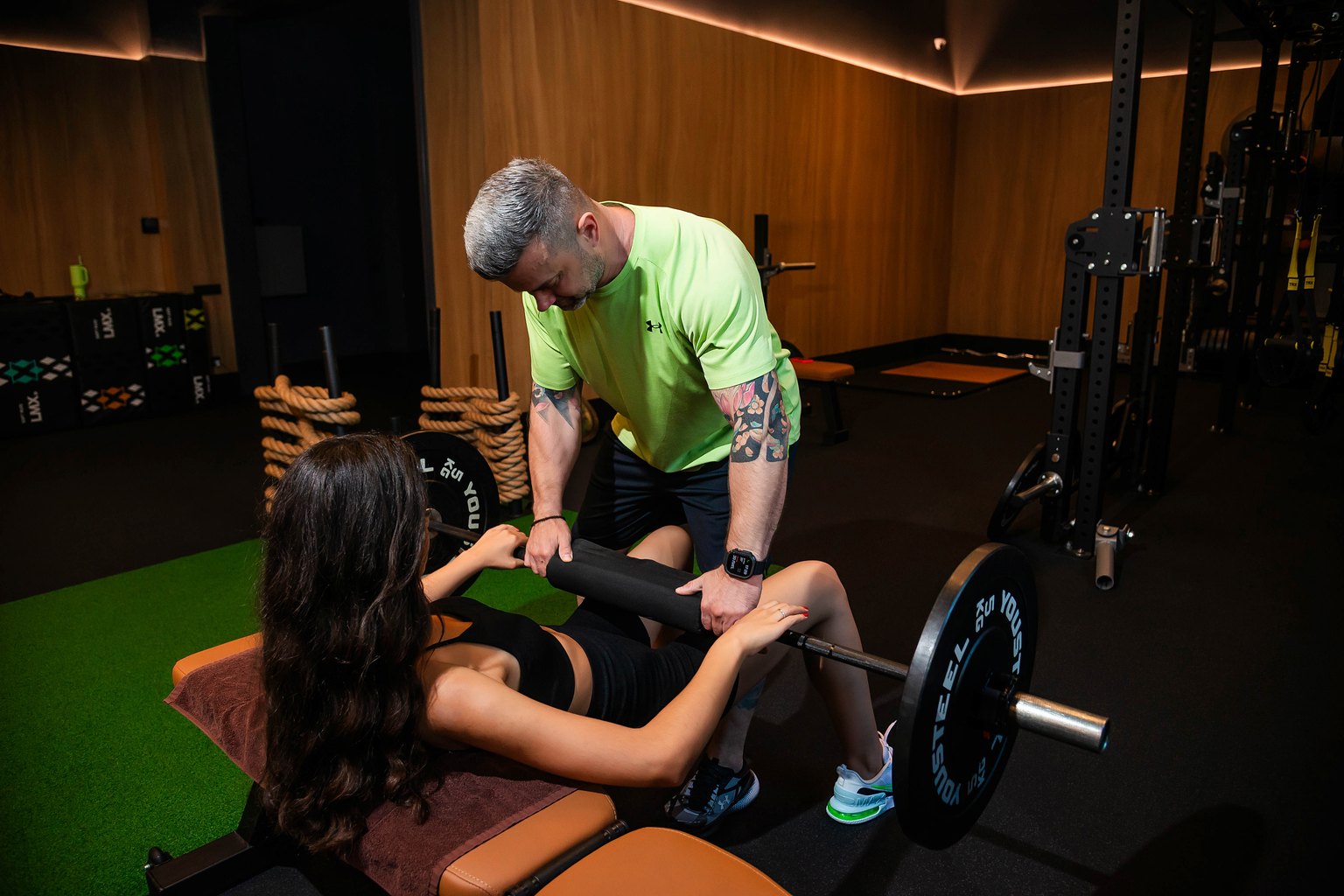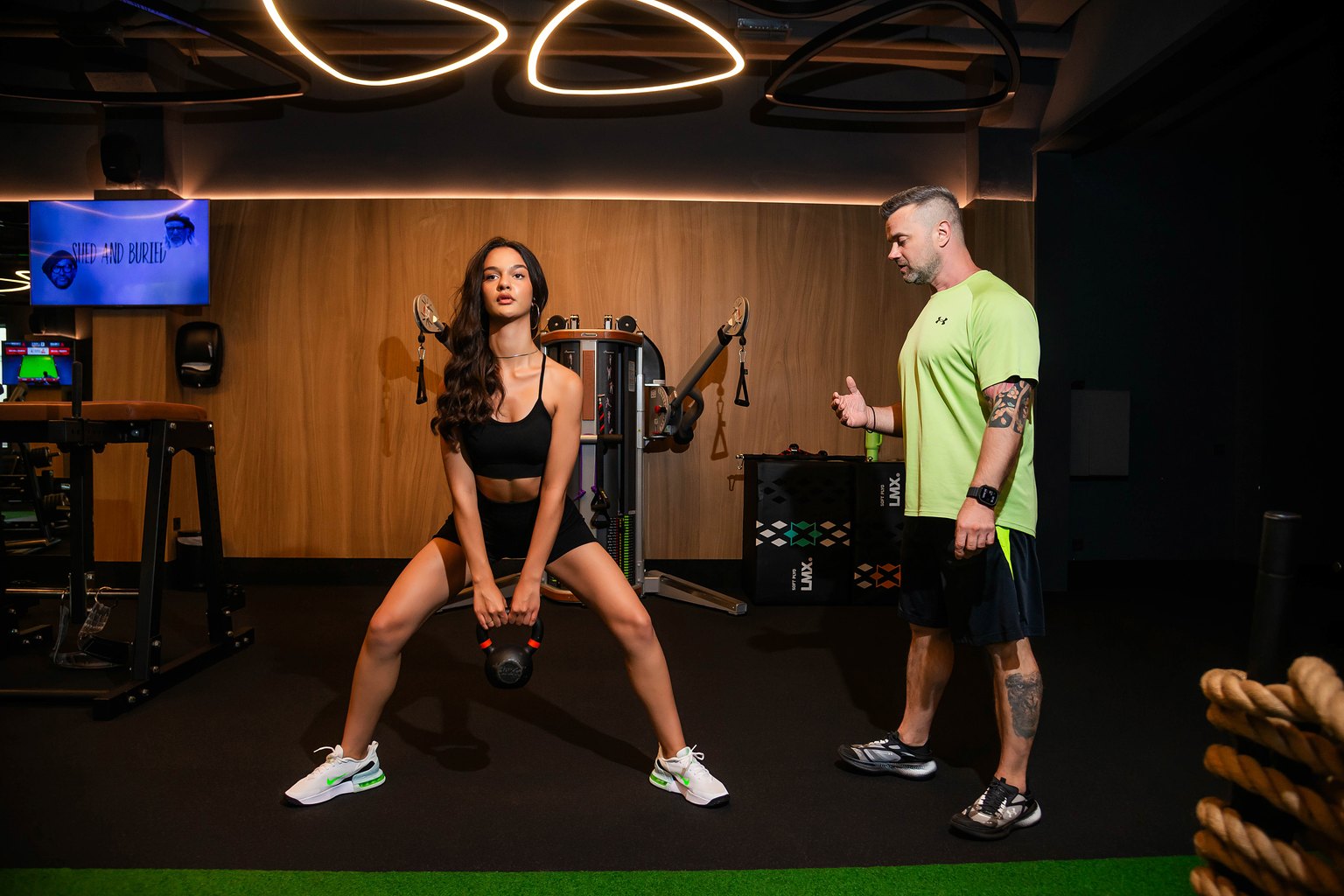
Patients often ask me about the most effective way to combat stress. Pills? Meditation? Breathing exercises? All of these have their place. But there is one tool that acts on the level of the neuroendocrine system with a precision that impresses even me after many years of practice. That is strength training.
Chronically elevated cortisol is not just "feeling stressed." It leads to muscle tissue breakdown, accumulation of visceral fat, sleep disorders, and immune dysfunction. According to the American Psychological Association, 2024, 77% of adults regularly experience physical symptoms specifically due to chronic stress. Here, strength training has a unique advantage over cardio and relaxation practices: it not only reduces acute cortisol spikes but also reprograms your endocrine system's response to stress in the long term.
At Sandler Wellness Center located at 23 Kniaziv Ostrozky St, Kyiv, we see this effect weekly. People come in exhausted, "on the edge," with chronic muscle tension and insomnia. After 6-8 weeks of a structured strength protocol, the picture changes drastically. Not because "sports are good." But because specific biochemical mechanisms are at play, which I will explain now.
What happens in the brain and body during strength training: the neuroendocrine mechanism
Cortisol is not your enemy. It is necessary for mobilizing energy, regulating inflammation, and maintaining blood pressure in critical situations. The problem arises when it is chronically elevated without physical discharge.
When you perform basic strength exercises — barbell squats, deadlifts, bench presses — a cascade of reactions is triggered. Initially, cortisol rises, sometimes significantly. This is normal and physiologically justified: the body mobilizes glucose for muscle work. But this is an acute, controlled response that has a clear endpoint.
Here’s what happens next, and this is the key difference from chronic stress.
Suppression of the HPA axis. The hypothalamic-pituitary-adrenal (HPA) axis is the main regulator of cortisol. Regular strength training reduces its baseline activity. A study published in the Journal of Clinical Investigation, 2023, n=847, showed that after 12 weeks of strength training 3 times a week, baseline cortisol levels at rest decreased on average by 23% compared to the control group.
Release of neurotransmitters. During strength training, the brain releases beta-endorphins, dopamine, and serotonin. These molecules directly compete with cortisol for receptors in the amygdala — the brain structure responsible for the "fight or flight" response.
Adaptation of the adrenal glands. This is something you won’t find in public discourse. Regular, measured load changes the sensitivity of the adrenal glands to stress signals. They literally "learn" to produce less cortisol in response to the same stress. A meta-analysis published in Psychoneuroendocrinology, 2022, 29 RCTs, n=1204, confirmed this phenomenon: a trained person responds to a psychological stressor with 18-31% less cortisol release than an untrained individual.
BDNF and restructuring of neural connections. Strength exercises stimulate the production of brain-derived neurotrophic factor (BDNF). This molecule actively restores neuronal structures in the hippocampus that are damaged by chronic stress. This is why after a month of training, patients often report improvements in memory and concentration, not just mood.
An important myth that I regularly debunk: "excessive" strength training increases cortisol. Yes, overtraining is a real problem. But it occurs under specific conditions: more than 90 minutes of intense training daily without recovery. A structured protocol of 45-60 minutes, 3-4 times a week, does not have this effect.
Indications, protocols, and dosing: how to train to reduce cortisol
Not every strength training session is equally effective as anti-stress. There is a "therapeutic dose" and nuances that I observe in practice at Sandler Wellness Center weekly.
Who is particularly indicated:
- Chronic psycho-emotional stress (work, relationships, uncertainty)
- Sleep disorders — difficulty falling asleep, night awakenings
- Feeling of "exhaustion without reason," decreased motivation
- Accumulation of fat in the abdominal area with normal nutrition
- Decreased libido (cortisol suppresses testosterone and estrogen)
- Anxiety states without clinical pathology
- Chronic fatigue syndrome (after excluding organic causes)
Optimal protocol for reducing cortisol differs from the classic bodybuilding protocol.
Frequency: 3 times a week with mandatory recovery days between sessions. Rest days are just as important as training days — this is when neuroendocrine adaptation occurs.
Duration: 45-60 minutes. A study published in Hormones and Behavior, 2021, n=312, recorded: after 60 minutes of intense strength training, cortisol continues to rise instead of normalizing after completion.
Intensity: moderate-high. Zones of 65-80% of 1RM (one-repetition maximum) show the best neuroendocrine response. Very light loads do not provide sufficient stimulus for HPA axis adaptation.
Choice of exercises: basic multi-joint movements are preferred. Squats, deadlifts, presses, and pulls — they engage large muscle groups and generate a powerful hormonal response.
Nutrition around training: carbohydrates before training (1-1.5 hours prior) significantly reduce the cortisol response to exercise. Do not train on an empty stomach if the goal is an anti-stress effect, not fat burning.
At Sandler Wellness Center, trainers develop an individual program based on the client's initial stress level and physical fitness. Personal training (60 min) costs 2,000 UAH, split training — 2,500 UAH.
→ See also: Iron Against Stress: How Strength Training Improves Mental Health, Sleep, and Confidence in Kyiv
Results and scientific evidence: what and when the patient feels
I always tell my clients: do not expect results after the first workout. Although the acute anti-stress effect is already present on the day of training.
Weeks 1-2. Immediately after each workout — reduction in anxiety, feeling of "letting off steam." This is not placebo: it is a dopaminergic and endorphin response. Sleep improves on average after 10-14 days of regular training.
Weeks 3-4. Structural adaptation begins. Morning cortisol levels (cortisol curve) become more normalized. Patients report more stable energy throughout the day and less acute reactions to stressors.
Weeks 8-12. This is when the effect I mentioned at the beginning occurs — reprogramming. According to Psychoneuroendocrinology, 2022, after 12 weeks of regular strength training, the following is observed:
- 23% reduction in baseline cortisol
- 15-20% increase in testosterone in men
- 34% improvement in sleep quality (Pittsburgh index)
- 4.2 points average reduction in anxiety symptoms on the GAD-7 scale
It is important to be honest: these results do not come automatically. They require consistency in the protocol, adequate sleep (7-9 hours — no less), and sufficient protein intake (1.6-2.2 g/kg body weight).
In our practice at Sandler Wellness Center, we track dynamics through subjective stress scales and, if necessary, laboratory monitoring of cortisol. This allows for timely adjustments to the protocol.
Contraindications and safety: who should be cautious
Strength training is safe for the vast majority of people. However, there are situations where a doctor's consultation is needed before starting.
Regarding adrenal insufficiency (Addison's disease): in these patients, strength training requires a particularly cautious approach, as the cortisol response to exercise is impaired. Only under the supervision of an endocrinologist.
Separately regarding antidepressants and anxiolytics. Some medications in these groups affect neuromuscular coordination and heart rate under load. It is not a question of "whether or not" — it is a question of dosing the load and monitoring.
For people over 50 and those who have been inactive for more than 6 months, I recommend starting with a trainer's consultation — not with self-attempts to "start on Monday." At Sandler Wellness Center, this is standard practice: before starting the program, a trainer conducts a functional assessment.
Prices and registration at Sandler Wellness Center, Kyiv
Sandler Wellness Center is located at 23 Kniaziv Ostrozky St, Kyiv — in the heart of the city, making visits convenient even in a busy schedule.
Fitness programs at the center:
| Service | Price |
|---|---|
| Personal training (60 min) | 2,000 UAH |
| Split training (60 min) | 2,500 UAH |
| Pilates (multifunctional hall) | 2,200 UAH |
| Individual stretching | 1,900 UAH |
| Group stretching (3-5 people) | 1,200 UAH/participant |
If medical monitoring is needed — for example, for patients with chronic conditions or those who want to track cortisol levels dynamically — consultations with an endocrinologist (3,500 UAH) and intravenous therapy for recovery starting from 2,500 UAH are available at Sandler Wellness Center.
You can register through the website sandler.com.ua or by calling the administrator. The first training always begins with a discussion about your goals, stress level, and limitations — this is not a formality, but part of the center's approach.
Prices may change — please confirm the current cost with the administrator or on sandler.com.ua.
Frequently Asked Questions (FAQ)
Q: How long does it take for strength training to actually lower cortisol levels?
A: The first noticeable effect — reduction in anxiety after training — occurs already in the first or second session due to the endorphin response. Structural change in baseline cortisol levels at rest requires 8-12 weeks of regular training (3 times a week). This timeframe is recorded in the study published in the Journal of Clinical Investigation, 2023, n=847 — a 23% reduction in cortisol over 12 weeks.
Q: Do strength training sessions increase cortisol? I heard that exercise is a stress for the body.
A: Yes, during the workout itself, cortisol temporarily rises — this is a normal physiological response to energy mobilization. But after the session, it quickly normalizes, and over time, the baseline level decreases. Chronic elevation of cortisol from training occurs only with overtraining: daily sessions exceeding 90 minutes without recovery. The optimal protocol of 45-60 minutes, 3-4 times a week, has the opposite effect.
Q: Which is better for lowering cortisol: cardio or strength training?
A: Both types of training lower cortisol, but the mechanisms differ. Cardio is more effective at reducing acute cortisol spikes during execution. Strength training fosters a more stable long-term adaptation of the HPA axis and additionally increases testosterone and growth hormone, which are natural antagonists of cortisol. A meta-analysis published in Sports Medicine, 2021, showed a preference for a combined approach, but when choosing one type — strength wins in terms of the duration of the effect.
Q: Can I train with chronic stress if I'm constantly tired?
A: Yes, and this is where most people make a mistake — they wait until they feel "better" to start training. However, a study published in the Journal of Affective Disorders, 2022, n=565, showed that even one moderate-intensity strength training session reduces subjective fatigue from stress by 35% within 2 hours afterward. The key is to start at low intensity and under the supervision of a trainer who understands your situation.
Q: Does the time of day for training affect cortisol?
A: Yes, and significantly. Cortisol is naturally highest in the morning (peak at 6-8 AM). Morning workouts coincide with this peak and provide a more pronounced hormonal response. Evening workouts (after 6 PM) may delay the normal decrease of cortisol in the evening and worsen sleep onset for some individuals. The optimal time is 10 AM-2 PM, or at least 3 hours before sleep. However, this is individual: some people tolerate evening training well without affecting sleep.
Q: Are cortisol tests necessary before starting strength training?
A: Not necessarily for healthy individuals without clinical symptoms. But if there is suspicion of Cushing's syndrome (central obesity, stretch marks, hypertension), adrenal insufficiency, or chronic fatigue not explained by lifestyle — then testing for daily cortisol in saliva or 24-hour urine is an important step. At Sandler Wellness Center, you can receive a consultation with an endocrinologist before starting a training program.
Conclusion
Strength training as anti-stress is not a metaphor or a marketing slogan. It is a well-documented neuroendocrine mechanism that changes how your body responds to stress at the molecular level. A 23% reduction in baseline cortisol, neuronal restoration in the hippocampus through BDNF, adaptation of the HPA axis — all of this is real physiology, not motivational poster rhetoric.
But the effect only occurs with the correct protocol. Proper frequency, duration, intensity, and recovery. Without this, you may achieve the opposite result.
At Sandler Wellness Center located at 23 Kniaziv Ostrozky St, Kyiv, we build training programs considering your stress load, health status, and goals. Not "general fitness," but a specific response to a specific condition. If you have been postponing starting, now is the right moment. Sign up for a consultation through sandler.com.ua.