Every second client of mine aged 30 and over comes with the same complaint: "I wake up and already feel stiffness. My back aches, my neck won't turn, my knees creak when I go up the stairs." And almost all of them have already tried to do something about it, but in a haphazard way. A couple of yoga classes, sometimes a visit to the pool, and then back to the usual discomfort.
Stretching after 30 is not about flexibility in a ballet sense. It’s about having your body function as it should. According to the American College of Sports Medicine, 2023, muscle elasticity begins to decline as early as 28-30 years at a rate of approximately 10-15% per decade in the absence of regular training. And this directly affects posture, joint range of motion, and even sleep quality.
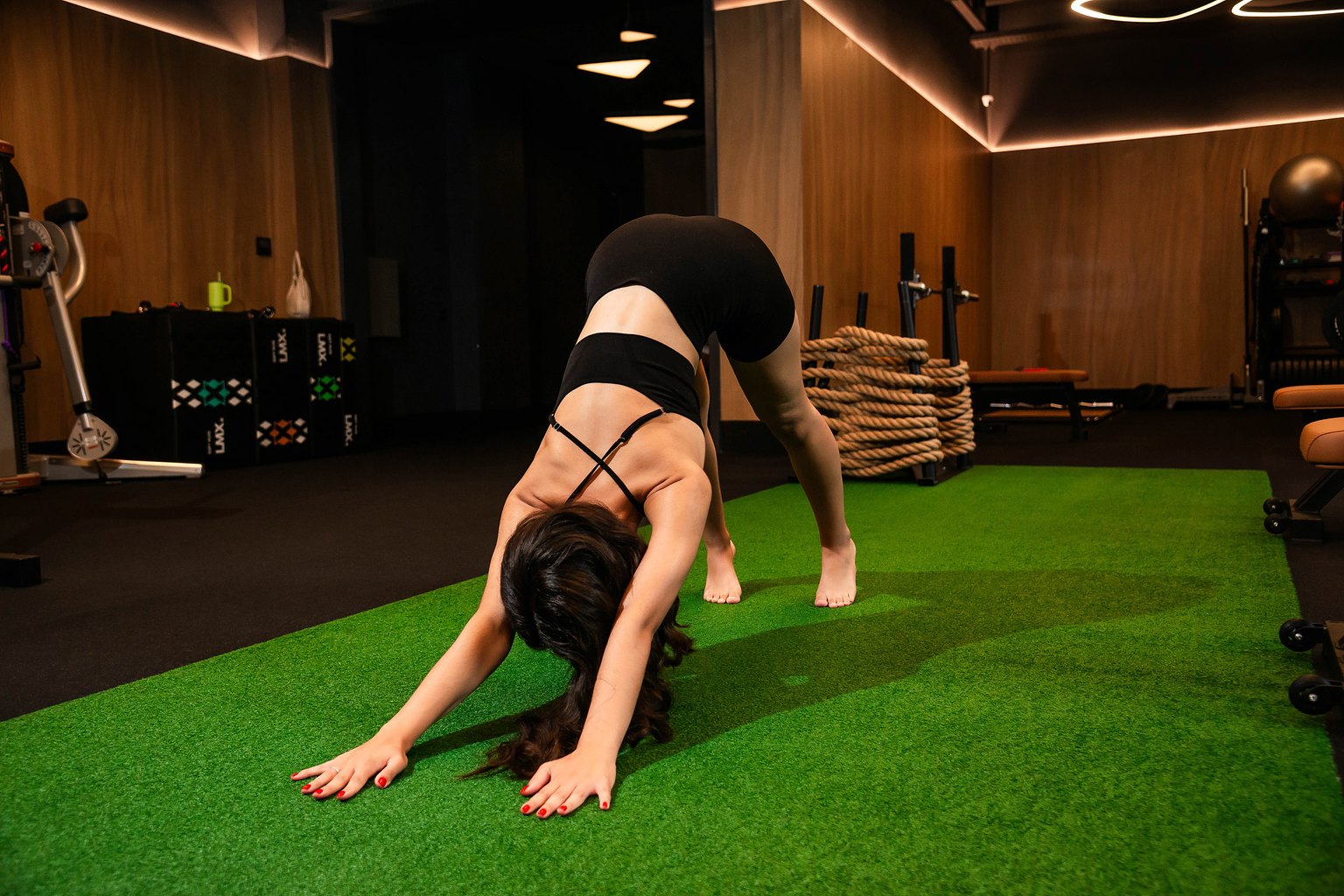
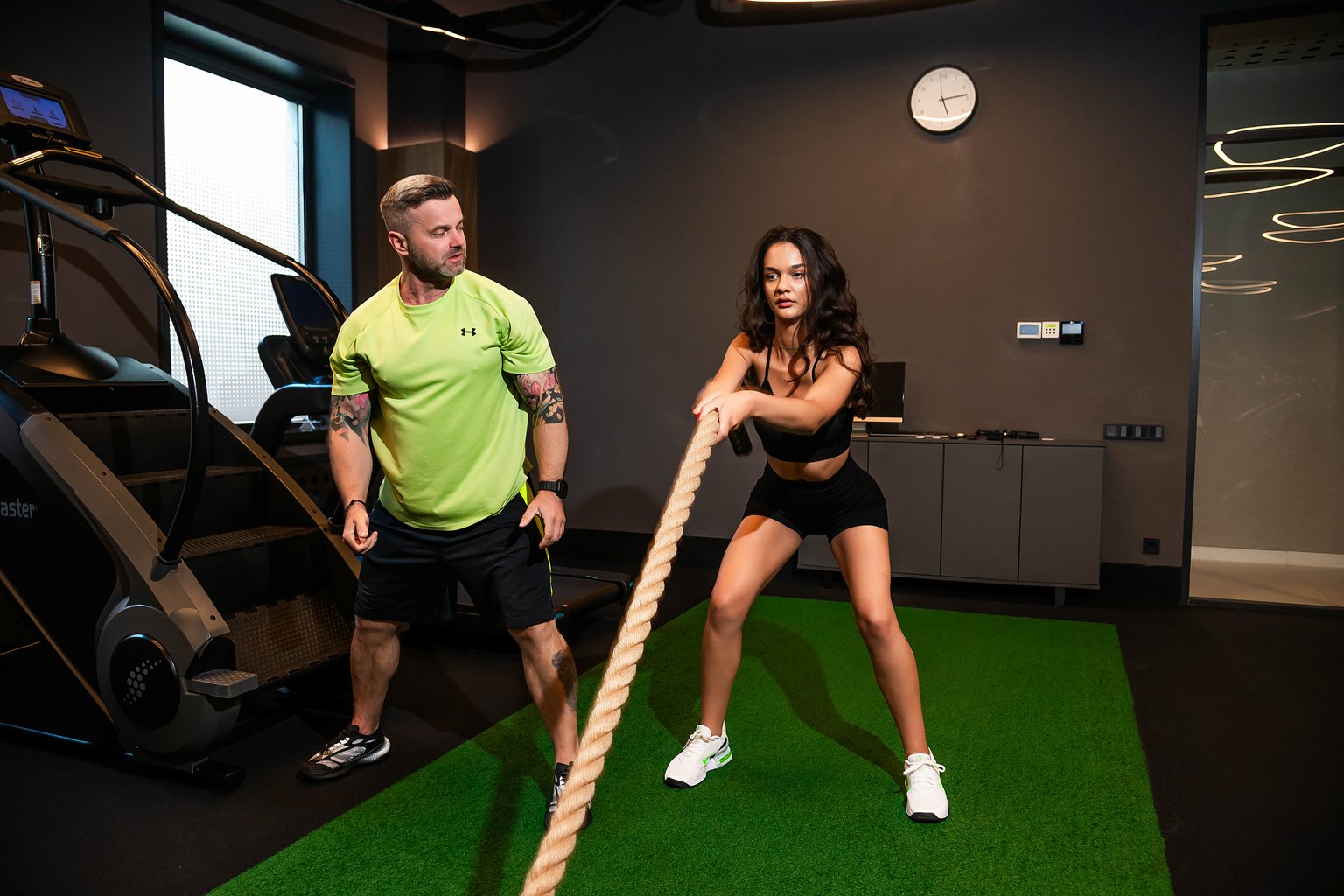
At Sandler Wellness Center (23 Kniaziv Ostrozky St, Kyiv), we work on this systematically. Stretching for us is not an addition to training. It is a separate, structured protocol adapted to age, musculoskeletal condition, and specific goals of the individual. The difference between "stretching for 10 minutes after a run" and a systematic approach to flexibility is the difference between cosmetic repairs and real structural changes.
Below, I break down the mechanisms, protocols, and what you can realistically expect.
What Happens to Muscles and Connective Tissue After 30: Unvarnished Biomechanics
A muscle is not just a contractile structure. It is surrounded and penetrated by fascia: a dense connective tissue sheath that forms a three-dimensional network throughout the body. It is the fascia that determines how freely you move.
With age, several parallel processes occur in the fascia. First, the content of hyaluronic acid decreases — a substance that ensures sliding between fascial layers. Second, the ratio of collagen types I and III shifts in favor of the stiffer type I. Third, the content of elastin decreases. A study in the Journal of Biomechanics, 2022 (n=312) showed that fascial stiffness in people aged 35-45 is 23% higher than in the 20-25 age group with comparable physical activity.
What does this mean practically? Movements that were once easy and natural now require greater effort and are accompanied by discomfort. The body begins to compensate for limited mobility in one segment by overloading another. A classic example: limited mobility of the iliopsoas muscle leads to hyperlordosis of the lumbar spine and chronic lower back pain. And the person treats their back, while the real problem is in the front of the thigh.
The mechanism of stretching at the neural level is also important. When you hold a static stretch for more than 30 seconds, the Golgi tendon organ — a sensory receptor that sends a signal to reduce muscle tone — is activated. That’s why holding a position for 60-90 seconds yields significantly better results than the 15-second stretch that most people do "just to check the box."
There’s another nuance that is rarely discussed: the nervous system does not allow the muscle to stretch further than it considers "safe." Regular stretching gradually raises this threshold, and the range of motion increases not because the muscle has become longer, but because the brain has agreed to release control.
Indications, Protocols, and Dosage: Who and How Does Stretching at Sandler Wellness Center
Stretching after 30 has specific indications, and "I just want to be more flexible" is the least specific of them.
Who is this particularly relevant for:
- Office workers with chronic stiffness in the cervical-thoracic region
- People with recently resolved acute back pain (rehabilitation phase)
- Amateur athletes for injury prevention and recovery
- Individuals in the acute phase of any inflammatory process
- People with recent fractures or ligament tears without a doctor's approval
- Women in the postmenopausal period (to counteract fascial rigidity)
- Men aged 35-50 with "shortened hip syndrome" from prolonged sitting
- Anyone leading a sedentary lifestyle who wants to improve their basic quality of movement
At Sandler Wellness Center, we use several protocols depending on the starting condition and goals:
Static Stretching — holding a position for 60-120 seconds. The main tool for people with chronic stiffness. Minimum frequency: 4 times a week. The effect accumulates gradually, with stable changes noticeable after 6-8 weeks of regularity.
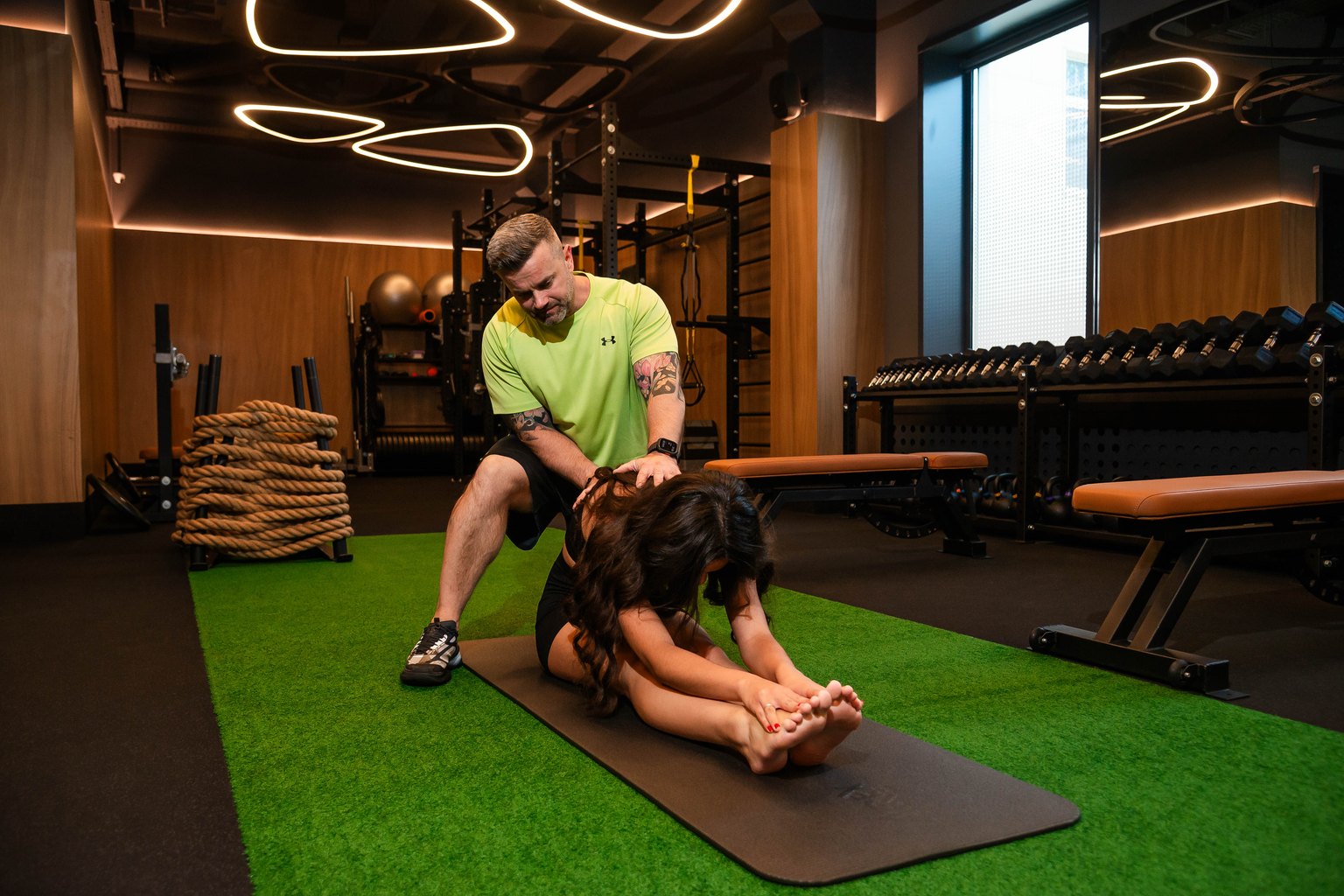
PNF Stretching (proprioceptive neuromuscular facilitation) — alternating tension and relaxation of the muscle in a stretched position. A study in the Physical Therapy Journal, 2023 (n=124) showed that PNF improves range of motion by 34% more than regular static stretching over a 6-week course. We use it in personal sessions with a specialist.
Dynamic Stretching — controlled movements with gradually increasing amplitude. Optimal for warming up before activity and for people for whom prolonged position holding causes discomfort.
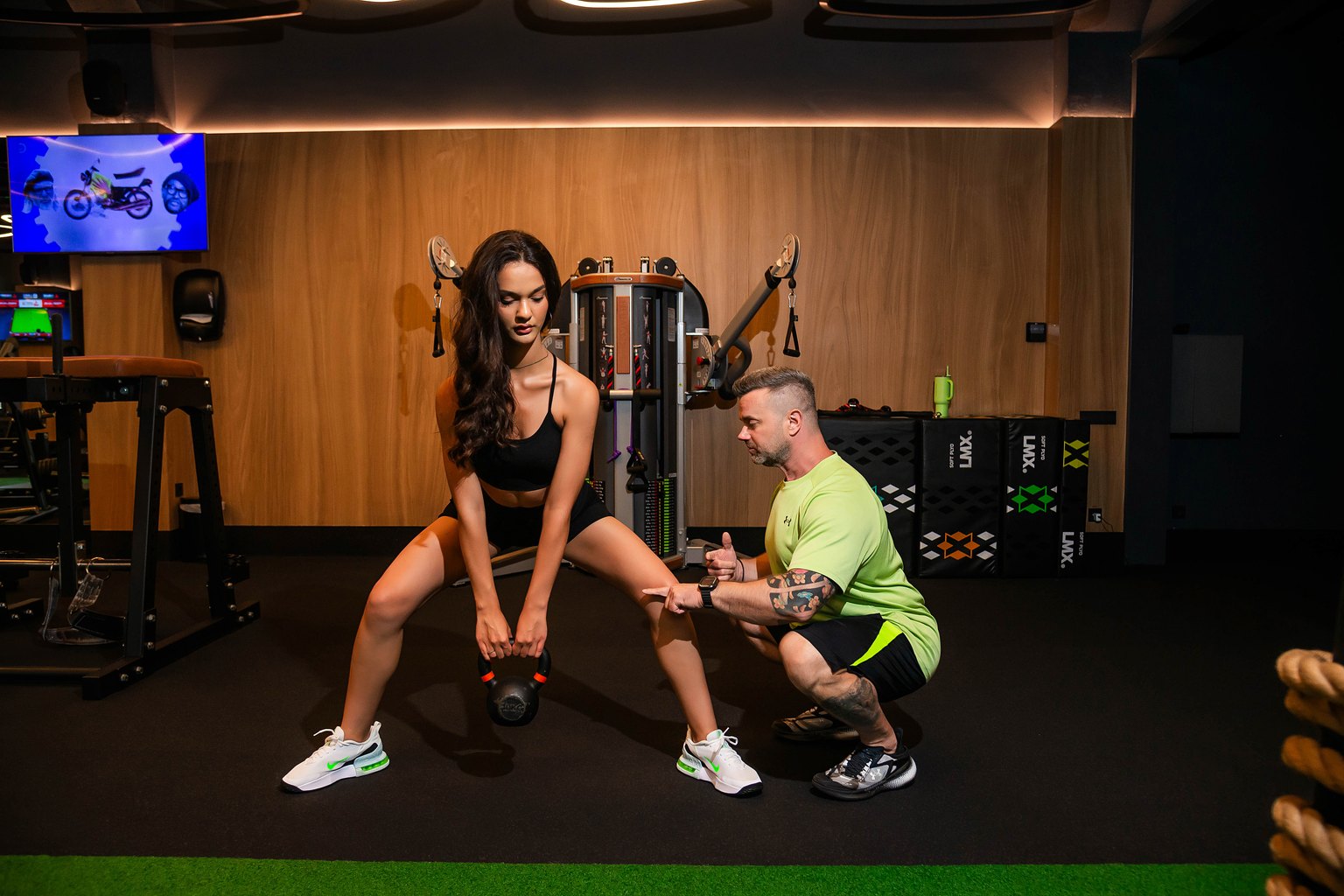
An individual stretching session at Sandler Wellness Center begins with a functional assessment: we look at movement limitations in key joints, asymmetries, and compensatory patterns. Then a protocol is built where each exercise has a specific goal, not just "stretch the leg."
Minimum effective dose: 20-30 minutes of targeted stretching 3-4 times a week. Less is maintenance, but not progress.
→ See also: Pilates for Beginners: Where to Start and What to Expect at Sandler Wellness Center
Results and Scientific Evidence: What to Expect and When
Here, I always ask patients to be honest with themselves about their expectations.
Week 1-2: primarily neurological adaptation. The muscle hasn’t changed its structure, but the nervous system has begun to "trust" stretching more. You will feel that the same position is easier than it was three days ago. This is not self-suggestion — this is neuromuscular adaptation.
Week 3-6: structural changes begin. The number of sarcomeres in muscle fibers increases (sequential hyperplasia), and the fascia gradually becomes more hydrated and slippery. It is in this range that most people note that morning stiffness has decreased, and they have started to "move more easily."
After 8-12 weeks: stable, measurable changes in range of motion. A meta-analysis in Sports Medicine, 2021 (58 RCTs, n=2847) showed an average increase in hip joint range of motion by 12-28° and shoulder by 15-22° after 8-12 weeks of stretching programs.
What is also important: stretching affects sleep quality. A study in Sleep Medicine Reviews, 2023 showed that a 15-minute evening stretch before bed reduced the time to fall asleep by an average of 8 minutes and increased subjective sleep quality ratings by 23% in the 35-55 age group. Mechanism: activation of the parasympathetic nervous system through slow, held stretches.
I see this weekly in our center: people come in asking for "more flexibility," and after 2 months they say the main change is that they finally started sleeping well.
Contraindications and Safety: An Honest Conversation
The most common mistake I observe: people try to force progress and stretch to the point of pain. The result — micro-tears, increased pain sensations, frustration, and complete cessation of activities.
A few specific safety rules:
Never stretch "cold." A muscle at a temperature of 38-39°C stretches 20% better than at 35°C (Journal of Athletic Training, 2020). Even 5-7 minutes of light aerobic activity before stretching — walking, gentle arm circles — changes the situation.
Never perform ballistic (bouncing) stretching without preparation. Sudden repetitive movements at the edge of amplitude activate the myotatic reflex (protective muscle contraction) and increase the risk of microtrauma.
For individuals diagnosed with sacroiliac joint instability or hypermobility (Bennington/Marfan syndrome), excessive stretching is contraindicated — their problem is the opposite.
After 50, the approach also changes: the focus shifts from achieving amplitude to controlled movement and neuromuscular coordination. Static stretching remains but becomes more conservative in intensity.
Price and Registration for Stretching at Sandler Wellness Center, Kyiv
Sandler Wellness Center, 23 Kniaziv Ostrozky St, Kyiv — offers several formats of stretching sessions.
Individual session in the dance hall or multifunctional hall — a 60-minute session with a personal trainer, where an individual protocol is built based on your limitations and goals.
Current prices according to the official price list:
| Format | Price |
|---|---|
| Stretching (individual) | 1,900 UAH |
| Group stretching (3-5 participants) | 1,200 UAH/participant |
| Personal training, gym, 60 min | 2,000 UAH |
| Pilates | 2,200 UAH |
If you need a preliminary assessment of your musculoskeletal condition or have a specific request after an injury or surgery, I recommend first registering for an initial consultation on functional diagnostics — this will allow us to build a truly targeted protocol, not just "general stretching."
You can register through the website sandler.com.ua or directly at the center. The administrators will help you choose a trainer and a convenient time.
Prices may change — please confirm the current cost with the administrator or on sandler.com.ua.
→ See also: Personalized Fitness: Why You Need a Trainer Even If You’ve Been Training for Years — A Practical Answer
Frequently Asked Questions (FAQ)
Q: Is it really possible to become flexible after 30-40 years if I have never seriously engaged in stretching?
A: Yes, absolutely possible. The nervous system and connective tissue retain plasticity throughout adult life. A study in Frontiers in Physiology, 2022 (n=189, average age 42 years) showed that a group without previous stretching experience achieved the same improvement in range of motion in 10 weeks as a group with moderate experience. The pace of progress in adults is slower than in teenagers, but results are achievable with regularity.
Q: How many times a week should I stretch to feel results?
A: The minimum threshold for structural changes is 3 times a week for 20-30 minutes on targeted muscle groups. Most people notice the first significant changes in morning stiffness and ease of movement within 2-3 weeks of this regimen. Daily stretching provides faster progress, but at a moderate intensity to avoid overload.
Q: How does stretching in a gym with a trainer differ from video lessons at home?
A: The key difference is real-time correction of movement patterns. Most people unconsciously compensate for mobility limitations in one segment by shifting the load to another — and "stretch" the wrong thing. A trainer sees this and corrects it. Additionally, PNF stretching and partner techniques are physically impossible without an assistant. At Sandler Wellness Center, we also adapt the protocol to your condition after each block of sessions.
Q: Can I stretch with back pain?
A: It depends on the cause of the pain. In cases of chronic myofascial pain due to shortened and overloaded muscles, stretching is one of the primary tools for treatment and relief. In cases of acute disc herniation or radicular symptoms (pain radiating down the leg), some stretching directions may worsen the condition. I recommend starting with an initial consultation on functional diagnostics (available at Sandler Wellness Center) and only then selecting a protocol.
Q: What is more effective for recovery after workouts — stretching or massage?
A: They act on different levels and complement each other best. Stretching restores neuromuscular balance and range of motion; massage relieves hypertonicity, improves local microcirculation, and accelerates the removal of metabolites. A study in the Journal of Sports Science and Medicine, 2022 (n=76) showed that a combination of stretching and massage after training reduced markers of muscle damage (CK) by 31% compared to passive rest. At Sandler Wellness Center, both formats are available and can be combined within one visit.
Q: Does stretching help with cellulite and excess weight?
A: Directly — no. Stretching is not a fat-burning activity and does not change the structure of subcutaneous adipose tissue. However, it improves lymphatic drainage and local blood circulation, which may slightly enhance skin appearance. For weight correction and cellulite, Sandler Wellness Center has separate medical and hardware protocols.
Conclusion
Stretching after 30 is not an option for those who want to do the splits. It is a fundamental tool for maintaining movement quality, preventing musculoskeletal issues, and recovering the body from daily loads. The difference between someone who stretches regularly and someone who doesn’t becomes physically evident in posture, range of motion, and sense of energy after 5-10 years.
I invite you to Sandler Wellness Center at 23 Kniaziv Ostrozky St in Kyiv. We will start with a real assessment of your movement condition, not a standard program "for everyone." Personal stretching with an experienced trainer is the fastest way from chronic stiffness to feeling that your body is yours again.
Details, current schedule, and registration for the first session are available at sandler.com.ua.