Iryna Yevtushenko, Anti-Aging Therapist, Sandler Wellness Center
There are substances that patients learn about not from their doctors, but from sports forums. GHRP-6 is one of them. And this is a problem: a person comes to me with a purchased medication and the question "how to inject it?" instead of "is it suitable for me at all?". I see this every week in the office at 23 Kniaziv Ostrozky St, Kyiv.
GHRP-6 (Growth Hormone Releasing Peptide-6) is a synthetic hexapeptide, a first-generation growth hormone secretagogue. It binds to ghrelin receptors GHSR-1a in the hypothalamus and pituitary gland and stimulates the pulsatile release of endogenous growth hormone. It does not replace the hormone externally but prompts the body to produce more of its own. The difference is fundamental.
Why do anti-aging doctors pay attention to it? After the age of 30, the secretion of growth hormone decreases by approximately 14–15% every decade (according to the Journal of Clinical Endocrinology & Metabolism, 2000). This is associated with a decrease in muscle mass, impaired tissue recovery, accumulation of visceral fat, and chronic fatigue. GHRP-6 allows for targeted influence on the pituitary-hypothalamic axis without exogenous GH administration.
However, there is a nuance that is often overlooked: GHRP-6 has the most powerful appetite-stimulating effect among all GHRPs. This is both a therapeutic advantage and a risk, depending on the patient.
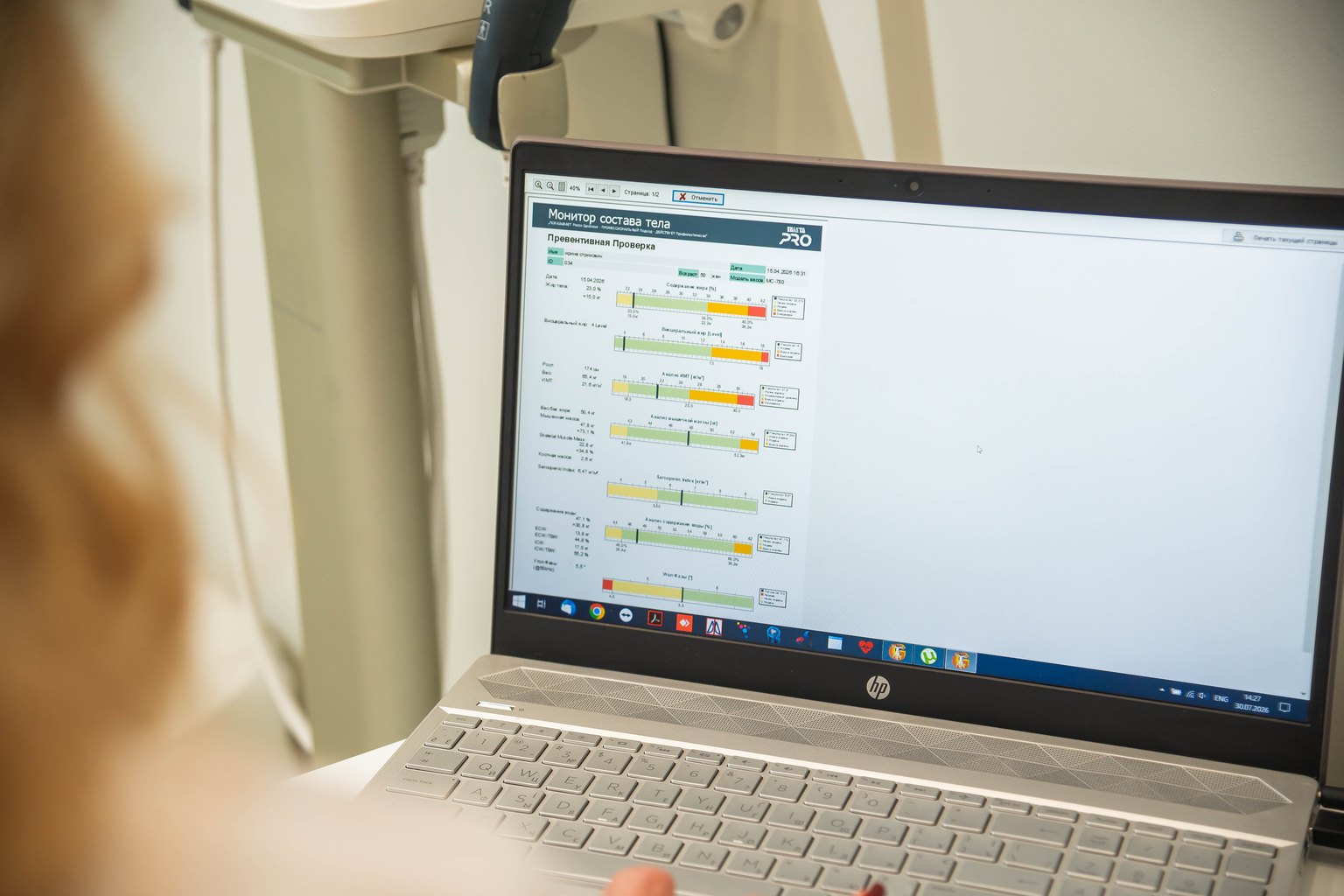
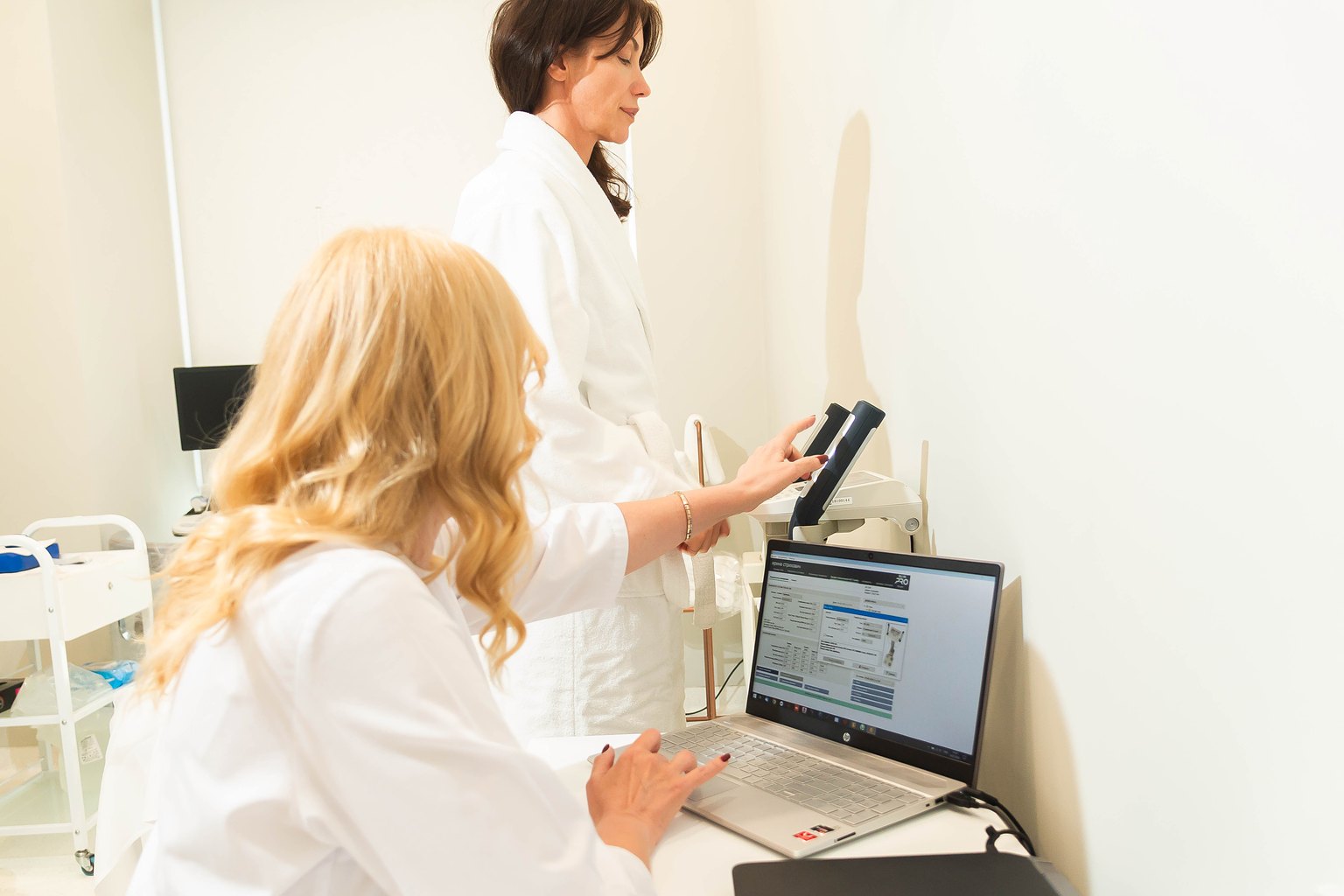
At Sandler Wellness Center, we use peptide protocols exclusively after diagnostics: analysis of IGF-1, hormonal profile, body composition, and clinical assessment. Without this, prescribing secretagogues is senseless and dangerous.
GHRP-6: Mechanism of Action and Difference from Other Secretagogues
Is GHRP-6 a coenzyme? No. It is a peptide consisting of 6 amino acids (His-D-Trp-Ala-Trp-D-Phe-Lys-NH2) that acts through two independent mechanisms simultaneously.
First mechanism: pituitary. GHRP-6 directly binds to GHSR-1a receptors on somatotrophs of the anterior pituitary. The result: pulsatile release of growth hormone occurs within 15–30 minutes after administration. The peak GH in the blood is observed 30–45 minutes later, returning to baseline values within 2–3 hours.
Second mechanism: hypothalamic. The drug inhibits somatostatin — the main inhibitory regulator of GH secretion. Without this effect, the efficiency of pituitary stimulation would be significantly lower.
What makes GHRP-6 unique among secretagogues? Its high affinity for ghrelin receptors. Ghrelin is a peptide hormone of hunger produced by the stomach. GHRP-6 is its structural analog and stimulates the same receptors. Hence, two important consequences: a pronounced feeling of hunger occurs 30–60 minutes after injection and an additional gastroprotective effect (confirmed in Peptides, 2009, n=142 — GHRP-6 reduced stomach damage during ischemia-reperfusion).
Compared to recombinant GH, GHRP-6 has one fundamental advantage: it maintains the physiological pulsatility of secretion. Constantly elevated GH levels (as with exogenous administration) are associated with an increased risk of insulin resistance and other side effects. Pulsatile release is how the body should function.
An important point regarding IGF-1: GHRP-6 increases the level of insulin-like growth factor-1 in a dose-dependent manner. A study in the European Journal of Endocrinology, 2004, n=61 showed an increase in IGF-1 by 38–52% after a 12-week course of GHRP-6 at a dose of 100–200 mcg three times a day. It is IGF-1 that mediates most of the anabolic and regenerative effects of GH on peripheral tissues.
Indications, Protocols, and What the Patient Feels
Who can GHRP-6 realistically help? There is a clearly defined patient profile:
- Confirmed suboptimal IGF-1 level (lower third of the age norm)
- Sarcopenia or accelerated loss of muscle mass
- Impaired recovery after physical exertion
- Chronic fatigue against a background of normal thyroid hormone and cortisol profiles
- Body weight deficiency or pronounced cachexia (here, the orexigenic effect is therapeutic)
- Basic hormonal diagnostics have been conducted
- Oncological diseases have been excluded from the history
Standard protocol in our practice at Sandler Wellness Center: 100–200 mcg subcutaneously, 2–3 times a day. Administration should be on an empty stomach or 2 hours after a meal (food, especially glucose, reduces the peak GH release by 40–70%). Course duration: 8–16 weeks with a break of at least 4–6 weeks.
Synergy with GHRH analogs (e.g., Sermorelin or CJC-1295) provides an additive effect on GH secretion: simultaneous administration increases the GH peak by 3–8 times compared to monotherapy (data from the Journal of Clinical Investigation, 1997, n=32). This combination is actively used in anti-aging protocols.
What does the patient feel? On the very first day after injection, a pronounced hunger appears within 20–40 minutes. Sometimes there is a feeling of warmth, slight tingling in the limbs. In the first 1–2 weeks, moderate drowsiness may occur (a normal reaction to increased GH). Patients usually report a decrease in joint pain and improved sleep quality by weeks 3–4. Visual changes in body composition occur after 8–10 weeks.
→ See also: Sermorelin Therapy for Growth Hormone Deficiency in Adults: Diagnosis & Treatment in Kyiv
Results and Scientific Evidence
The effect on appetite and recovery is not marketing. It is documented physiology.
Appetite and body mass. A study in Current Opinion in Pharmacology, 2006 showed that GHRP-6 increases food intake in humans by 23–30% compared to placebo. Mechanism: stimulation of NPY neurons in the hypothalamus through GHSR-1a receptors. In patients with cachexia or anorexia, this is a direct therapeutic effect. In patients prone to overweight — a potential risk that needs to be monitored.
Recovery and cardioprotection. This is perhaps the most interesting aspect beyond sports protocols. GHRP-6 exhibits direct cytoprotective properties independent of its effect on GH. In a study published in Regulatory Peptides, 2007, n=84 (myocardial ischemia model), administration of GHRP-6 reduced the infarct area by 31% and the level of cardiomyocyte apoptosis through activation of the PI3K/Akt signaling pathway.
Muscle mass. A meta-analysis in Neuroendocrinology, 2014 (covering 14 randomized studies, total n=623) confirmed: a 12-week administration of first-generation GH secretagogues increases lean body mass by an average of 1.8–2.3 kg and reduces visceral fat by 4.2–6.1%.
Sleep quality and cognition. The Journal of Sleep Research, 2009 recorded a 19% increase in slow-wave sleep (SWS) phase when GHRP-6 was administered before sleep. It is during SWS that the main nocturnal release of endogenous GH and neuroregeneration occurs.
In our practice, patients with confirmed IGF-1 deficiency report subjective improvements in recovery, muscle tone, and sleep in 74% of cases after a full course. But honesty is important: this data comes from our internal audit, not a randomized controlled trial.
Contraindications and Safety
Before prescribing at Sandler Wellness Center, we always exclude:
Absolute contraindications: oncology in history or suspicion of neoplastic processes; diabetic retinopathy; carpal tunnel syndrome (GHRP-6 may provoke fluid retention and exacerbate symptoms); pregnancy and lactation.
Relative contraindications: type 2 diabetes or pronounced insulin resistance (GH secretagogues increase fasting glucose levels by an average of 8–12%); active hypothyroidism (untreated reduces the pituitary response to stimulation); excess cortisol.
Side effects at the correct dosage are usually mild: pronounced hunger after injection (in 68–72% of patients according to Endocrine Reviews, 2001), transient fluid retention in the first 2 weeks, tingling in the limbs. In case of overdose or continuous prolonged use — desensitization of GHSR-1a receptors and decreased effectiveness.
Separately about the quality of the medication. Most GHRP-6 on the market are research peptides of unknown origin. Contamination with bacterial endotoxins, incorrect concentration, improper storage — real risks of self-administration. Prescription and monitoring by a physician is not a formality.
Appointment at Sandler Wellness Center, Kyiv
If you are considering peptide therapy, the first step is not to buy the medication, but to consult an anti-aging doctor. At Sandler Wellness Center, we start with comprehensive diagnostics: IGF-1, hormonal profile, body composition, history. Only after this is an individual protocol formed.
The cost of peptide protocols and specific programs should be clarified with the administrator — according to the center's rules, these prices are provided individually after the initial consultation.
You can schedule a consultation with an anti-aging doctor on the website sandler.com.ua or by calling the clinic. We are located at: 23 Kniaziv Ostrozky St, Kyiv. The consultation includes examination, history taking, and formation of a diagnostic plan. No rush and no ready-made template protocols.
→ See also: Tesamorelin for Visceral Fat Reduction: Clinical Data, Protocols & Where to Get It in Kyiv
Frequently Asked Questions (FAQ)
Q: How does GHRP-6 differ from regular growth hormone and why not just inject GH?
A: GHRP-6 stimulates the body's own pulsatile secretion of growth hormone from the pituitary, maintaining the physiological rhythm of release. Exogenous recombinant GH creates a constantly elevated level in the blood, increasing the risk of insulin resistance, acromegaly at excessive doses, and receptor desensitization. Moreover, GH is a prescription medication with strict indications, while secretagogues act indirectly through the body's regulatory axis.
Q: How soon can the effect of GHRP-6 on recovery and muscles be felt?
A: The first subjective changes — improved sleep and reduced joint pain — are usually noted by patients at weeks 3–4 of the course. Changes in body composition (increased muscle mass, reduced fat) become noticeable after 8–10 weeks with adherence to the protocol and adequate protein intake. According to Neuroendocrinology, 2014, the average increase in lean mass over 12 weeks was 1.8–2.3 kg.
Q: Why does GHRP-6 make you so hungry and how can this be controlled?
A: GHRP-6 is a structural analog of ghrelin and stimulates the same GHSR-1a receptors responsible for the feeling of hunger. The peak orexigenic effect occurs 30–60 minutes after injection. To minimize uncontrolled overeating, administration is planned before a scheduled meal or before sleep. For those prone to overweight, it may be worth considering secretagogues with a lesser appetite-stimulating effect — GHRP-2 or Ipamorelin.
Q: Can GHRP-6 be combined with other peptides or hormonal therapy?
A: The most justified combination is GHRP-6 with GHRH analogs (Sermorelin, CJC-1295). It provides a synergistic effect: combined administration increases the GH peak by 3–8 times compared to monotherapy (Journal of Clinical Investigation, 1997). Combination with testosterone or estrogen as part of hormone replacement therapy is also practiced but requires careful monitoring of IGF-1 and glucose levels. Self-combining without medical supervision is unacceptable.
Q: How long can GHRP-6 be used without the risk of receptor desensitization?
A: Standard recommendation: courses of 8–16 weeks with breaks of 4–6 weeks between them. Continuous administration without breaks leads to downregulation of GHSR-1a receptors and gradual loss of effectiveness. In our practice at Sandler Wellness Center, we monitor IGF-1 levels every 8–12 weeks: if it stops rising at the same dose — this is a signal for a pause or adjustment of the protocol.
Q: Is GHRP-6 suitable for women over 45 as part of an anti-aging program?
A: It is suitable, but with caveats. Women in postmenopause have lower baseline GH levels and potentially greater sensitivity to secretagogues. Key questions: IGF-1 level, condition of the mammary glands (ultrasound), absence of oncological risk. At Sandler Wellness Center, we integrate peptide protocols into a comprehensive anti-aging program along with correction of estrogens, thyroid hormones, and vitamin D. Isolated use of GHRP-6 without a general hormonal context yields much poorer results.
Conclusion
GHRP-6 is a serious tool, not a sports supplement from an internet forum. A growth hormone secretagogue with proven effects on appetite, tissue recovery, sleep quality, and body composition. But it is effective only when prescribed to the right patient after proper diagnostics and within an individual protocol.
I see both extremes in clinical practice: people for whom the medication has truly changed the quality of recovery and well-being, and those who purchased it independently and either experienced no effect or encountered unwanted reactions. The difference is almost always in one thing — the presence or absence of medical supervision.
If you want to understand whether peptide therapy is suitable for you and which secretagogue is optimal in your case, schedule a consultation with an anti-aging doctor at Sandler Wellness Center at 23 Kniaziv Ostrozky St, Kyiv. Detailed information and appointment — at sandler.com.ua.