Strength Training for Women: Why It's Not Scary and Very Necessary
"I don't want to look like a man." "I don't need big muscles." "I'd rather do cardio." These phrases are heard in gyms every day — and behind each one lies a myth that prevents women from gaining the most effective tool for health and body.
The truth is simple: the female body physiologically cannot "bulk up" like a male body. Women's testosterone levels are 10-20 times lower than men's. Those female athletes on the covers of fitness magazines who look "muscular" have years of targeted work, often pharmacological support, and genetic predisposition behind them. An ordinary woman training 2-3 times a week will achieve a toned, defined body — not bulk.
Strength training is not about appearance. It's about bone density, metabolism, hormonal balance, mental health, and quality of movement at 30, 50, and 70 years old. It's an investment in oneself that pays off for decades.
At Sandler Wellness Center located at 23 Kniaziv Ostrozky St, Kyiv, we witness this transformation every day: women who came in fearing the barbell, after 3 months can't imagine a week without strength training. Not because "they have to," but because they felt the difference — in their bodies, energy, and confidence.
This article provides a scientific explanation of why strength training for women is not just beneficial but necessary.
How Muscles Actually Work in Women
To dispel the myth of "bulking up," we need to understand physiology.
Muscle Hypertrophy is the process of increasing muscle fibers in response to mechanical load. It is regulated by hormones, and here's the key point: in women, estrogen predominates, not testosterone.
Estrogen, contrary to popular belief, is an anabolic hormone — it supports and protects muscle tissue but does not stimulate massive growth. A 2022 study in the Journal of Strength and Conditioning Research showed that women gain strength as effectively as men, but muscle volume increases significantly slower due to lower androgen levels.
Myth vs Fact
| Myth | Fact |
|---|---|
| I'll get big from lifting weights | Women's muscles grow slowly and within hormonal profiles |
| Cardio burns fat better | Strength training boosts metabolism for 24-48 hours post-workout |
| Women only need light weights | Progressive overload is necessary for everyone — otherwise, there's no adaptation |
| It's too late to start after 40 | Strength training is effective at any age, even after 70 |
Another important mechanism is myofibrillar hypertrophy versus sarcoplasmic hypertrophy. The former makes muscles denser and stronger without significant volume increase. This is how most women look after systematic strength training: toned but not "bulky."
A study by the American College of Sports Medicine (2021) found that women who engaged in strength training for 12 weeks increased strength by 25-30%, but muscle size only increased by 5-8% — and they perceived this as improved tone rather than "bulking up."
Benefits of Strength Training for Women's Health
The list of benefits is longer than most expect.
Bones and Osteoporosis
Every second hip fracture after age 65 occurs in women. Osteoporosis develops due to decreased estrogen after menopause and lack of mechanical load on bones. Strength training is the only type of physical activity that stimulates osteogenesis (formation of new bone tissue). A meta-analysis of 29 studies (Osteoporosis International, 2023) confirmed: 2-3 strength training sessions per week increase bone mineral density by 1-3% annually.
Metabolism
Muscle is a metabolically active tissue. 1 kg of muscle burns 70-100 kcal per day at rest. A woman who gains 3 kg of muscle mass over a year of training automatically burns 200-300 kcal more daily — without changing diet or cardio.
Hormonal Balance
Strength training lowers cortisol levels (the stress hormone), increases insulin sensitivity, and stabilizes estrogen. For women with PCOS (polycystic ovary syndrome), strength training is included in treatment protocols in many countries.
Mental Health
| Parameter | Before Training | After 3 Months |
|---|---|---|
| Bone Mineral Density | baseline | +1-2% |
| Basal Metabolism | baseline | +150-250 kcal/day |
| Anxiety Level (GAD-7 scale) | moderate | -30-40% |
| Sleep Quality | average | improves in 70% |
| Insulin Sensitivity | baseline | +20-35% |
How to Start: A Beginner's Program
The most common mistake is to walk into the gym and immediately lift heavy weights or replicate a program seen from a blogger.
Where to Start
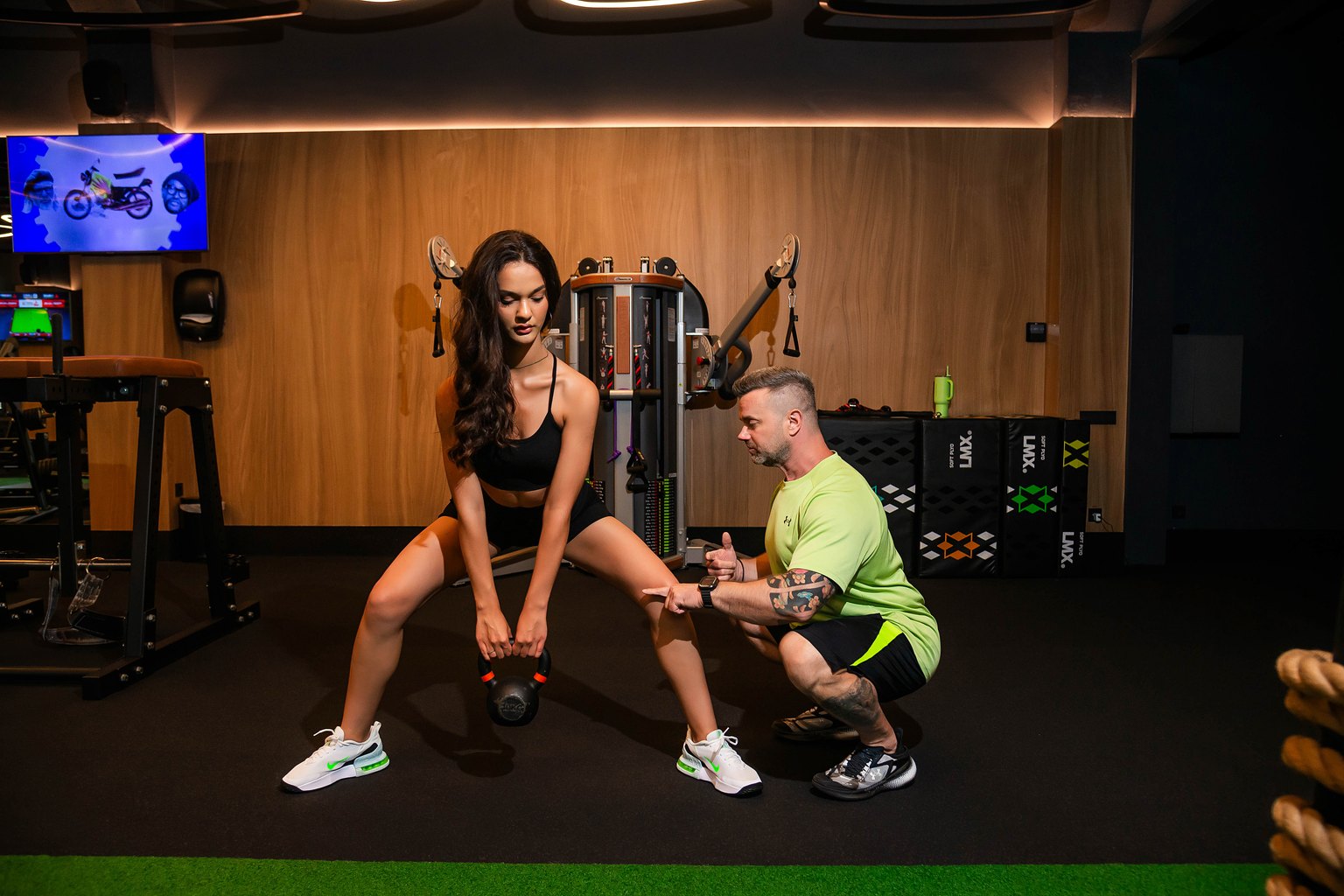
The first month is about learning movements, not lifting weights. A technically correct squat without weights is more beneficial than an incorrect one with a barbell.
Basic program for beginners (3 workouts per week):
- Day A: squat, dumbbell bench press, bent-over dumbbell row
- Day B: Romanian deadlift, vertical pull, standing dumbbell press
- Day C: Bulgarian squat, horizontal row, plank
Each exercise: 3 sets of 10-12 repetitions. Rest between sets — 60-90 seconds.
Beginner's Checklist
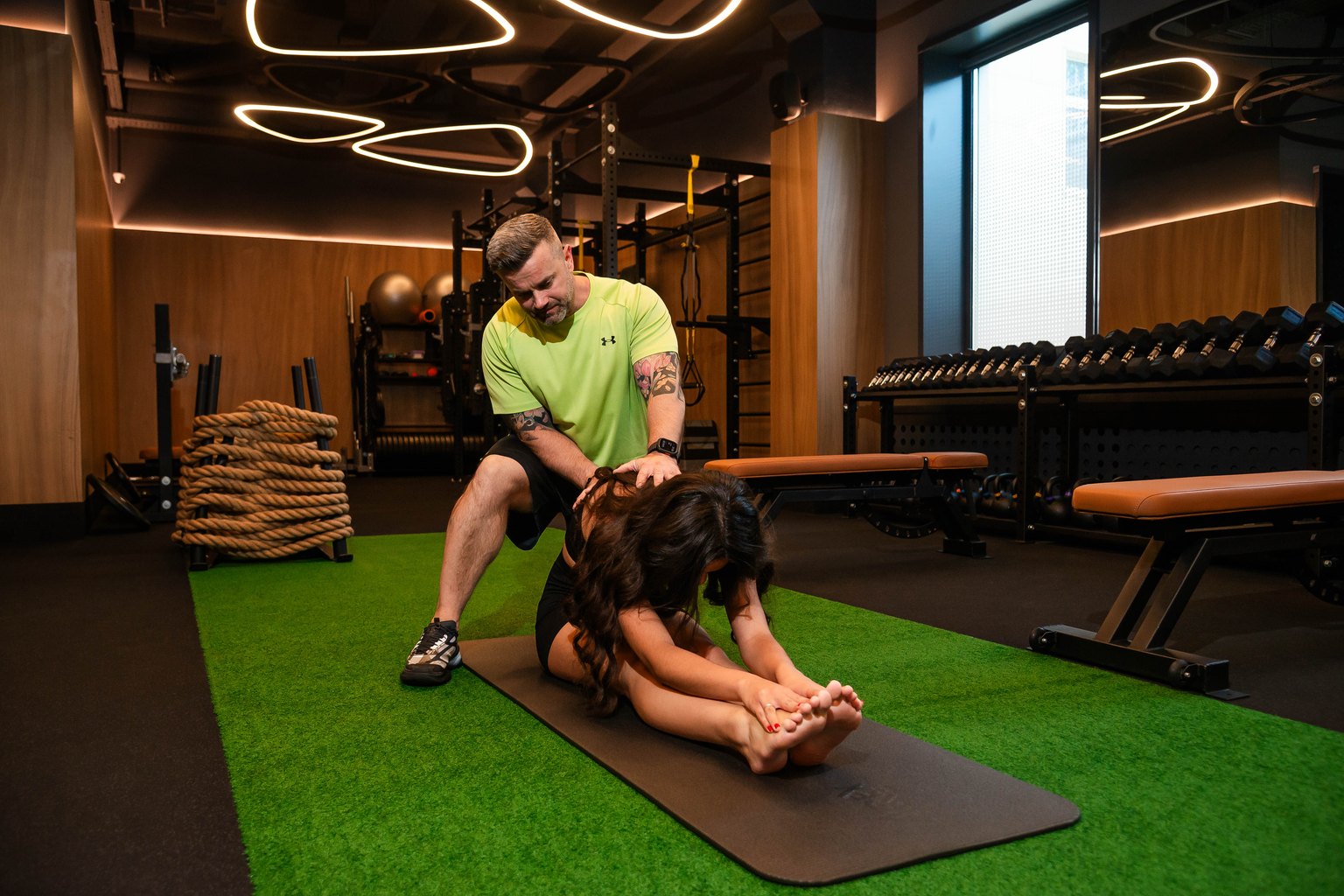
- Have a consultation or introductory session with a trainer
- Learn the technique of basic movements (squat, row, press)
- Start with a weight where the last 2 repetitions feel challenging but technically correct
- Keep a training journal (weight, repetitions, feelings)
- Increase weight no more than once every 1-2 weeks
- Sleep 7-9 hours — muscles grow during sleep
- Do not compare yourself to others in the gym
Strength Training in Different Phases of the Cycle
The hormonal cycle directly affects strength, recovery, and motivation for training. Ignoring this means training ineffectively.
Phase 1 — Menstruation (Days 1-5). Hormone levels are minimal. For most women, light training is better than complete rest — it reduces painful sensations through the release of endorphins. But if you feel unwell, reduce intensity by 30-40%.
Phase 2 — Follicular (Days 6-14). Estrogen rises. This is the best time for strength training: recovery is faster, pain threshold is higher, motivation is at its peak. It makes sense to set personal records during this period.
Phase 3 — Ovulation (Days 14-16). Peak strength and endurance. But caution: elevated estrogen levels make ligaments more elastic — the risk of strains increases. Pay special attention to technique.
Phase 4 — Luteal (Days 17-28). Progesterone rises. Recovery slows down, fatigue may appear. Reduce intensity, focusing more on technique rather than weight.
Personal Training at Sandler Wellness Center, Kyiv
Sandler Wellness Center is not just a gym. It is a center where physical rehabilitation, sports science, and individual approach are combined into one working system.
At 23 Kniaziv Ostrozky St, Kyiv, we work with women who have never held a barbell and those returning to training after pregnancy, injury, or a long break. Each journey is individual.
What every client of Sandler Wellness Center receives:
- Initial assessment of the musculoskeletal system and posture
- Individual program considering goals, fitness level, and health
- Learning proper technique from scratch — without "look how" and self-attempts
- Program adjustments according to cycle phases
- Progress tracking and load adjustments
At Sandler Wellness Center, your trainer is not just someone who counts repetitions. They are a specialist who understands the physiology of the female body and builds a program considering all its features.
You can book your first consultation through the website sandler.com.ua or by calling directly to the center at 23 Kniaziv Ostrozky St, Kyiv.
Frequently Asked Questions (FAQ)
Can I do strength training during menstruation?
Yes, if you feel well. Moderate strength training reduces cramps and improves mood through the release of endorphins. If the pain is severe — reduce intensity or take a break.
How long does it take to see results?
The first changes in well-being and strength occur after 3-4 weeks. Visible changes in the body appear after 8-12 weeks of regular training. This is normal and it’s science, not marketing.
Do I need to drink protein?
Protein supplements are not mandatory. If your diet contains enough protein (1.4-1.8 g per kg of body weight), sports protein is just a convenience, not a necessity.
What if I have joint pain?
This is not a contraindication, but it is a signal for consultation with a specialist. At Sandler Wellness Center, we often work with clients who have knee and back pain — and properly selected loads are part of rehabilitation, not a threat.
Can pregnant women train?
Moderate intensity strength training is safe during uncomplicated pregnancy and is recommended by most obstetricians-gynecologists. However, the program must be individually adapted and supervised by a qualified trainer.
Are there age restrictions?
No. Studies show the effectiveness of strength training in women over 70. After 60, they are especially important for fall and fracture prevention.
Conclusion
Strength training is not a male sport. It is a basic need of the female body that we ignore due to outdated stereotypes and fears that lack scientific basis.
A woman who regularly engages in strength training is a woman with dense bones, stable metabolism, balanced hormones, and a clear mind. Not "bulky." Not "manly." Healthy, strong, and confident.
It's never too late to start. The right way means with a specialist, understanding your body, and without haste.
Sandler Wellness Center at 23 Kniaziv Ostrozky St, Kyiv is ready to be your starting point. The first consultation with a specialist is not an obligation, but an opportunity to understand what your body needs.
Your strength is already there. It just needs the right direction.