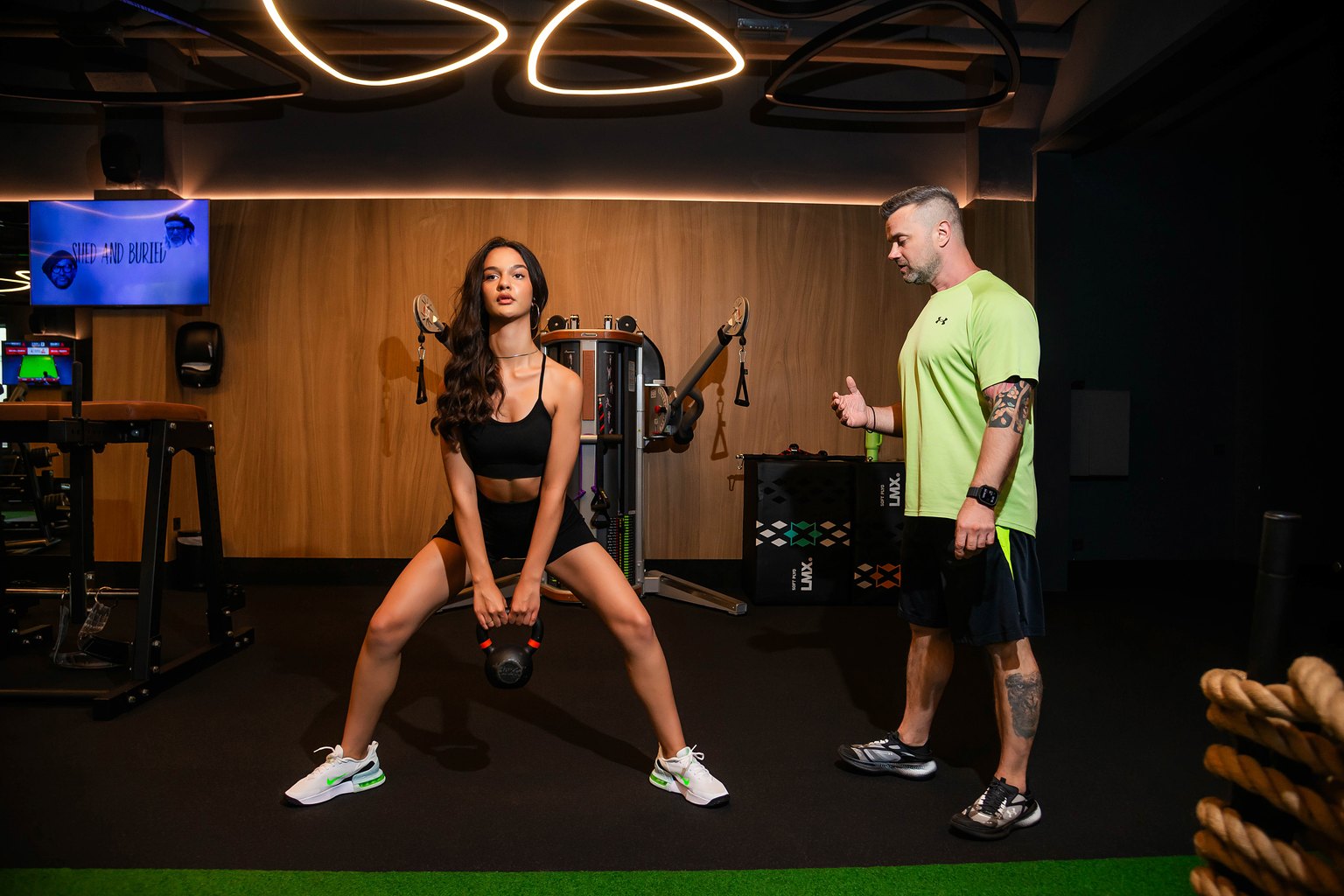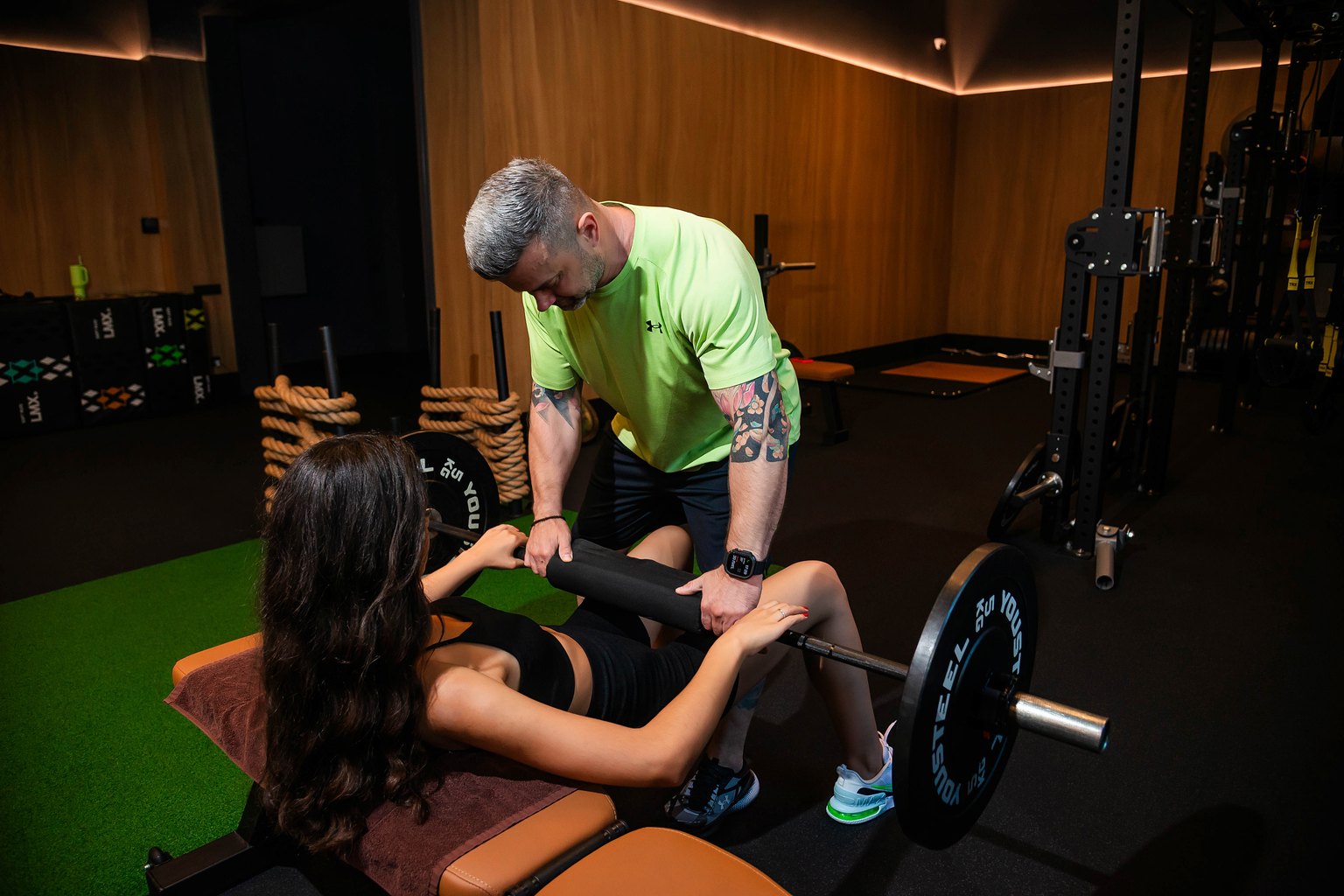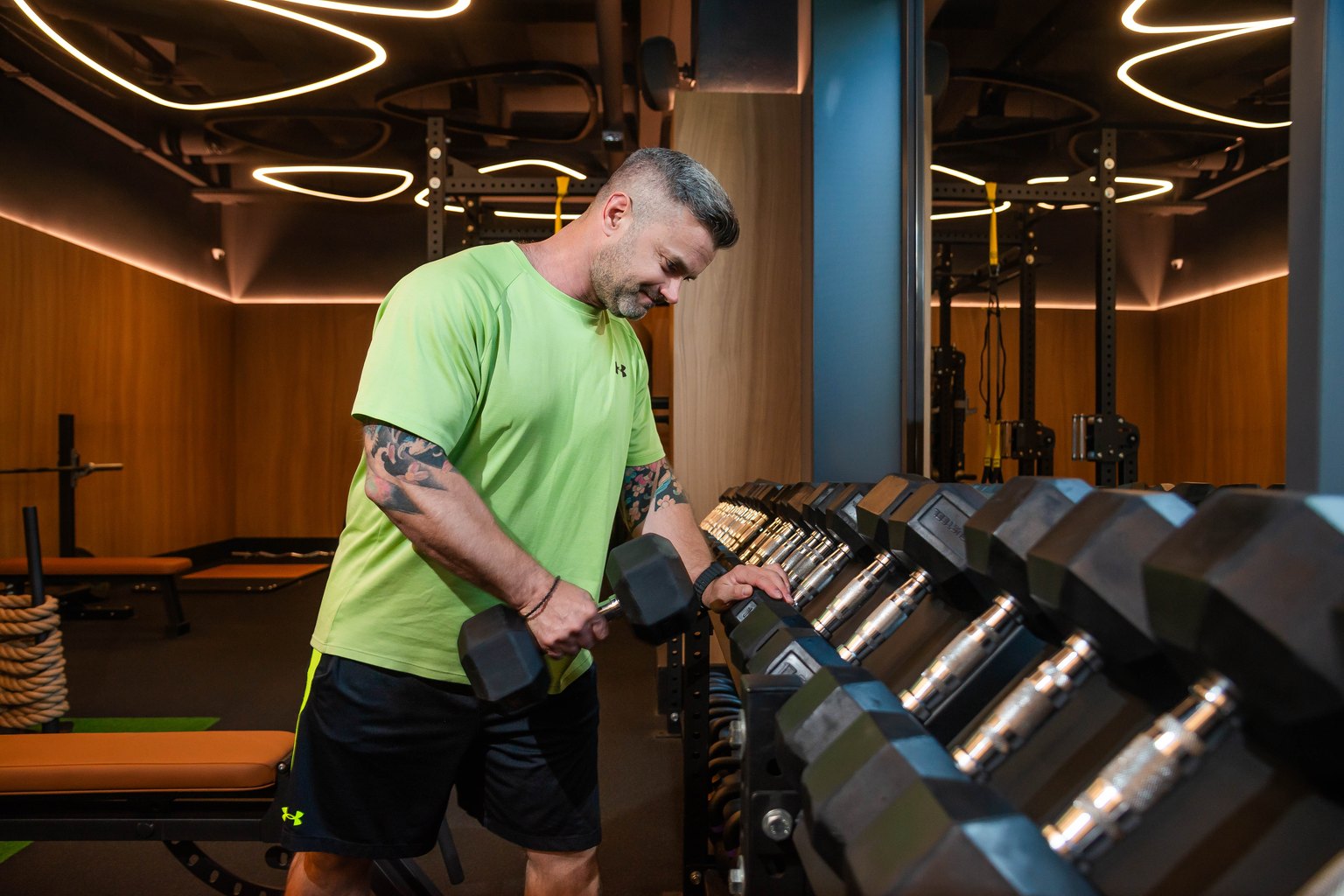
Every week, people come to me not only with back pain or a desire to lose weight. More often than not, they arrive exhausted. Anxious. With poor sleep and a feeling that control over their own body and life has somehow been lost. And every time I explain the same thing: the barbell heals just as well as pills. In certain scenarios — better.
A study published in JAMA Psychiatry (2018, n=1877) proved that strength training reduces symptoms of depression by 34% regardless of the intensity of the load. Another study published in Sports Medicine (2020, n=1252) showed that regular resistance training reduces anxiety levels by an average of 20%. This is not "good for health." These are clinical figures.
Sandler Wellness Center in Kyiv is not just a gym. Here, physical training is integrated with medical support: the trainer sees the person holistically, understanding the connection between stress, hormonal background, and physical activity. That’s why personal training here is not just a set of exercises, but a protocol.
Next, I will explain the mechanisms, figures, and specifics: what happens to your nervous system during weight lifting, why sleep improves, and how confidence is formed that no bad day can undermine.
What Happens in the Brain During Strength Training: Biochemistry in Brief
Let’s start with the main point. Strength training is controlled stress. When you lift weights, the hypothalamic-pituitary-adrenal (HPA) axis triggers the release of cortisol, adrenaline, and then — compensatorily — a whole cascade of recovery molecules.
BDNF (Brain-Derived Neurotrophic Factor). This is key. During intense resistance training, the concentration of BDNF in the blood increases by 32% compared to a resting state (Journal of Applied Physiology, 2019). BDNF literally stimulates the growth of new neurons in the hippocampus — the area of the brain responsible for memory, learning, and anxiety regulation. In people with depression, the hippocampus is reduced in size. Strength exercises partially compensate for this.
Endorphins and Endocannabinoids. The popular myth of "endorphin euphoria" after running actually relates more to the endocannabinoid system. A study in Frontiers in Physiology (2021) showed that anandamide — an endogenous ligand for cannabinoid receptors — increases by 87% more after strength training than after aerobic exercise. It is this compound that provides a sense of calm and satisfaction after lifting weights.
Dopamine and Serotonin. Regular strength training increases the density of D2 dopamine receptors in the striatum. Simply put: the brain becomes less dependent on external stimulants and more sensitive to natural sources of pleasure. This is confirmed in a study published in Psychoneuroendocrinology (2022, n=312).
What is important to understand practically: the effect is not linear. Too light a load does not elicit a neurochemical response. Too heavy without recovery chronically raises cortisol levels. The optimal zone is 65-80% of 1RM (one-repetition maximum) with 48-72 hours of recovery between workouts for major muscle groups.
Indications, Protocols, and Dosage: Who and How to Train for Mental Health
Strength training for mental health is suitable for almost everyone. But there are nuances.
Who is this particularly relevant for:
- Chronic work-related stress (office workers, managers)
- Anxiety disorders without acute phase
- Insomnia due to overexertion
- Post-traumatic stress (in remission, with doctor's permission)
- Acute depressive episode — initially requires medication stabilization
- Unstable blood pressure without medical supervision
- Severe osteoporosis without osteological support
Protocol for Reducing Stress and Anxiety (evidence base):
The study Mental Health and Physical Activity (2021) defined the optimal structure for a neuropsychological effect:
Frequency: 2-3 times a week. No more. No less.
Duration: 45-60 minutes per session. Over 75 minutes, cortisol levels begin to rise without adequate compensation.
Intensity: 60-80% of 1RM, 3-4 sets of 8-12 repetitions. This range provides the maximum release of BDNF.
Exercise selection: basic multi-joint movements take precedence over isolation exercises. Squats, deadlifts, bench presses — they engage more muscle mass and provide a stronger neuroendocrine response.
Progression of load: increase weight or volume every 2-3 weeks. Without progression, there is no adaptive stress, and therefore — no neurochemical effect.
I see this every week: people who came for their bodies, after 6-8 weeks start talking about sleep, reduced anxiety, and a feeling that "their head has cleared." This is not placebo. This is physiology.
→ See also: Strength training as anti-stress: how exercises reduce cortisol levels in Kyiv
Results and Scientific Evidence: What to Really Expect and When
Patients often ask: "When will I feel this?" I will give a specific answer.
Week 1-2: After each workout for 2-4 hours — elevated mood, reduced muscle tension. Acute neurochemical effect. Stable improvement is not yet present.
Week 3-4: Sleep begins to normalize. A study in Sleep Medicine Reviews (2017, meta-analysis, n=23 studies) showed that strength training increases slow-wave sleep (SWS) by 17% and reduces time to fall asleep by an average of 12 minutes.
Month 2-3: Stable reduction in baseline cortisol levels. A study in Hormones and Behavior (2020) recorded a 23% decrease in fasting cortisol after 8 weeks of regular strength training.
Month 3-6: Structural changes in the brain. It is during this period that MRI studies record an increase in hippocampal volume in people with anxiety disorders who engaged in resistance training (Neuroscience & Biobehavioral Reviews, 2022).
Self-confidence is a separate topic. The Journal of Health Psychology (2019, n=444) proved that increases in physical strength directly correlate with improvements in self-esteem regardless of changes in appearance. That is, even if you do not yet see a difference in the mirror — the brain already registers that you have become stronger. And this changes how you carry yourself, speak, and make decisions.
Contraindications and Safety: Honestly About Limitations
Strength training is safe. But not for everyone and not always.
Absolute contraindications:
Unstable angina, recent heart attack (up to 6 months), active joint inflammation in the acute phase, uncontrolled arterial hypertension (systolic pressure over 180 mmHg).
Relative contraindications (consultation with a doctor required):
Herniated intervertebral discs, osteoporosis, cardiac arrhythmias, type 1 diabetes, pregnancy.
What is important to know before your first training session at Sandler Wellness Center:
We do not leave beginners alone with the barbell. Every client undergoes an initial consultation where the trainer assesses movement patterns, identifies imbalances, and creates an individual plan. Address: 23 Kniaziv Ostrozky St, Kyiv. This fundamentally distinguishes the medical fitness approach from a regular gym.
Injury risk with proper technique and adequate load progression is 0.2-0.7 injuries per 1000 hours of training — lower than in team sports (British Journal of Sports Medicine, 2017).
Prices and Registration at Sandler Wellness Center, Kyiv
Sandler Wellness Center offers several training formats for those who want to use iron as a tool for mental health.
Personal Training (gym, 60 min) — 2000 UAH. The price includes: program development, technique control, load adjustment, progress monitoring.
Split Training (60 min) — 2500 UAH. This format is for two clients with a trainer. Effective if you want to train with a partner or friend while still receiving full personal support.
Stretching (individual, 60 min) — 1900 UAH. An excellent addition to the strength block for restoring the nervous system.
For those who want a comprehensive assessment of their health status before starting training, check-up programs are available: Universal Women's or Men's Check-up (18-45 years) — from 19,000 UAH. This provides a complete picture of your health in one visit.
You can register through the website sandler.com.ua or directly at the center at: 23 Kniaziv Ostrozky St, Kyiv.
Prices may change — please check the current cost with the administrator or on sandler.com.ua.
Frequently Asked Questions About Strength Training and Mental Health
Q: How many workouts per week are needed to feel an effect on mental health?
A: Two to three strength training sessions per week lasting 45-60 minutes are sufficient for a stable neurochemical effect. The study JAMA Psychiatry (2018) showed that even one workout per week reduces symptoms of depression, but a sustainable result is formed with a frequency of 2+ times. More often — not always better: with 5-6 workouts without adequate recovery, cortisol increases.
Q: Can strength training help with insomnia?
A: Yes, and the mechanism is well-studied. Strength training increases the share of slow-wave sleep (deep phase) by 17% and reduces time to fall asleep by approximately 12 minutes (Sleep Medicine Reviews, 2017). It is better to train in the morning or at noon — evening training after 8:00 PM may temporarily hinder falling asleep due to increased adrenaline.
Q: Can I engage in strength training while taking antidepressants?
A: Yes, and it is necessary, but with your doctor's knowledge. Strength training does not conflict with most antidepressants and anxiolytics. On the contrary, studies show synergy: physical activity enhances the effectiveness of SSRIs by about 30% (Neuropsychopharmacology, 2021). Discontinuing medications "because I started training" is prohibited.
Q: What exercises have the best impact on mood and stress levels?
A: Basic multi-joint exercises have the strongest neuroendocrine effect. Barbell squats, deadlifts, bench presses, pull-ups — they engage the maximum muscle mass and provide the largest release of BDNF and endocannabinoids. Isolated exercises (e.g., bicep curls) do not provide such an effect.
Q: Are strength training suitable for older adults to combat stress?
A: Yes, and especially effective. A study in JAMA Internal Medicine (2019, n=1432, average age 67 years) showed that resistance training reduces cognitive decline and symptoms of depression in older adults by 38%. At Sandler Wellness Center, programs for seniors are developed individually, taking into account joint condition and cardiovascular history.
Q: How quickly does self-confidence grow from strength training?
A: The first changes in self-esteem are recorded within 4-6 weeks of regular sessions — even before visible physical changes. The Journal of Health Psychology (2019) links this to an increase in the sense of competence and control over one’s body, not just aesthetics. The brain registers progress in strength and translates this into overall self-confidence.
Conclusion
Iron against stress is not a metaphor. It is a physiological mechanism with an evidence base: BDNF stimulates neurogenesis, endocannabinoids provide calmness, cortisol normalizes, and sleep becomes deeper. After 6-8 weeks of regular training, you gain not only a stronger body but also a more resilient nervous system.
But there is a condition: training must be properly structured. Incorrect technique, inadequate load, or lack of progression nullify most effects.
Sandler Wellness Center in Kyiv is a place where we build protocols tailored to the individual. Not templates from the internet, but personal programs with a medical understanding of physiology. Gym, functional diagnostics, support from specialists — all in one place.
Sign up for your first consultation at sandler.com.ua or come in person: 23 Kniaziv Ostrozky St, Kyiv. Your nervous system is waiting to work.