Personalized Fitness: Why You Need a Trainer Even If You’ve Been Training for Years — A Practical Answer
I often hear the same phrase from people who come to Sandler Wellness Center for the first time: "I've been training for five years, why do I need a trainer?" The answer to this question is more complex than it seems. It’s not about whether you know how to do squats. It’s about whether your body is responding correctly to the loads, whether there is progress, and whether there are hidden compensatory patterns that are slowly damaging your joints.
According to a study published in the Journal of Strength and Conditioning Research (2021, n=612), individuals who have been training on their own for over three years have at least one persistent technical error in 68% of cases, leading to excessive strain on certain structures of the musculoskeletal system. Not due to laziness, but due to the lack of an external perspective.
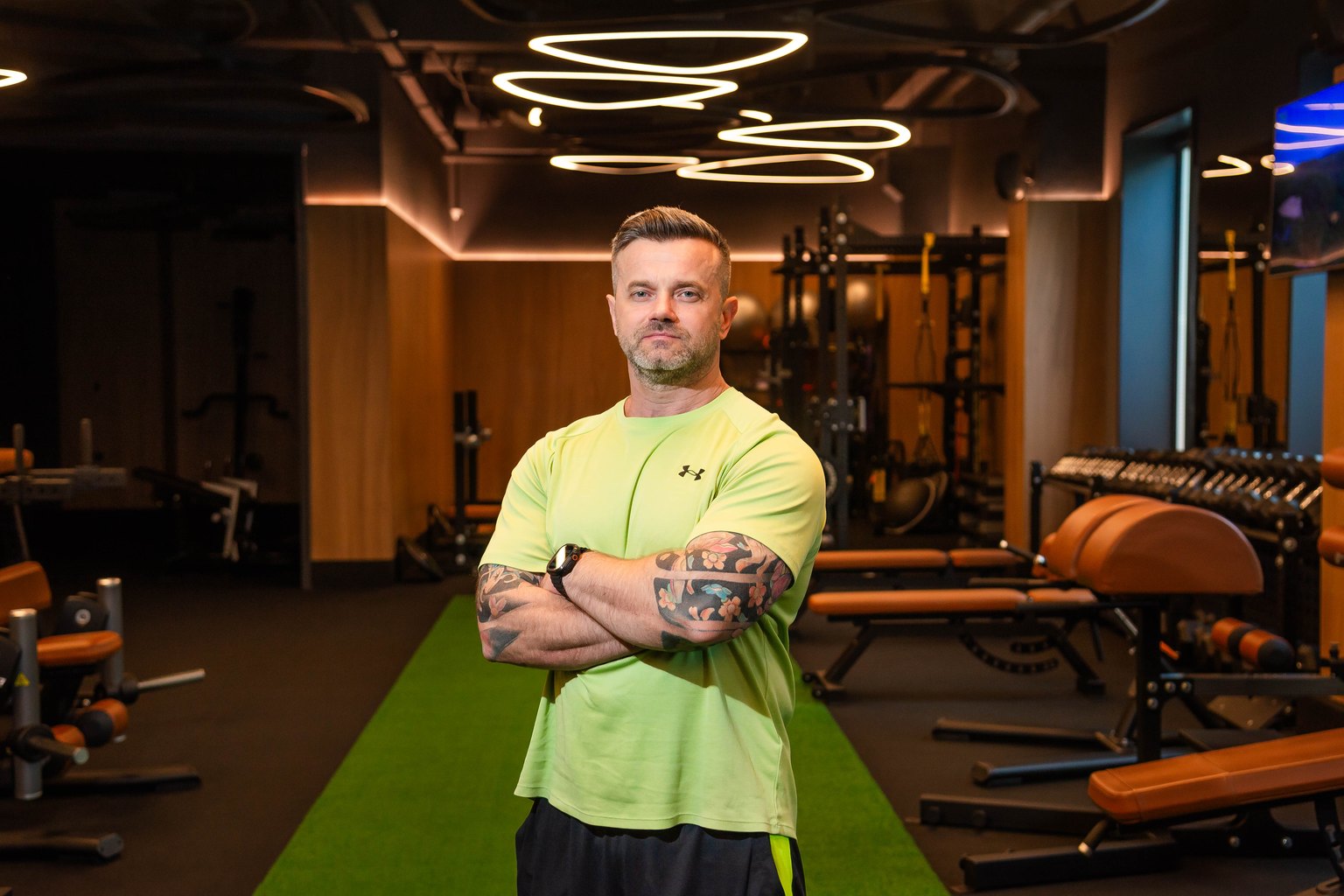
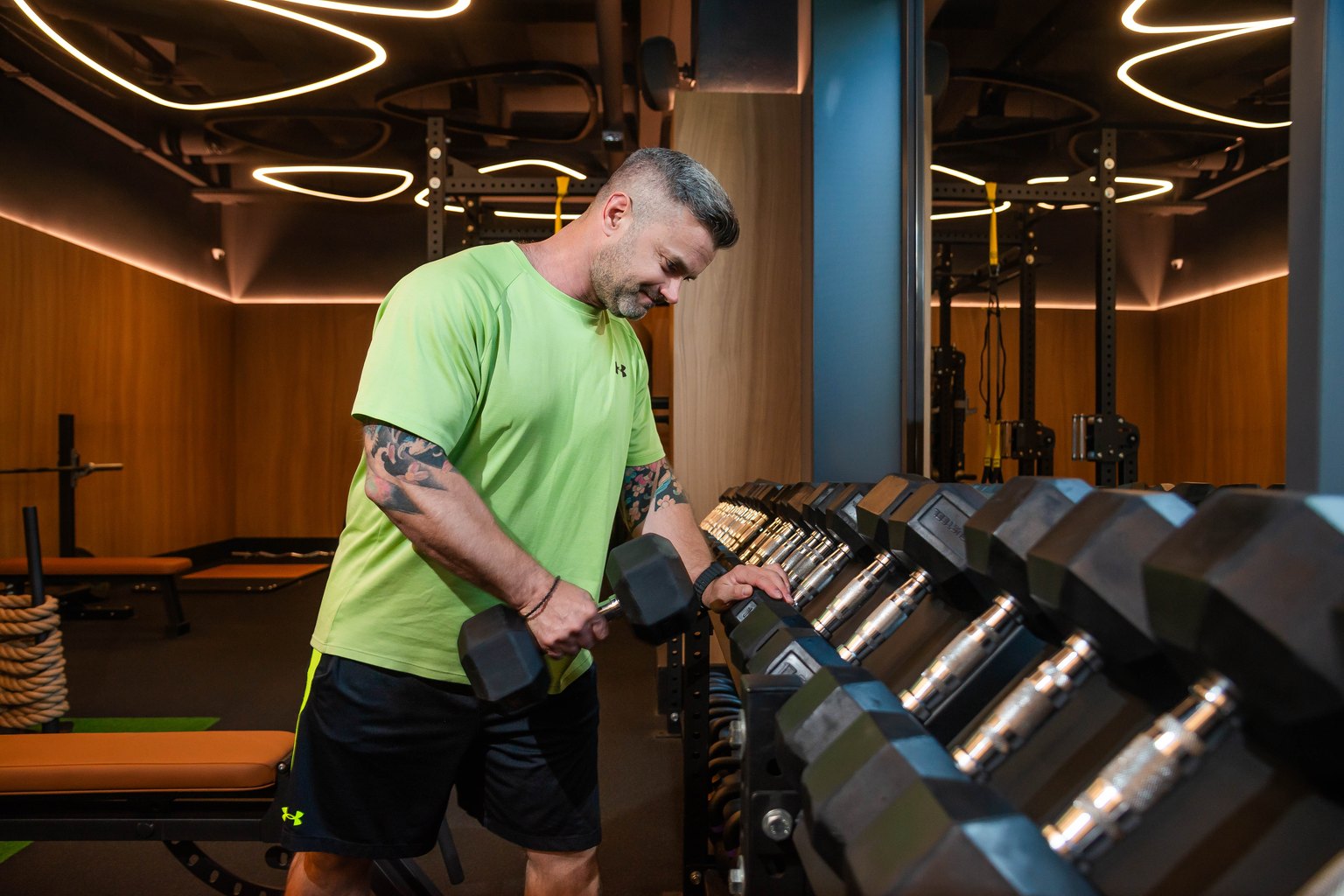
Personalized fitness is not a luxury or a service "for beginners." It is a system of individual load adaptation to the current state of the body: hormonal background, recovery level, functional limitations, goals. At Sandler Wellness Center located at 23 Kniaziv Ostrozky St, Kyiv, we build the training process this way: from functional diagnostics to a specific protocol from week to week.
Why is this important even for experienced athletes? Because the body adapts. What worked three years ago may be ineffective or even harmful today.
What Personalized Fitness Really Is: Mechanisms Most Ignore
Personalized fitness is not just "the trainer watches how you do exercises." It is a structured process of assessment, planning, and correction that takes into account the physiological characteristics of the individual.
Let’s start with the basics: skeletal muscle adapts to load through the principle of progressive overload. But there’s a nuance. The adaptation of type I (slow, oxidative) and type II (fast, glycolytic) muscle fibers occurs differently depending on the genotype. A study published in Human Molecular Genetics (2022) showed that the ACTN3 R577X gene variant affects the ratio of muscle fibers and, accordingly, the optimal type of training. Without genetic or at least functional testing, you are simply guessing.
Next is neuromuscular coordination. Most people who train on their own reach a plateau not because their muscles aren’t growing, but because the brain stops "activating" the necessary motor units in the correct sequence. This phenomenon of intermuscular coordination defect is well described in the works of Zatsiorsky & Kraemer (Science and Practice of Strength Training). Correcting it without a qualified external perspective is practically impossible.
The third level is systemic. The cortisol/testosterone ratio is a marker of recovery. If you train intensely but without considering this balance, overtraining accumulates. According to the European Journal of Applied Physiology (2020, n=341), chronic overtraining reduces peak strength by 12–18% and increases the risk of injury by 34%.
And one more point that is rarely discussed: the psychological aspect of accountability. A meta-analysis from 2019 in the British Journal of Sports Medicine (32 RCT, n=5840) showed that having a trainer increases adherence to the training plan by 41% compared to self-training. Just a fact.
Who Needs a Personal Trainer and How the Protocol is Structured at Sandler Wellness Center
I’ll answer directly: almost everyone with a specific goal needs a personal trainer. The question is only about the format of work.
Here are typical situations I see weekly in our center:
A person has been training for 3–7 years and has hit a plateau. Weight is not increasing, strength is not improving. The most common reason: getting used to the same movement patterns, suboptimal load progression, and unaccounted mobility deficits.
An active person with chronic back or knee pain. Continues to train "through the pain," using compensatory movements that exacerbate the problem. In our practice, this is one of the most common requests.
An experienced athlete before a competition or after an injury. Needs precise wave-like periodization, not a general plan from the internet.
Checklist: who is most suitable for personalized fitness at Sandler Wellness Center:
- Has a specific goal (weight loss, hypertrophy, event preparation)
- Has a plateau that cannot be overcome independently
- Has chronic pain or a history of injury
- Lacks time — needs maximum efficiency with minimal sessions
- Satisfied with current progress and has no specific goals (can train independently)
How our protocol looks:
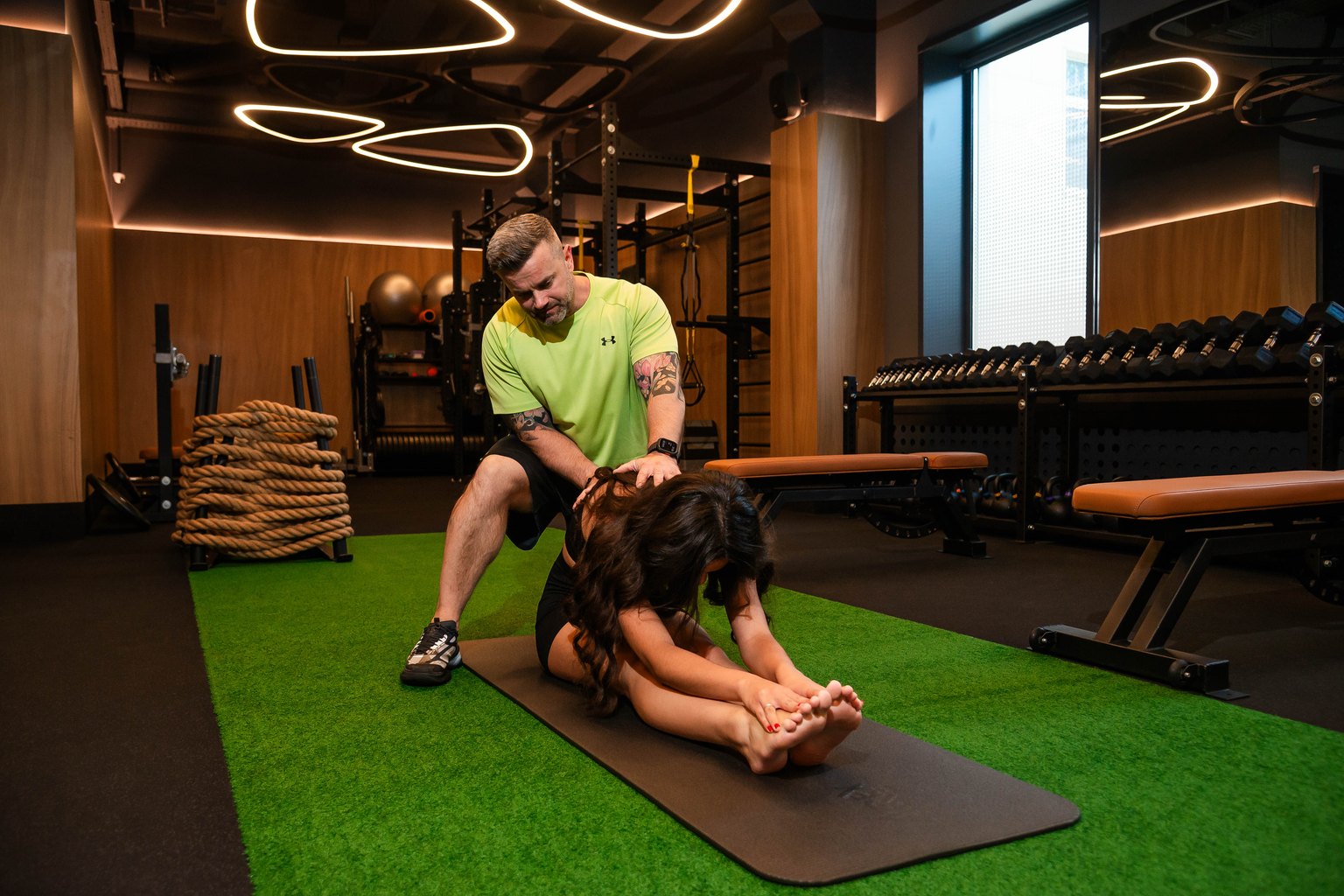
The first step is a primary consultation with functional diagnostics. We assess movement patterns, muscle imbalances, joint mobility, and history. Only after this do we proceed to the first training session.
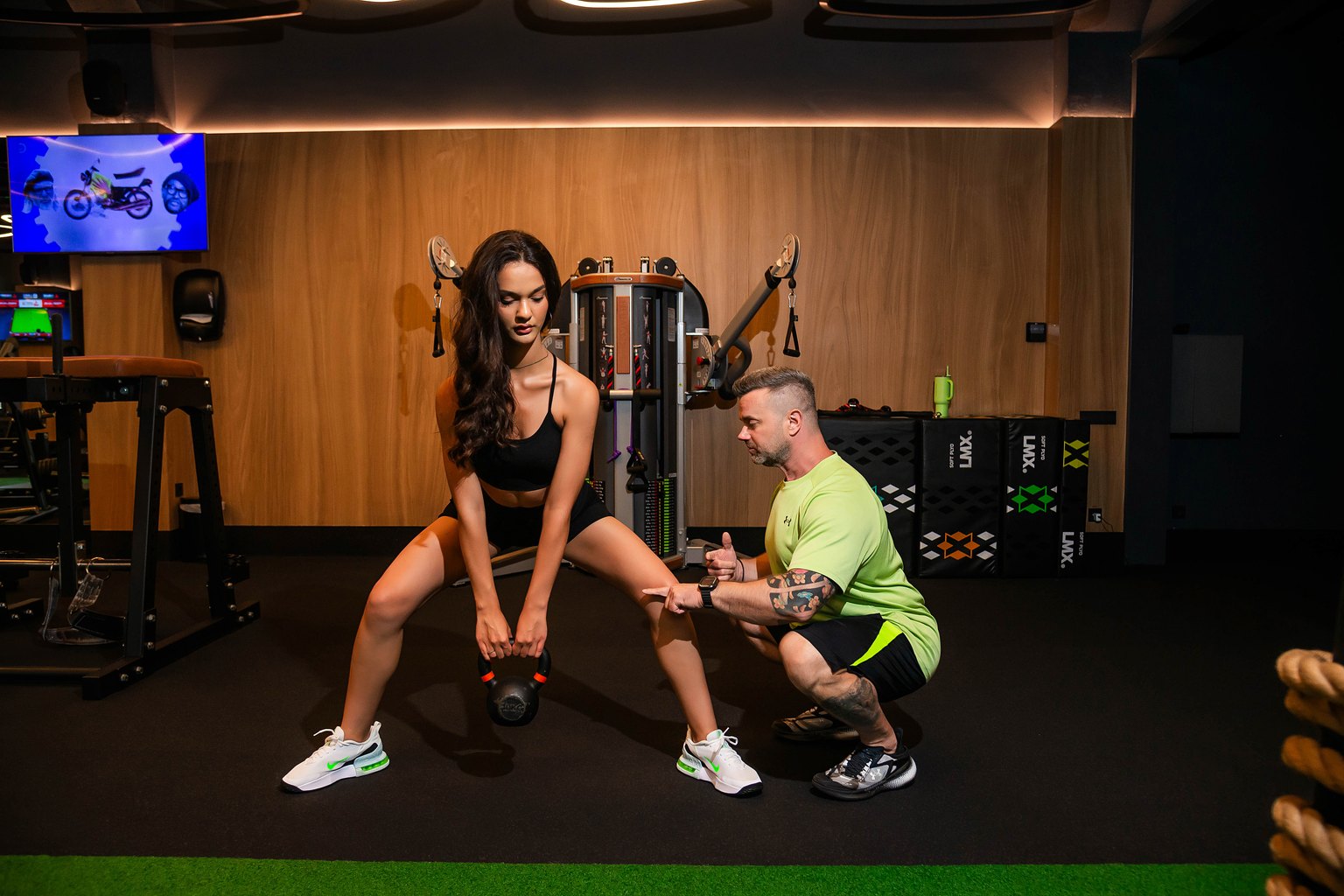
Next is a personal training session of 60 minutes (2000 UAH) or a "split" format for two (2500 UAH). The program is built on 4–8 week microcycles with planned progression and deload weeks.
What Really Changes: Results and Scientific Data
Patients often ask: "How many training sessions are needed to see a difference?" The answer depends on the goal. But there is a clear scientific basis.
According to the Journal of Physical Activity and Health (2023, n=847), individuals who train under the guidance of a certified trainer demonstrate a 28% greater increase in muscle mass and a 23% greater decrease in body fat percentage over 12 weeks compared to those who train independently with a similar workload.
What can you realistically expect and in what time frame:
2–3 weeks: correction of technique, elimination of obvious compensatory patterns, reduction of post-training pain.
4–6 weeks: first visible changes in body composition, noticeable improvement in strength indicators (with proper nutrition).
8–12 weeks: stable adaptation, new baseline level of strength and endurance, significant change in body proportions.
In our practice at Sandler Wellness Center, we record indicators before starting work and after each microcycle. Without objective data, it is impossible to understand what works and what does not. This is not marketing; it is basic sports science.
Contraindications and Safety: What Is Important to Know Before the First Training Session
Personal training is suitable for the vast majority of people. However, there are situations where prior medical evaluation is required.
An important nuance: lower back pain, osteochondrosis, intervertebral disc herniation are not contraindications to training. On the contrary, properly selected loads are part of rehabilitation. But only after functional diagnostics and agreement with a doctor.
Pregnancy is also not an absolute contraindication: there are specialized training protocols for pregnant women at different stages. This requires separate approval from an obstetrician-gynecologist.
Regarding the safety of the training process itself: at Sandler Wellness Center, trainers are certified and regularly undergo further training. All protocols for clients with medical features are coordinated with the clinical department of the center.
Prices and Registration at Sandler Wellness Center, Kyiv
Personal training at Sandler Wellness Center, located at 23 Kniaziv Ostrozky St, Kyiv, is conducted in several formats depending on your goals and needs.
Gym:
- Personal training 60 min — 2000 UAH
- Split training 60 min (for two) — 2500 UAH
Multifunctional Hall:
- Pilates — 2200 UAH
- Split training — 3500 UAH
Dance Hall:
- Individual ballet lesson — 1900 UAH
- Stretching — 1900 UAH
- Group stretching (3–5 participants) — 1200 UAH per participant
- Model walk — 1900 UAH
Clinical Diagnostics Before Training:
- Primary consultation with functional diagnostics — please check the cost with the administrator
The consultation includes: analysis of movement patterns, assessment of muscle balance, recommendations for training format and necessary medical examinations.
You can register through the website sandler.com.ua or directly at our center located at 23 Kniaziv Ostrozky St, Kyiv.
Prices may change — please confirm the current cost with the administrator or on sandler.com.ua.
Frequently Asked Questions About Personalized Fitness
Q: Do I need a trainer if I have been training for over 5 years?
A: Yes, even experienced athletes need a trainer, but in a different format. After 5 years of self-training, 68% of individuals have persistent technical errors or compensatory movement patterns (Journal of Strength and Conditioning Research, 2021). A trainer is needed not for basic learning, but for fine-tuning technique, proper periodization, and overcoming plateaus.
Q: How many personal training sessions are needed per week for visible results?
A: Ideally, for most goals — 2–3 personal training sessions per week with adequate recovery between them (48–72 hours for the same muscle groups). If the budget is limited, one session per week with a trainer plus independent training based on their plan also yields significantly better results than solely self-training.
Q: What is the difference between personal training and group classes?
A: Group classes are built on an averaged program without taking your individual characteristics into account. Personal training considers your level of preparation, existing injuries, goals, and current recovery status. A study in the Journal of Physical Activity and Health (2023, n=847) showed a 28% greater increase in muscle mass specifically with personal training compared to the same workload.
Q: What happens during the first personal training session?
A: In the first session, we do not "train to failure." A functional assessment is conducted: movement amplitude, balance, muscle imbalances, technical level of basic movements (squat, deadlift, press). Based on this, the first microcycle is built. At Sandler Wellness Center, we also recommend a preliminary consultation with functional diagnostics — it significantly reduces the time needed to select the optimal protocol.
Q: Can a personal trainer help with back pain during training?
A: Yes, if the pain is not related to acute inflammation or spinal instability. In most cases, back pain during training is a result of compensatory movement patterns or weakness of stabilizing muscles. A qualified trainer, together with a rehabilitation specialist, selects a protocol that addresses the root cause. At Sandler Wellness Center, trainers have access to the clinical department of the center for such agreements.
Q: How can I tell if a trainer is truly qualified?
A: Pay attention to three things: the presence of official certification (NSCA, ACSM, or national equivalents), the ability to conduct a functional assessment before starting training, and the ability to explain why a particular exercise is prescribed. A good trainer does not just "give a program," but explains the mechanism and corrects during the process.
Conclusion
Personalized fitness is not a matter of status or budget. It is a matter of the effectiveness of the time invested. You can train for 10 years and remain at the same level if there is no systematic correction and adaptation of the load in the process. Or, in 12 weeks with a properly constructed personal protocol, achieve what you have been striving for independently for three years.
At Sandler Wellness Center, we approach the training process as a medical discipline: with diagnostics, protocols, monitoring, and correction. Our team of trainers works within the same center with doctors, rehabilitation specialists, and nutritionists, allowing us to consider the complete picture of the client's health.
If you are ready to transition from "training as usual" to "training effectively" — sign up for a primary consultation with functional diagnostics at sandler.com.ua or visit us in person: Kyiv, 23 Kniaziv Ostrozky St.