This question comes up at least ten times a week. A client sits in the chair, looks at the service menu, and asks, "What’s the difference? What’s better for me?" The answer depends on the condition of the nail plate, the skin around the nails, and what you really want to achieve.
Both methods have a clear niche. Neither is "better" in an absolute sense. According to the European Academy of Dermatology and Venereology (2023), over 68% of nail and skin problems arise from improperly chosen processing techniques rather than the quality of the polish or coating. This means that the choice of manicure method directly affects the health of your hands.
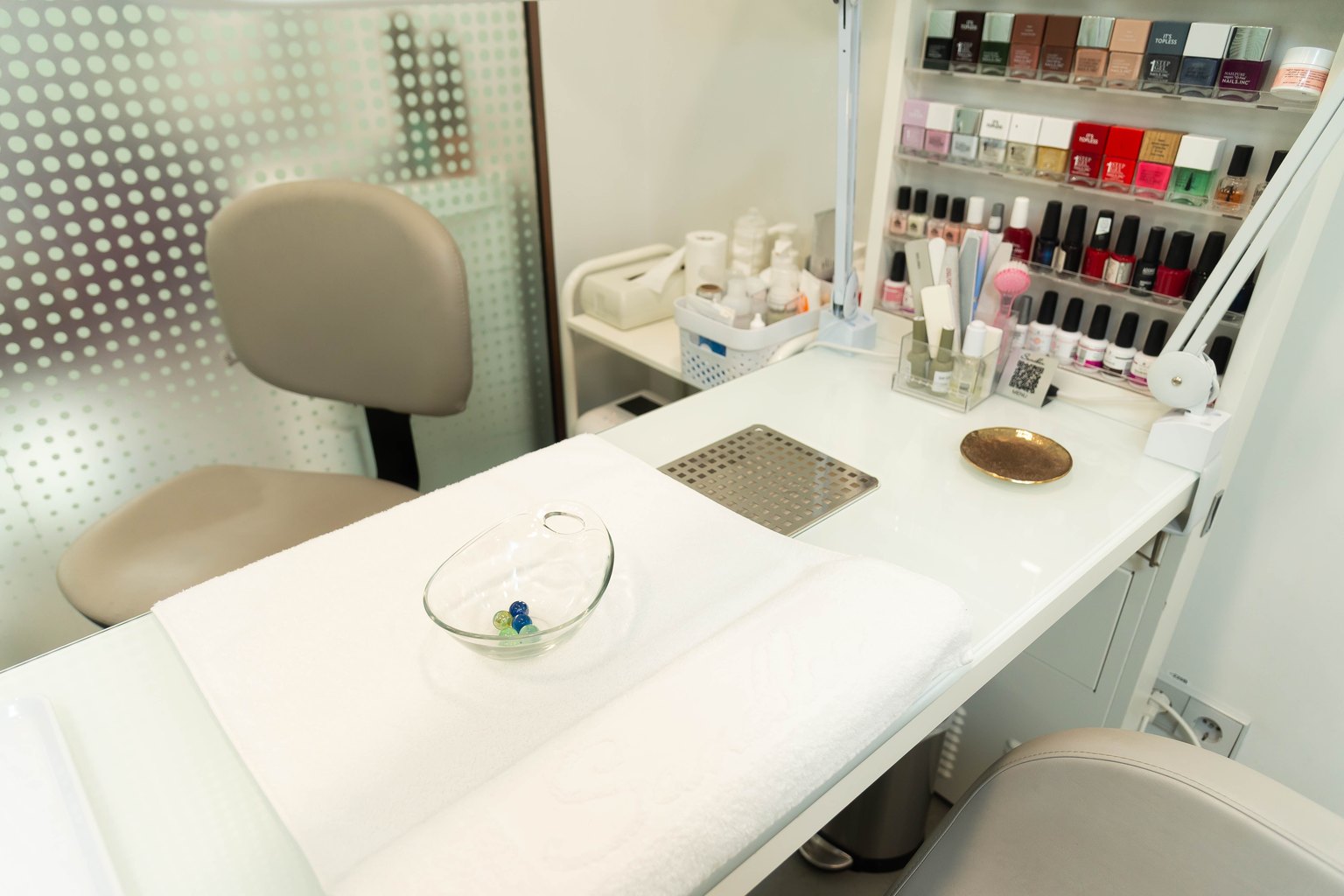
At Sandler Wellness Center, we approach nail services with medical precision. Our team, led by experienced nail service masters, takes into account the individual characteristics of each client: the thickness of the stratum corneum, the tendency to hangnails, the activity of cuticle growth, and even lifestyle. Clients who frequently wash dishes without gloves require a completely different approach than those who work in an office.
In this article, I will explain the mechanics of both methods without marketing fluff, describe the working protocols, and help you make an informed choice.
What is Combined and Hardware Manicure: Mechanism of Action
The names can be a bit misleading, so let’s start with the basics.
Combined manicure combines two approaches: cut (classic) and hardware. First, the master softens the cuticle using a special product or bath, then removes part of the cuticle with hardware attachments (burs), and cuts off rough areas, pterygium, or hangnails with nippers or scissors. Thus, the hardware acts as an auxiliary tool, while the final touch is applied with manual instruments.
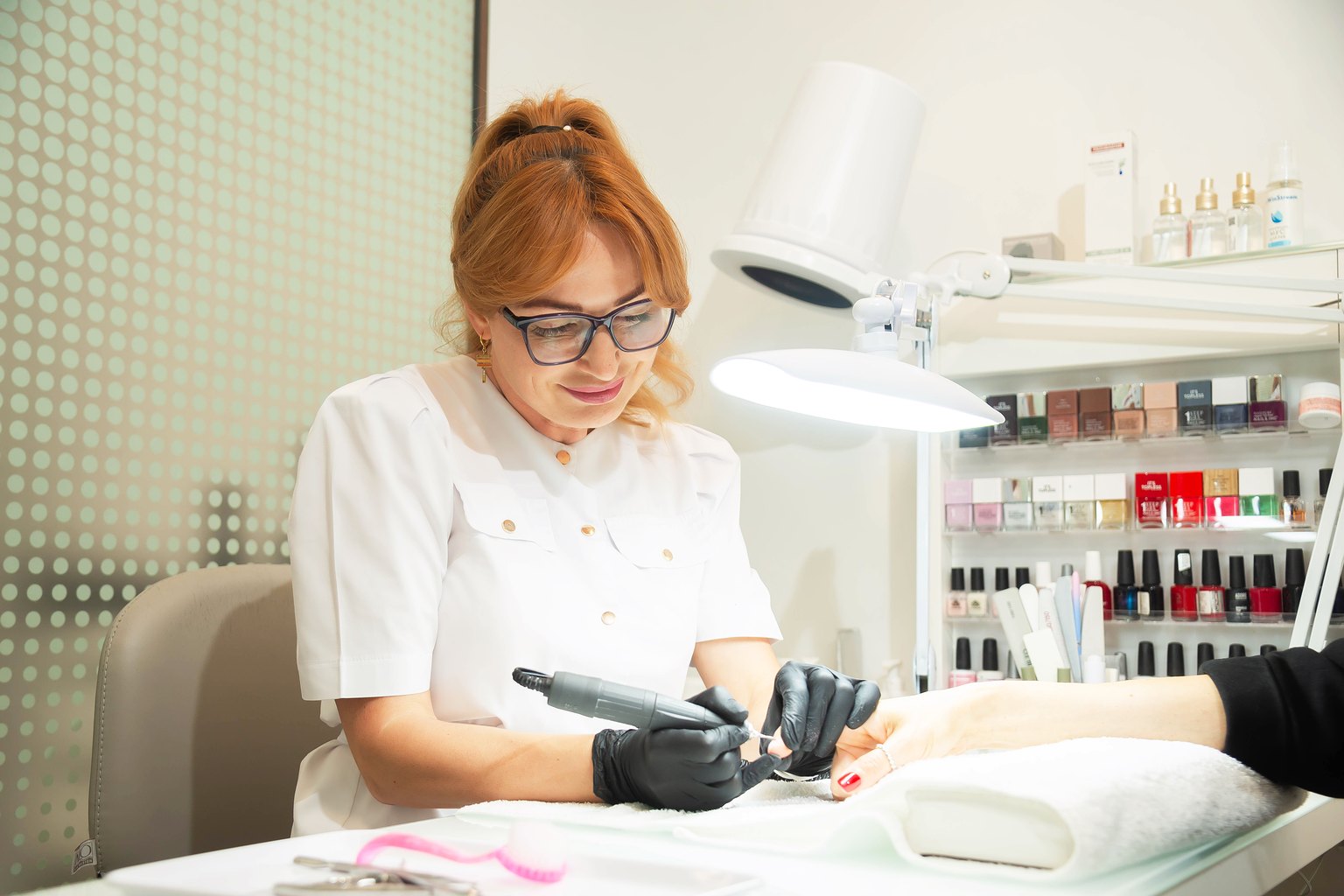
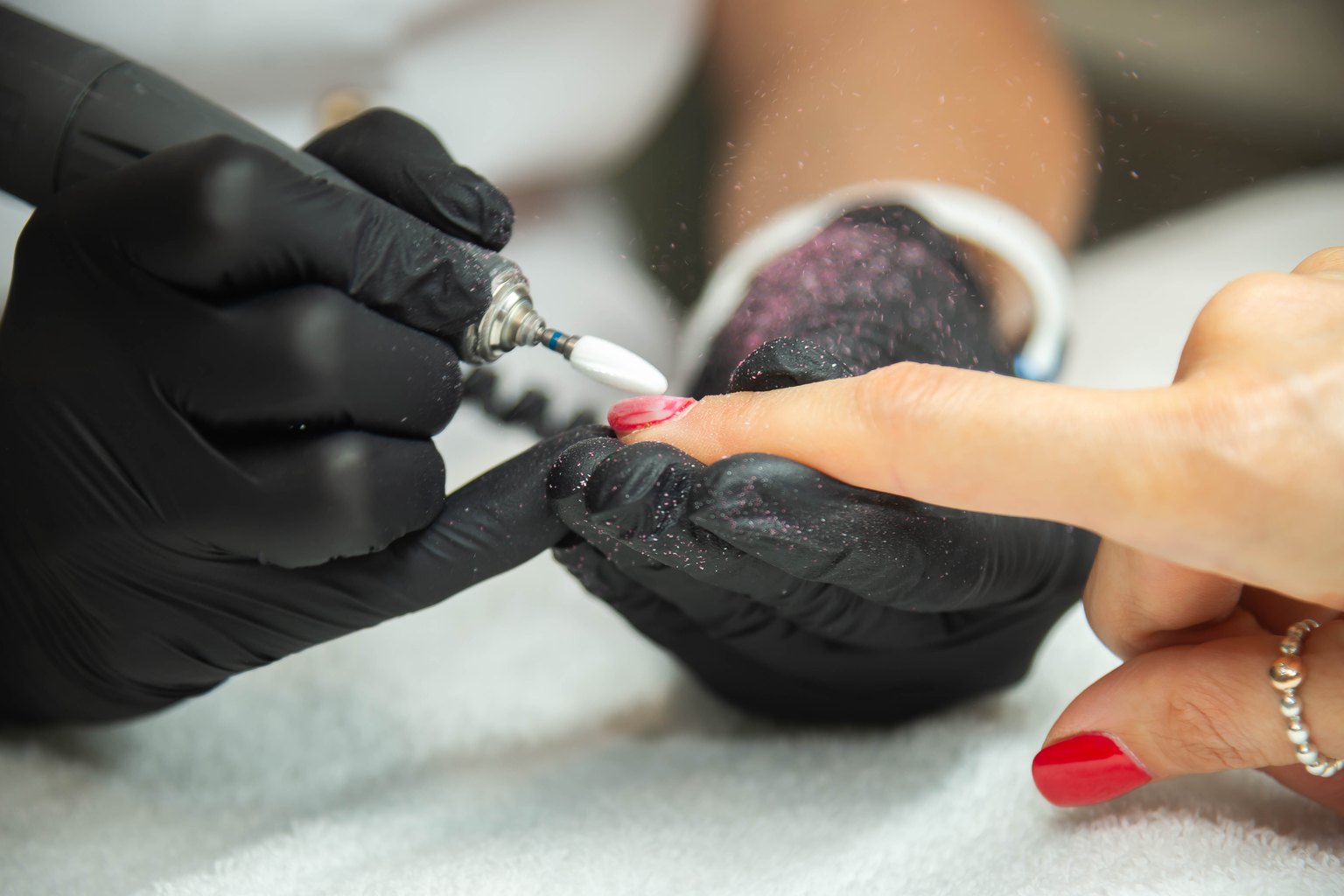
Hardware manicure (also known as "dry" or "Japanese") is performed exclusively with a bur on an electric device, without soaking and practically without sharp-edged tools. Various attachments with different abrasiveness perform all functions: they polish the cuticle, remove the pterygium, and treat the skin around the nail. No cuts, no blood contact.
The key difference at the physiological level: with the cut method, living cuticle tissue is removed, stimulating accelerated return of the stratum corneum. This is a classic closed cycle. A study published in the Journal of the European Academy of Dermatology and Venereology (2022, n=312) confirmed that after a cut manicure, the cuticle grows back on average 23% faster than after a hardware manicure. The hardware method preserves the living part of the cuticle, removing only the keratinized pterygium, which provides a longer-lasting result.
Why does the combined method remain popular? It allows for faster and more precise treatment of complex areas in certain situations. If the cuticle is rough, with large hangnails, or the client comes in with neglected nails, nippers in the hands of an experienced master will solve the problem more effectively than just a bur. But this does not mean that it is suitable for everyone and always.
Indications, Protocols, and Sensations During the Procedure
Before discussing the protocol, let me ask a simple question: when was the last time you saw your manicure four weeks after the procedure? If the cuticle was already "shooting" hangnails and pulling with films after two weeks — it’s likely that the method simply did not suit your skin type.
Hardware manicure is suitable for:
- Thin sensitive cuticle, prone to microtrauma
- Clients taking anticoagulants or having blood clotting disorders
- Tendency to paronychia (inflammation of the periungual fold)
- Regular clients with maintenance visits every 3-4 weeks
- Gel polish application or extensions: maximum clean preparation of the area
Combined manicure is suitable for:
- Thick, dense cuticle with pronounced pterygium
- First visit or "neglected" state after a long break
- Significant hangnails and keratinized areas
- Clients who prefer visible "cleanliness" immediately after the procedure
Hardware manicure protocol at Sandler Wellness Center:
Nails are treated dry. First, the master shapes the length and form of the nail plate with a diamond or ceramic bur. Then, a soft cylindrical attachment treats the area around the nail, removing the pterygium. The final polishing attachment smooths the nail plate and prepares it for coating. The procedure takes from 40 to 60 minutes.
Combined manicure protocol: softening the cuticle with a keratolytic agent (2-3 minutes), hardware treatment with a bur, precise correction with nippers. Then shaping and polishing. Total time — 50-70 minutes.
What the client feels: during the hardware procedure — a slight vibration and warmth from the friction of the bur against the skin. During the combined procedure — the nippers are hardly felt if the master does not catch the living tissue. The sensation of cutting indicates a technique error, not a norm.
→ See also: Men's Manicure in Kyiv: Why It's Necessary and What the Procedure Actually Includes
Results and Scientific Evidence
Duration of the result. This is the first criterion by which clients evaluate a manicure.
The hardware method provides an average of 3-4 weeks without noticeable cuticle growth. The combined method gives approximately 2-3 weeks. The difference is due to the fact that the hardware technique preserves the eponychium (the living protective edge of the cuticle) and only removes the keratinized layer, not stimulating regeneration. According to the International Journal of Cosmetic Science (2021, n=488), clients who regularly have hardware manicures noted a 41% reduction in hangnails after 3 months of regular treatments.
Health of the nail plate. Hardware processing does not touch the living cuticle, which serves as a natural barrier between the nail plate and the external environment. Disruption of this barrier during aggressive cut manicures leads to the penetration of pathogens and the risk of paronychia. A study published in Dermatology and Therapy (2023) showed that the frequency of inflammatory complications with cut manicures is 3.2 times higher than with hardware ones.
Condition of the skin on the hands. After 6 months of regular treatments in our practice at Sandler Wellness Center, clients note a visible smoothing effect: the skin around the nails becomes more even, and chronic hangnails disappear.
Contraindications and Safety: What You Need to Know Before Booking
For combined manicure, there are a number of specific warnings. It is not recommended for clients with diabetes (even a micro-cut increases the risk of infection), peripheral circulation disorders, and those taking blood-thinning medications (warfarin, new oral anticoagulants). In these cases, the hardware technique is the method of choice.
Hardware manicure is generally safer but requires a higher qualification of the master. An incorrect angle or pressure of the bur can overheat the nail plate or injure the nail matrix. Therefore, it is fundamentally important where and with whom you have the procedure done.
At Sandler Wellness Center, all burs are either single-use or sterilized in an autoclave between clients. Infection safety control is not a declaration but a protocol. We adhere to the standards of DSTU ISO 15883-1 for instrument processing.
Where to be careful with hardware manicure: thin nail plates (nail dystrophy, consequences of extensions). The bur can overheat or thin the plate. The master must adapt the speed of rotation and pressure.
Price and Booking at Sandler Wellness Center, Kyiv
Both services are available at our center located at 23 Kniaziv Ostrozky St, Kyiv. Prices are fixed, with no hidden surcharges for nail shape or skin type.
| Service | Price |
|---|---|
| Combined manicure | 1,700 UAH |
| Hardware manicure | 1,700 UAH |
| Gel polish application | 850 UAH |
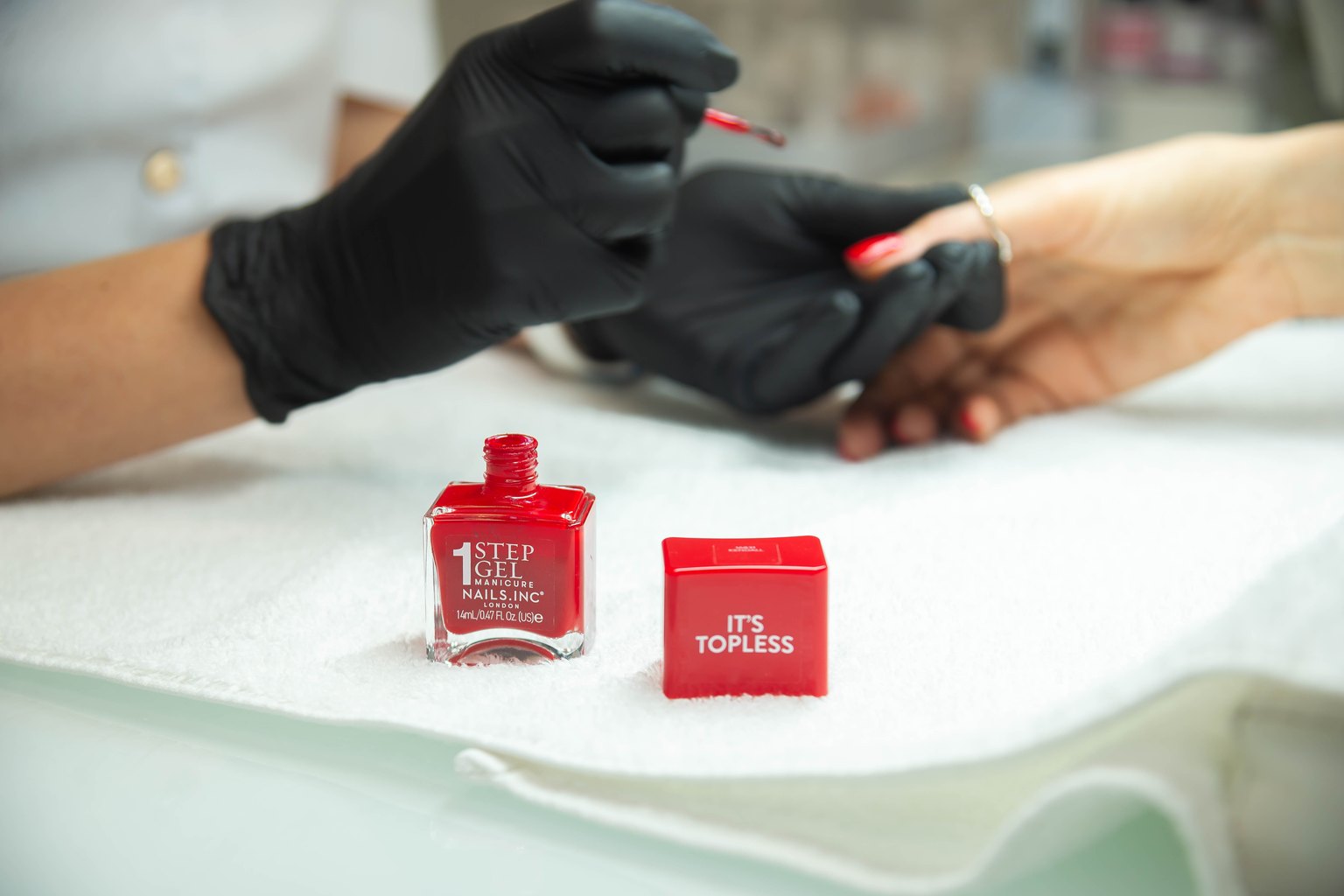
| Nail polish application | 500 UAH |
| Gel polish removal | 500 UAH |
| Hand spa care | 1,200 UAH |
I recommend adding hand spa care to any manicure at least once a month: a nourishing wrap with a mask restores the hydrolipid barrier of the skin on the hands and significantly prolongs the effect of the manicure.
Booking is available online at sandler.com.ua or by calling the administrator. Sandler Wellness Center welcomes clients 7 days a week. I recommend booking a slot 2-3 days in advance, especially on weekends.
Prices may change — please confirm the current cost with the administrator or at sandler.com.ua.
→ See also: Nail Extension with Gel: How Long It Lasts and How to Care for It Properly
Frequently Asked Questions (FAQ)
Q: What is the difference between combined and hardware manicure?
A: Combined manicure combines hardware processing with a bur using scissors or nippers to remove the cuticle and hangnails, while hardware ("dry") is performed exclusively with a bur without sharp instruments, preserving the living part of the cuticle and reducing the risk of micro-cuts. The hardware method provides a longer-lasting result (3-4 weeks), while the combined method is often chosen for neglected nails or rough cuticles.
Q: Which manicure is better for gel polish — hardware or combined?
A: The optimal choice for gel polish application is hardware manicure: it ensures even removal of the pterygium across the entire surface of the nail plate, improving coating adhesion. According to NAILS Magazine (2022), 78% of masters noted that gel polish lasts on average 4-5 days longer after hardware preparation compared to cut or combined methods.
Q: Is hardware manicure painful?
A: Hardware manicure, when performed with the correct technique, is not painful. Clients feel a slight vibration and warmth from the friction of the bur. If there is a burning sensation or sharp discomfort, this signals incorrect rotations or angle — the master must respond. At Sandler Wellness Center, we always clarify the client's sensations during the procedure.
Q: How often should I have a combined manicure?
A: The optimal frequency for combined manicure is every 2.5-3 weeks. The cuticle regenerates faster after cut removal, so it’s not advisable to stretch the time between visits. With the hardware method, the interval can be extended to 3-4 weeks without deteriorating the condition of the nails. If you notice significant hangnails within 10-12 days, this may indicate a deficiency of B vitamins or vitamin E, and you should consult a doctor.
Q: Is hardware manicure safe for thin and brittle nails?
A: Yes, but with precautions. In cases of nail dystrophy or thin plates after prolonged extensions, the master must reduce the speed of the bur and minimize pressure to avoid overheating the nail matrix. I also recommend applying strengthening gel or therapeutic polish. Discuss the condition of your nails with the master before the procedure, not during it.
Q: Where is the best place to get quality hardware and combined manicure in Kyiv?
A: Sandler Wellness Center at 23 Kniaziv Ostrozky St, Kyiv — one of the few wellness centers in the capital where nail service is integrated into a medical concept: sterilization of instruments in an autoclave, single-use attachments for the bur, and individual selection of the method for each client. You can book online at sandler.com.ua.
Conclusion
Choosing between combined and hardware manicure is not a matter of taste. It’s a question of the condition of your cuticle, lifestyle, and goals: if you want longer-lasting results with minimal risk of complications — go for hardware. If you need to "tidy up" neglected nails in one procedure — combined will do it more effectively.
Both methods are available at Sandler Wellness Center at 23 Kniaziv Ostrozky St, Kyiv. Our nail service masters conduct a brief analysis of the condition of the nails and cuticles before each procedure to select the optimal technique for you. Taking care of your nails is not a luxury, but basic hygiene.
Details and online booking: sandler.com.ua