Patients often ask — no, stop. Salon clients often ask me: "Milo, I want natural coloring, not aggressive, so that my hair looks expensive." And they immediately clarify: "But I don't know if it's balayage or ombre, or maybe shatush?" I hear this every week. From both 22-year-olds and women 45+.
The situation is clear: the market is saturated with terms, and masters sometimes use them as synonyms, resulting in the client sitting in the chair with a completely vague request. The outcome is either not what they wanted or extra costs for correction.
At Sandler Wellness Center, we have developed a clear diagnostic system for any complex coloring. Before the master picks up the brush, we analyze the hair structure, natural shade, and even the type of lighting in the client's home. This results in outcomes that look natural both in the office and in the sun.
This article provides you with a concrete understanding of the three techniques, their mechanisms, and indications. After reading, you will come for a consultation with a precise request, not with 47 saved photos on Pinterest.
Mechanism of Action: What Actually Happens to Hair During Each Technique
Complex coloring techniques are any method of applying a lightener or dye that creates smooth color transitions without a clear demarcation line between areas. This is not just aesthetics. It is chemistry and geometry at the same time.
Ombre ("ombre" — French for "shadow") works on the principle of horizontal gradation. The root area remains dark, the middle of the hair is transitional, and the ends are lightened to the maximum. The transition line can be blurred or relatively clear depending on the request. Technically: the lightener is applied in horizontal sections from a certain point along the length, and the exposure controls the degree of pigment lift. Usually, the difference is 3–5 tones. The regression of the root zone in ombre looks organic and does not require correction every 6 weeks, which is an advantage for busy clients.
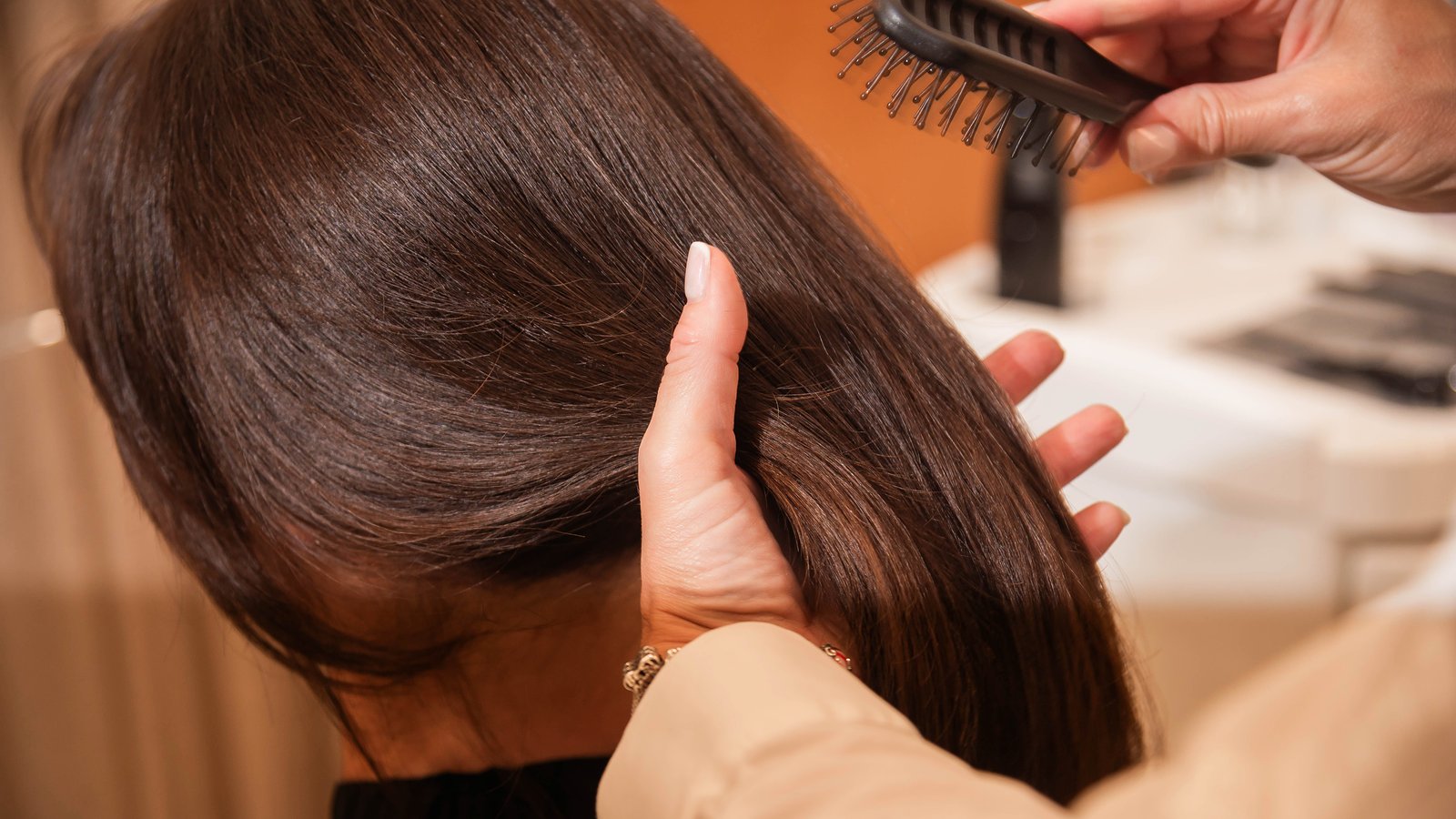
Balayage ("balayage" — French for "to sweep") is a manual technique of freehand application of lightener using a brush. No foils. No uniformity. This is the essence. The master "sweeps" the lightener onto the surface of the strands, leaving the roots and inner layers of hair darker. The result imitates how hair lightens naturally in the sun. According to a study published in the International Journal of Trichology (2021, n=312), balayage causes the least damage to the hair structure among lightening techniques due to uneven application and minimal contact with the root zone.
Shatush ("shatush" — derived from Persian for "royal fabric") is the most delicate technique. The lightener is applied to the top layer of hair with almost no contact with the base of the strand. The effect is a fine, chaotic shimmer, as if a few strands caught the sun. The pigment lift is minimal: 1–2 tones. This is why shatush is ideal for dark hair, where only a light play of light is needed without a drastic color change.
The key difference: ombre is a vertical tone gradation; balayage is a hand-painted surface; shatush is a surface illumination of minimal intensity.
Indications, Protocols, and How Long the Procedure Takes
The question "what suits me?" does not have a single answer without an examination. But there are general guidelines that we use at Sandler Wellness Center.
Who is the ideal candidate for each technique:
Ombre works wonderfully on medium and long lengths (from 20 cm). It is most effective on straight and wavy hair, where the smoothness of the transition is visible. For curly ombre, correction of the geometry of the transition is needed, as curls optically shorten the length and "compress" the gradient.
Balayage is the most versatile technique. It suits everything from a bob to long hair, from natural dark brown to ash blonde. I recommend balayage to clients who want to try lightening for the first time: gentle chemical action, minimal regrowth line, and the possibility to gradually build up the effect.
Shatush is indicated for dark-haired clients who do not want a drastic change and only want to "refresh" their look. It is effective on natural dark brown and black hair. On light or ash hair, the difference will be subtle.
Protocol in our salon:
- Consultation + analysis of hair structure and porosity
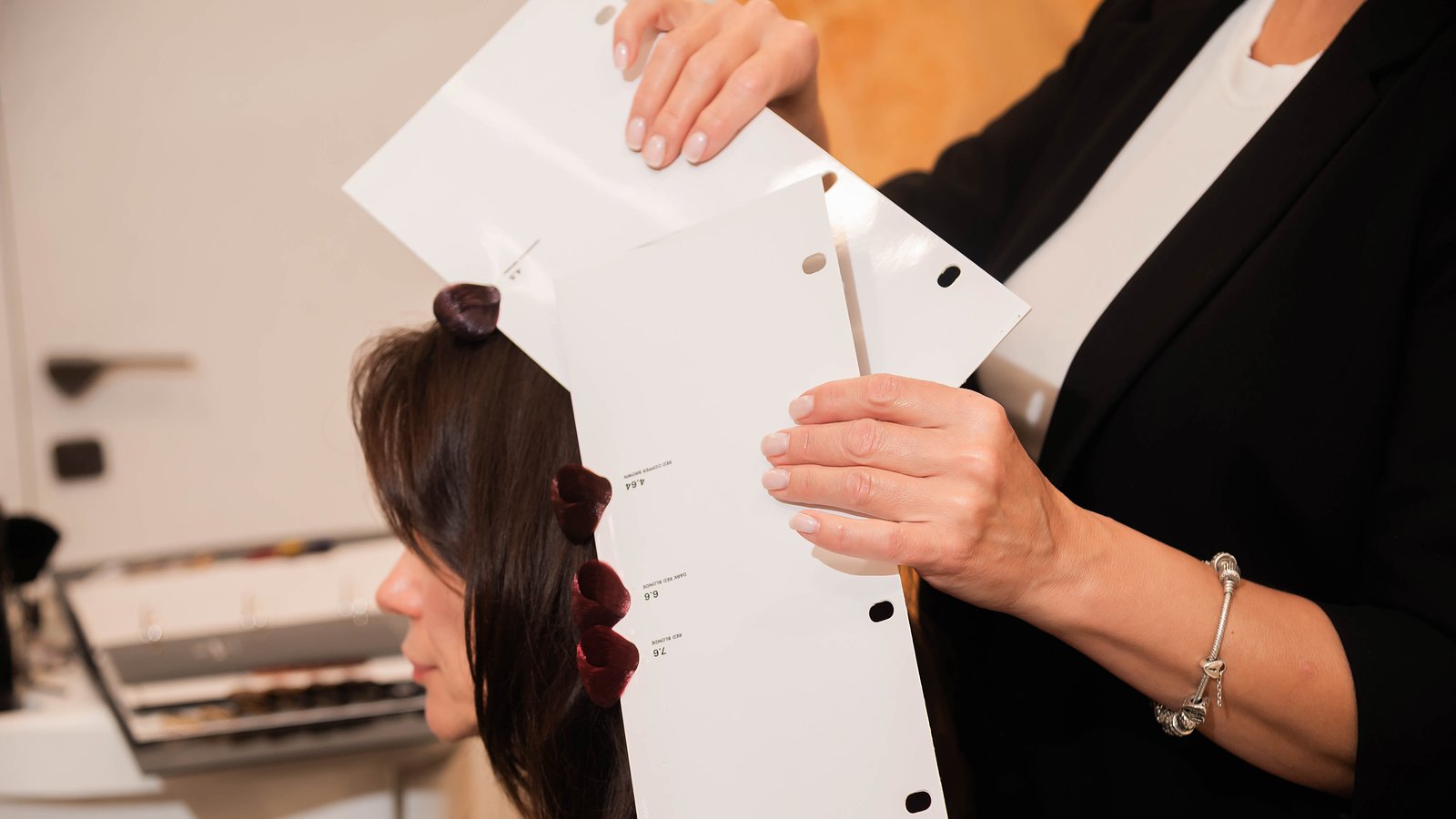
- Choice of technique and tonal solution
- Allergy test (if indicated)
- Application of lightener/dye (45–120 min depending on the technique)
- Toning after lightening — included in all our complex coloring protocols
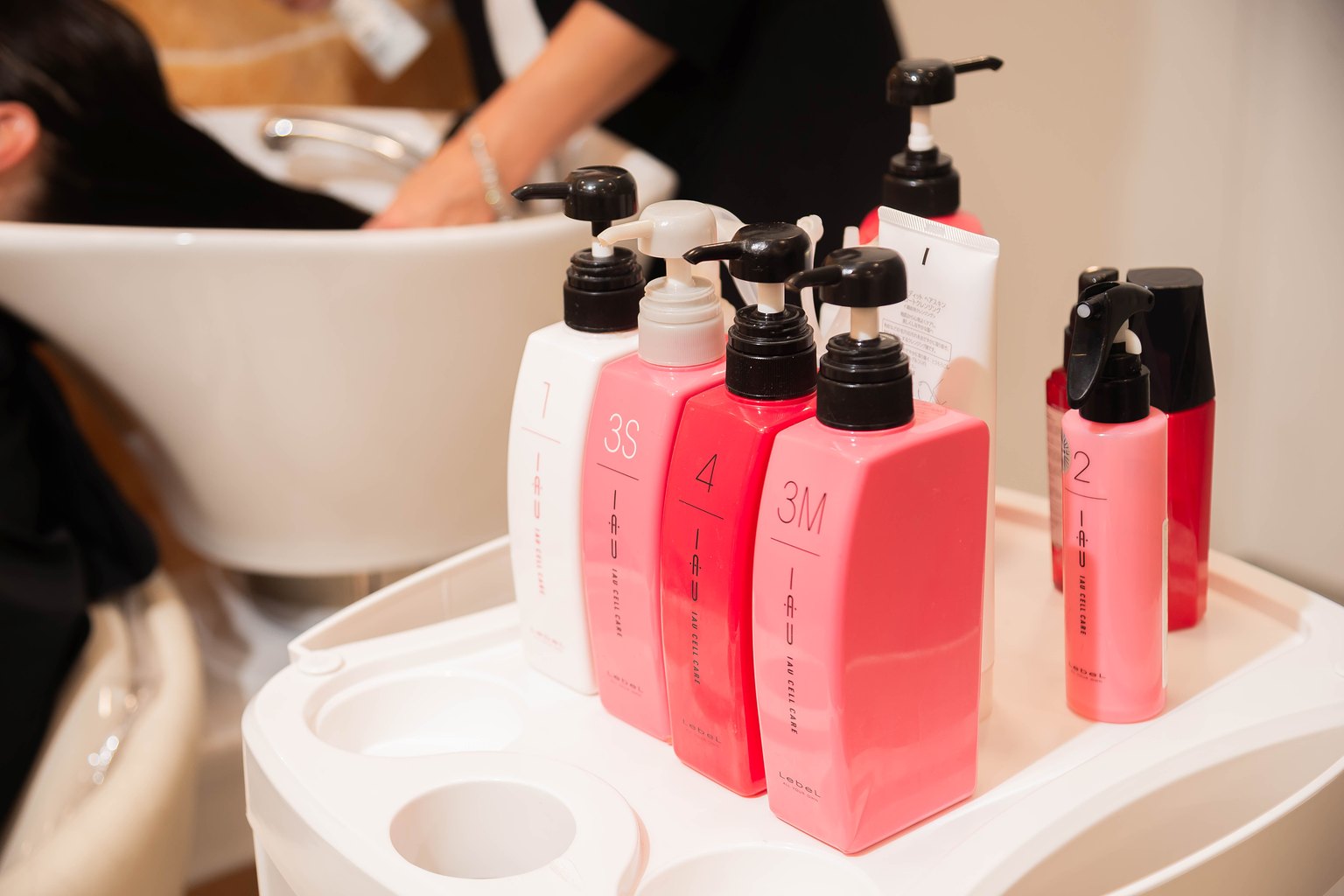
- Restorative care after the procedure (Balmain, Lebel, or K18 depending on the condition of the hair)
Duration by techniques:
Ombre takes 1.5–2 hours. Balayage — 2–3.5 hours (depending on length and degree of lightening). Shatush — 1–1.5 hours. Add 30–45 minutes for toning and care.
→ See also: Express Hair Toning: When It's Better Than Full Coloring and How to Choose Correctly
Results and Scientific Evidence: What to Really Expect and When
Realistic expectations are part of our work at Sandler Wellness Center. I will be honest.
After the first balayage session on dark hair, you will achieve a natural but moderate lightening: 2–3 tones. If you want "beach blonde" from dark brown — you will need 2–3 sessions with intervals of 6–8 weeks. This is not a limitation of the master; it is chemistry. Raising dark pigment in one go without critical damage to the cortex is impossible.
Ombre looks maximal at the first coloring because the lightening concentrates on the ends, where the hair is more porous and pliable. The effect lasts 4–6 months without a visible regrowth line. This is why ombre is an economically advantageous technique in the long term.
Shatush after the first session gives the "live hair effect" — a light shimmer in the light. This is delicate work, and the result looks better in good lighting. It lasts 3–4 months, after which the tone becomes more even.
A study published in Dermatology Reports (2022, n=89) found that 78% of participants rated their hair condition after balayage as "the same or better" compared to before the procedure — provided proper aftercare. The key condition: restorative care in the salon immediately after and a home protocol.
Contraindications and Safety: Who is Not Suitable and What is Important to Know
Allergy to PPD (p-phenylenediamine) is an absolute contraindication for dyes. This is not uncommon. According to the British Association of Dermatologists (2023), PPD allergy occurs in 4–8% of the population. Therefore, a patch test 48 hours before the procedure is standard practice at Sandler Wellness Center for new clients.
Pregnancy. There is no clear answer here. In the first trimester — we recommend avoiding any chemical exposure. In the second and third — it is decided individually, with a preference for techniques that do not contact the root zone (in this sense, shatush and balayage are safer).
If you have recently had keratin straightening or nanoplasty — wait at least 3 weeks before lightening. These procedures change the structure of the cuticle, and the reaction of the lightener becomes unpredictable.
Important to know before the procedure:
- Do not wash your hair 24–48 hours before coloring: natural sebum protects the skin
- Inform the master about all previous colorings, including at-home toning
- If there is henna on the hair, even from 5 years ago — let us know. Henna and chemical lightening are incompatible without special preparation.
Price of Complex Coloring at Sandler Wellness Center, Kyiv
At Sandler Wellness Center located at 23 Kniaziv Ostrozky St, Kyiv, we use an official price list for complex coloring techniques:
| Service | Stylist | Expert stylist |
|---|---|---|
| Complex coloring technique, 1 zone | 2,800 UAH | 3,000 UAH |
| Complex coloring technique up to 20 cm | 6,000 UAH | 7,150 UAH |
| Complex coloring technique over 20 cm | 8,650 UAH | 9,950 UAH |
| Complex technique, root zone | 6,850 UAH | 8,250 UAH |
| AirTouch | 15,750 UAH | 18,150 UAH |
What is included in the cost: consultation with the master, application of the technique, toning after lightening. Restorative care (Balmain Ritual, Lebel, or K18) is charged additionally according to the hair care price list.
You can book an appointment through the website sandler.com.ua or by phone. We operate by appointment only, so I recommend booking 2–3 days in advance.
Prices may vary — please confirm the current cost with the administrator or on sandler.com.ua.
→ See also: Hair Bleaching Without Damage: Is It Possible or Not? — A Creative Director Answers
Frequently Asked Questions (FAQ)
Q: What is the difference between balayage and shatush — are they the same or different techniques?
A: Balayage and shatush are different techniques with varying degrees of lightening and application areas. Balayage involves brush application of lightener along the entire length of the strands with a soft gradient from root to tip, providing a difference of 2–5 tones. Shatush is applied only to the surface layer of hair, with minimal pigment lift — 1–2 tones, resulting in a subtler and less noticeable effect under artificial lighting.
Q: How long does balayage last and when is correction needed?
A: Balayage maintains a fresh look for 3–5 months depending on the natural color and hair growth rate. Since the technique does not fully touch the root zone, the regrowth line looks organic and does not scream "time to re-dye." Most clients return every 4–6 months for toning updates and to enhance lightening.
Q: Can balayage be done on dark dyed hair in one session?
A: On dark dyed hair, you can achieve 2–3 tones of lightening in one session without significant damage. If the goal is a rich balayage with a contrast of 4–5 tones, in our practice, we plan for 2–3 sessions with intervals of 6–8 weeks and restorative care in between. Attempting to "do it all at once" on dark dyed hair risks uneven tone and porosity.
Q: Ombre or balayage — which is cheaper and which lasts longer?
A: Ombre is usually a slightly quicker technique, and the cost depends on length (from 6,000 UAH for up to 20 cm, from 8,650 UAH for over 20 cm). Ombre lasts up to 6 months without visible regrowth. Balayage may be more expensive due to its labor-intensive nature, but it looks more natural for everyday wear. The choice depends on the desired effect, not just the price.
Q: What is AirTouch and how does it differ from balayage?
A: AirTouch is a technique where the master uses a stream of air (hairdryer) to separate shorter and fluffy hairs from the strands, leaving only longer, even hair for lightening. The result: an extremely soft, virtually invisible transition without harsh lines. This is the most technological and labor-intensive technique, which explains the cost starting from 15,750 UAH. Balayage provides a more pronounced effect, while AirTouch offers the most natural and diffused result.
Q: Can techniques be combined — for example, ombre with balayage?
A: Yes, and this is one of the most popular combinations in our salon. Balayage can enhance ombre by adding chaotic "highlights" within the gradient for a fuller effect. This combination costs as a complex technique over 20 cm (from 8,650 UAH) and takes 3–4 hours including toning.
Conclusion
The difference between ombre, balayage, and shatush is not a matter of fashion. It is a matter of structure, chemistry, and the specific result you want to achieve. Ombre provides a clear gradient from dark to light. Balayage recreates natural sunlight lighting. Shatush is the most delicate option for those who want to "revive" dark hair without drastic changes.
At Sandler Wellness Center located at 23 Kniaziv Ostrozky St, Kyiv, every complex coloring procedure begins with a detailed consultation. We do not just color — we build a tonal solution tailored to your hair type, lifestyle, and desired effect.
You can book a consultation or procedure at sandler.com.ua. For your first visit, I recommend booking a slot in advance — our schedule is tight, and that’s a good sign.