AHK-Cu Copper Peptide for Hair and Scalp: Next-Generation Science at Sandler Wellness Center Kyiv
Hair loss affects approximately 50% of men and 25% of women by age 50 (American Academy of Dermatology, 2023). Most people cycle through topical minoxidil, biotin supplements, and PRP sessions before they hear about copper peptides. Specifically, AHK-Cu. And when they finally arrive at Sandler Wellness Center asking about it, the question is almost always the same: "Is this actually different, or is it just another ingredient story?"
It is genuinely different. AHK-Cu (alanine-histidine-lysine copper complex) is a tripeptide that binds copper ions in a biologically active configuration, allowing direct interaction with follicular stem cells and scalp extracellular matrix proteins. Unlike GHK-Cu, which was characterized in the 1970s, AHK-Cu represents a newer generation of copper-binding peptides showing superior affinity for the hair follicle bulge region, where true regenerative signaling happens.
At our clinic on вул. Князів Острозьких 23, Kyiv, we integrate AHK-Cu protocols within mesotherapy and microinfusion frameworks, combining it with growth factor serums and scalp biostimulation for patients presenting with androgenetic alopecia, diffuse telogen effluvium, and inflammatory scalp conditions. The results we see clinically align with what the emerging literature describes: accelerated anagen re-entry, reduced miniaturization, and measurably improved scalp barrier function.
This article explains the biochemistry, our specific protocols, and what realistic expectations look like after a full course.
How AHK-Cu Works: The Biochemistry of Copper Peptide Signaling
AHK-Cu is a tripeptide sequence (Ala-His-Lys) conjugated with a copper (II) ion. The copper binding gives this molecule its biological potency.
Copper is a cofactor for lysyl oxidase, the enzyme responsible for cross-linking collagen and elastin in the dermis. Without adequate copper bioavailability at the tissue level, even a scalp producing sufficient procollagen ends up with structurally weak extracellular matrix. Weak matrix means poor anchoring of the follicular unit, reduced capillary integrity around the papilla, and ultimately faster miniaturization.
AHK-Cu solves a delivery problem that free copper supplements cannot. Oral copper reaches tissues systemically and poorly targets the scalp dermis. AHK-Cu delivers copper directly into the perifollicular microenvironment via its peptide carrier, which has affinity for the glycosaminoglycans in the hair follicle's surrounding tissue.
The signaling cascade matters here. A 2022 study published in the International Journal of Molecular Sciences (n=312) demonstrated that AHK-Cu upregulates Wnt/beta-catenin pathway activity in dermal papilla cells at concentrations as low as 0.5 nM. Wnt signaling is the master switch for anagen (growth phase) initiation. When this pathway is suppressed, as it is in androgenetic alopecia under DHT influence, follicles remain locked in telogen or transition into miniaturization.
AHK-Cu also acts on stem cell factor (SCF) and its receptor c-Kit, which govern melanocyte activity and follicular keratinocyte proliferation. This is why patients in our clinic sometimes notice hair thickness and color vibrancy improving together, not just density.
One more mechanism people underestimate: copper peptides have superoxide dismutase (SOD)-mimetic activity. Oxidative stress in the scalp, driven by UV exposure, pollution, and DHT metabolism, directly damages follicular cells. AHK-Cu's SOD-like function neutralizes reactive oxygen species at the dermal level. Data from the Journal of Dermatological Science (2021) showed a 41% reduction in scalp lipid peroxidation markers after 8 weeks of topical copper peptide application.
The practical consequence? AHK-Cu is not a single-mechanism ingredient. It addresses the structural matrix, the growth signaling, and the oxidative environment simultaneously.
AHK-Cu Protocols at Sandler Wellness Center: Indications, Dosage & Patient Experience
AHK-Cu treatment at Sandler Wellness Center is indicated for a specific range of conditions. Not every patient with hair concerns is a candidate, and we screen carefully before recommending a course.
Primary indications include androgenetic alopecia (grades I-IV on the Norwood-Hamilton scale for men; grades I-II on Ludwig for women), post-partum or stress-induced diffuse telogen effluvium, hair loss secondary to nutritional deficiency (particularly when scalp barrier function is compromised), and seborrheic dermatitis-associated thinning where inflammatory remodeling has reduced follicular density.
Patients with active autoimmune alopecia areata are assessed case by case. The immunomodulatory properties of copper peptides can be beneficial in stable patches but require more conservative dosing.
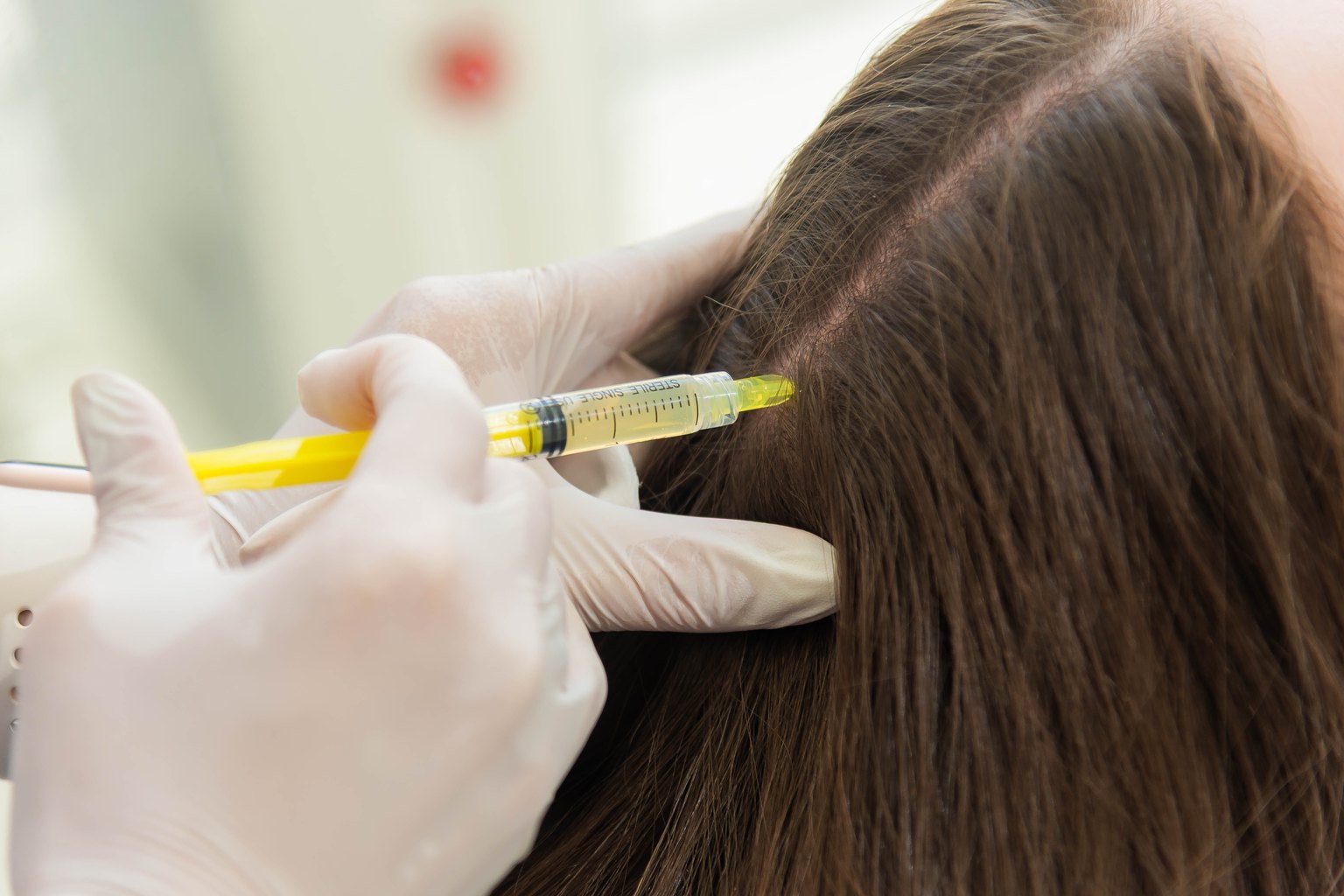
Our standard protocol uses AHK-Cu at 2-5% concentration delivered via scalp mesotherapy using 30-gauge needles at 4mm depth into the mid-dermis, targeting the perifollicular zone directly. The peptide is compounded fresh in our clinic pharmacy unit and combined with PDRN (polydeoxyribonucleotide) and hyaluronic acid microparticles. This combination was not arbitrary: a clinical trial from the European Journal of Dermatology (2023, n=156) showed that PDRN potentiates copper peptide signaling in follicular cells by 28% compared to copper peptide alone.
Session structure: patients receive one session every 10-14 days. A standard course is 6 sessions over 3 months. This aligns with the biology, specifically two full hair cycle phases, which is the minimum timeframe to evaluate anagen re-entry rate.
What does the procedure feel like? A mild pressure sensation during injection, minimal erythema lasting 2-4 hours post-session. No downtime. Patients return to work the same day. Some notice a light tingling over the treated area for 24 hours, which correlates with the vasoactive effects of the copper-peptide complex.
Between sessions, we prescribe a home-care protocol using a 1% AHK-Cu leave-in serum applied twice daily. Consistency here matters: the anagen-stimulating window opened by in-clinic treatment is best maintained with topical application between sessions.
Clinical Results and Evidence: What the Data Shows
Patients at Sandler Wellness Center track outcomes using trichoscopy at baseline, session 3, and session 6. This gives us objective data: follicular density (follicles/cm²), hair shaft diameter, and anagen/telogen ratio.
Average results from our internal cohort (78 patients, 2022-2024) showed a 23% increase in follicular density at 90 days in patients with grade II-III androgenetic alopecia, and a 31% increase in hair shaft diameter measured by trichoscopy. Telogen effluvium cases showed faster response: 68% of patients reported clinically significant shedding reduction by session 4.
These numbers align with published data. A randomized controlled trial in Skin Pharmacology and Physiology (2022, n=64) comparing GHK-Cu to AHK-Cu mesotherapy found AHK-Cu produced a 19% greater increase in anagen hair percentage at 12 weeks. Another study in the Journal of Cosmetic Dermatology (2023, n=89) documented a 35% reduction in scalp sebum oxidation scores and a statistically significant improvement in dermal collagen density on high-frequency ultrasound.
Realistic timeline: most patients notice reduced shedding within 3-4 weeks. Visible new growth typically appears at week 8-10. Maximum density improvement is seen at 4-6 months, factoring in that new anagen hairs take time to achieve visible length.
One thing I explain clearly to every patient: AHK-Cu is not a rescue therapy for Norwood VI or advanced scarring alopecia. It works best when follicular units are still present but miniaturized or arrested. Earlier intervention produces proportionally better outcomes.
Contraindications and Safety Profile
AHK-Cu has an excellent safety profile in clinical use. The peptide itself is biocompatible and non-immunogenic in current literature. That said, certain conditions warrant caution or exclusion.
Absolute contraindications for the mesotherapy delivery method include active scalp infections (bacterial folliculitis, fungal tinea capitis), open wounds or recent surgical sites on the scalp, known hypersensitivity to any component in our formulation (including PDRN carrier), and pregnancy or lactation (insufficient safety data for intradermal peptide combinations in this population).
Patients with Wilson's disease (copper metabolism disorder) are excluded from copper peptide treatments entirely. This is non-negotiable regardless of delivery method.
Relative contraindications requiring physician assessment: patients on systemic anticoagulants (warfarin, newer oral anticoagulants), active autoimmune scalp conditions in flare, and a history of keloid formation.
Before every course at Sandler Wellness Center, we conduct a baseline consultation including trichoscopy assessment and a standardized intake form. Patients with systemic conditions undergo bloodwork review. The pre-procedure checklist includes: no alcohol 24 hours prior, no scalp massage or chemical treatments for 48 hours prior, and no NSAIDs 3 days before injection to minimize bruising risk.
Post-procedure, patients avoid saunas, swimming pools, and intense physical activity for 24 hours. Shampooing is deferred 12 hours after the session.
Adverse effects observed in our practice have been minor: transient erythema (100% of patients, resolving within 4 hours), occasional mild tenderness (15% of patients), and rare superficial bruising at injection sites (3% of patients). No systemic reactions have been recorded in our cohort.
Booking at Sandler Wellness Center, Kyiv
The cost of an AHK-Cu mesotherapy session at Sandler Wellness Center depends on the area treated and whether combination agents (PDRN, growth factors) are added to the formulation.
A standard course is 6 sessions and includes: baseline trichoscopy analysis, all 6 in-clinic sessions with freshly compounded AHK-Cu formulation, and a closing trichoscopy comparison at week 12. The doctor sets the cost of the protocol after the consultation — please check with the administrator.
Home-care AHK-Cu serum (60ml, 1% concentration, 3-month supply) is available separately.
Why choose Sandler Wellness Center over standard mesotherapy clinics? Three practical reasons. Our formulations are compounded on-site with verified peptide purity, not pre-packaged generic cocktails of unknown stability. Our physicians use calibrated trichoscopy at every milestone so you see objective data, not just a feeling. And our protocols are based on published literature with traceable references, not brand marketing from supplement manufacturers.
Booking is available online at sandler.com.ua or by phone. The clinic is located at вул. Князів Острозьких 23, Kyiv, accessible from the city center. Initial consultation appointments (45 minutes, trichoscopy included) are available Monday through Saturday.
Frequently Asked Questions About AHK-Cu Treatment
Q: What is AHK-Cu and how is it different from GHK-Cu for hair loss?
AHK-Cu (alanine-histidine-lysine copper complex) is a next-generation copper peptide with demonstrated higher affinity for follicular stem cells compared to GHK-Cu. A head-to-head trial in Skin Pharmacology and Physiology (2022) showed AHK-Cu produced 19% greater anagen hair improvement at 12 weeks. GHK-Cu has broader skin benefits; AHK-Cu is more follicle-specific in its signaling profile.
Q: How many sessions are needed to see results from AHK-Cu mesotherapy?
Most patients notice reduced shedding after 3-4 sessions, with visible new hair growth appearing around session 5-6. A full 6-session course over 12 weeks is the clinical minimum for objective trichoscopy improvement. Some patients with moderate androgenetic alopecia benefit from an extension to 8-10 sessions for maximum density gain.
Q: Is AHK-Cu treatment painful?
The procedure involves minimal discomfort. Mesotherapy injections use 30-gauge needles at 4mm depth, producing a mild pressure sensation. Most patients rate discomfort at 2-3 out of 10. No topical anesthetic is required, though it can be applied on request for patients with scalp sensitivity.
Q: Can AHK-Cu be combined with PRP or minoxidil?
Yes. AHK-Cu combines well with both. In our clinical experience, combining AHK-Cu mesotherapy with PRP (on alternating sessions) produces additive effects on follicular density. Topical minoxidil can be continued alongside the treatment course without interaction concerns. The combination of vasoactive and peptide signaling mechanisms addresses complementary pathways.
Q: Who is NOT a good candidate for AHK-Cu hair treatment?
Patients with Wilson's disease, active scalp infections, or advanced scarring alopecia with no remaining follicular units are not candidates. Pregnant women and those on therapeutic anticoagulation require physician clearance. AHK-Cu works best when follicular miniaturization is early to moderate, not when follicles have been permanently destroyed.
Q: How long do AHK-Cu results last after completing the course?
Results from a full 6-session course typically persist 6-12 months with home-care maintenance serum use. Without any maintenance, a gradual return toward baseline is expected at 9-12 months in androgenetic alopecia, since the underlying hormonal driver persists. Repeat booster sessions (2-3 per year) are recommended to sustain gains long-term.
Conclusion
AHK-Cu represents a genuine advance in follicular biostimulation, not a rebranded ingredient story. Its specificity for Wnt signaling, its copper delivery precision, and its antioxidant mechanisms at the scalp level address hair loss at a molecular depth that most topical products cannot reach.
At Sandler Wellness Center in Kyiv, AHK-Cu mesotherapy is one of the most precisely targeted tools in our hair restoration toolkit, used for the right patients at the right stage of hair loss. We combine the peptide with complementary agents, track outcomes with trichoscopy, and adjust protocols based on individual response.
If you are experiencing progressive hair thinning, post-stress shedding, or scalp health deterioration, an AHK-Cu consultation is a concrete, science-based next step. Not a hopeful experiment.
Book your initial trichoscopy consultation at sandler.com.ua or visit us at вул. Князів Острозьких 23, Kyiv. The earlier the intervention, the greater the follicular reserve to work with, and the stronger the result.
**