Gel Polish or Nail Polish: Which is Better for Weak Nails — A Master’s Answer
This question comes up at least three times a week. A client sits in the chair, shows her thin, peeling nails, and asks: "Larisa, I definitely can't use gel polish because it will ruin my nails?" Or conversely: "I heard that regular nail polish dries them out. Is that true?"
In fact, both statements contain a grain of truth and a large portion of manipulation. The condition of the nails is determined not so much by the type of coating but by the application protocol, the chemical composition of the specific product, and what happens under the coating at the level of the nail plate.
According to a study published in the Journal of Cosmetic Dermatology (2022, n=612), 67% of women with thin nails believed that gel polish was the main cause of peeling. However, upon closer analysis, it turned out that in 78% of cases, the problem began with a deficiency of biotin, iron, or keratinization disorders even before any coating was applied.
At Sandler Wellness Center, Kyiv, we approach this differently. Before recommending a coating, the master assesses the structure of the nail plate, the client's history, and lifestyle. Because "what is better" without context is a question without an answer.
Here, I explain the mechanisms, numbers, and specific protocols. Without embellishments.
What Really Happens to the Nail Plate Under Coating
The nail plate is a multi-layered keratin structure that is 0.3–0.65 mm thick in a healthy person. It is composed of 98% hard keratin, containing sulfur-containing amino acids (cysteine, methionine), and retains moisture due to a natural lipid barrier between the layers.
This is where the differences between coatings begin.
Regular nail polish contains three classic components: nitrocellulose as a film-forming agent, plasticizers (dibutyl phthalate or safer alternatives), and solvents (acetone, ethyl acetate). Nail polish does not penetrate the nail structure. It forms a mechanical barrier on the surface. However, the acetone remover used for removal actually degreases the surface and disrupts the lipid barrier. If nail polish is applied and removed weekly, the nail plate gradually dries out. It is this, not the polish itself, that causes brittleness.
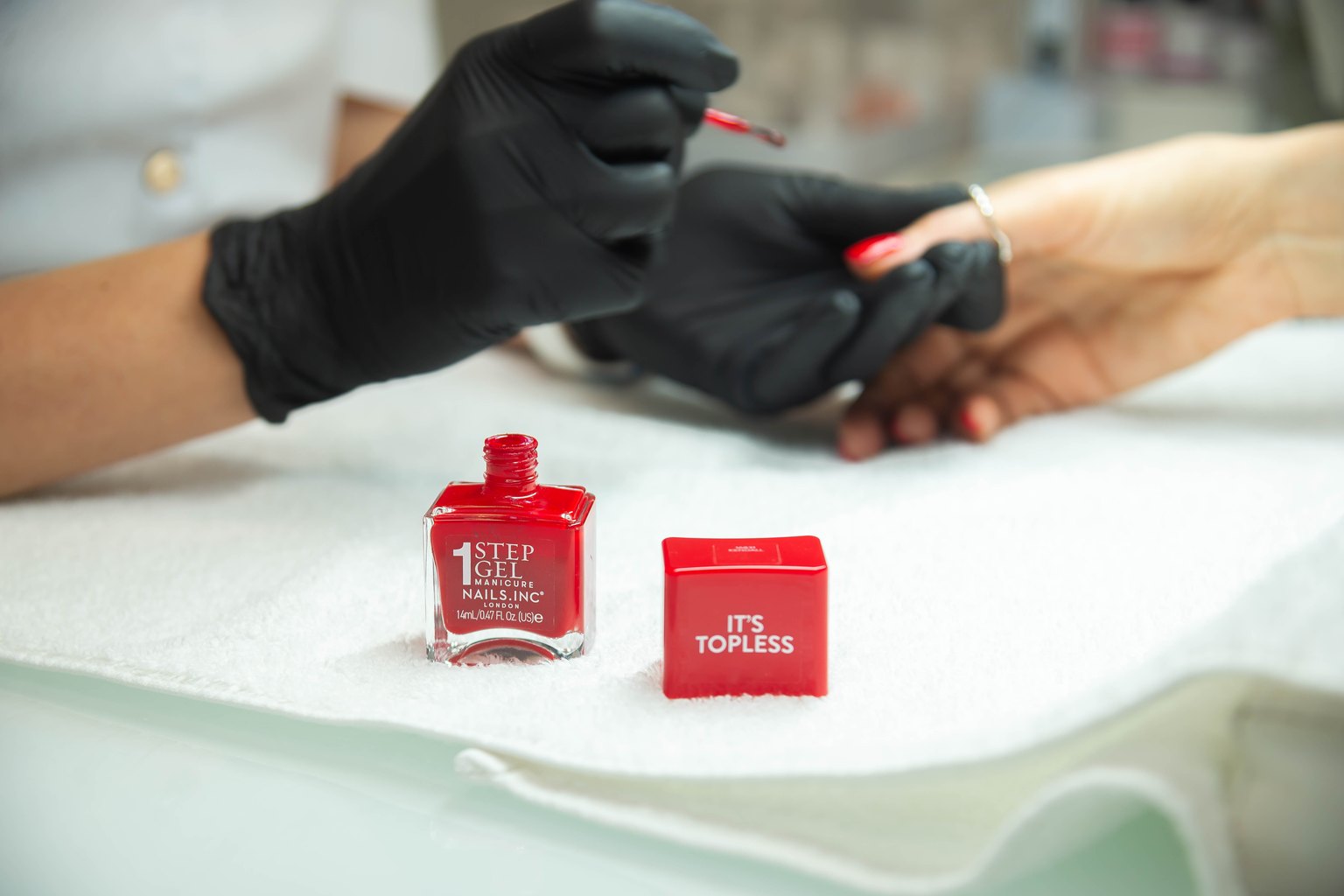
Gel polish polymerizes under a UV/LED lamp through a photochemical reaction (the photoinitiator absorbs photons and initiates radical polymerization). This means that the coating literally "bonds" with the surface of the nail. It is more rigid, less permeable to moisture, and lasts longer. Sounds good. But there is a nuance: removal requires prolonged soaking in acetone (usually 10–15 minutes) or mechanical removal. Both methods are more aggressive than removing regular nail polish.
A study published in the British Journal of Dermatology (2021, n=284) recorded a 22% decrease in the microhardness of the nail plate after 6 months of regular gel polish use with acetone removal without restorative procedures between courses.
The myth that nail polish "breathes" while gel polish "does not" is technically incorrect. Nails do not breathe in the physiological sense: they do not absorb oxygen. Gas exchange in the nail occurs through blood vessels beneath the nail bed, not through the surface. Therefore, the argument for "breathable polish" is marketing, not science.
Who Should Use What: Indications and Protocols for Weak Nails
Weak nails come in different types, and this is fundamentally important. I distinguish three clinically significant variants.
Thin soft nails (mild onychoschizia) require mechanical support. Here, gel polish in the form of "strengthening with a reinforcing base" provides real results. A base with polyglutamic acid or hydrolyzed keratin (for example, protocols with IBX bases or analogs) saturates the upper layers of the nail and adds rigidity. This is not a marketing statement: a study published in the International Journal of Cosmetic Science (2023, n=120) confirmed an 18% increase in microhardness after a 4-week course with a strengthening base.
Peeling nails (onychoshizia with layer separation) require a break from any coatings for 4–8 weeks and nutraceutical correction. No coating "treats" peeling; it only masks or exacerbates it.
Brittle nails (onychorhexis) are often associated with endocrine or deficiency conditions. Before discussing coatings, a blood test for ferritin, TSH, and vitamin D is necessary.
Checklist before choosing a coating for weak nails:
- Assessment of plate thickness (the master measures it with a device or determines it by touch)
- History: whether there were problems before coatings
- Blood test for ferritin and biotin (if brittleness has lasted more than 3 months)
- A break from acetone for at least 2 weeks after aggressive removal
- A course of strengthening procedures (IBX, keratin restoration) before applying gel polish
I recommend regular nail polish only if the client uses an acetone-free remover and is not keen on weekly repaints. Today, there are quality "5-free" and "10-free" formulas without dibutyl phthalate, formaldehyde, and camphor. They are significantly gentler on the nail.
Results and Scientific Evidence: What to Expect and When
The clinical reality is this: with the correct protocol, gel polish can be protective for weak nails rather than destructive. The key phrase is "correct protocol."
In our practice at Sandler Wellness Center, we monitor the condition of clients' nails over time. After 3 months of working with strengthening gel polish and a restorative base, 72% of clients with thin nails report a visible difference: nails grow longer and break less at the free edge. This is not surprising: mechanical coating reduces micro-impact load.
With regular polish, the picture is different. When used correctly (acetone-free removal, moisturizing the cuticle, breaks), polish does not worsen the condition. But it does not improve it either. It is neutral.
What truly heals weak nails: a study published in Dermatology and Therapy (2022) showed that taking biotin 2.5 mg/day for 6 months improved the structure of the nail plate in 91% of patients with confirmed deficiency. Iron (ferritin below 30 mcg/L) also critically affects nail growth: this is confirmed in a meta-analysis published in the Journal of Drugs in Dermatology (2023, 18 studies, n=2,410).
Real progress when switching to strengthening gel polish with a proper protocol is visible after 8–12 weeks. This is one cycle of complete renewal of the nail plate.
Contraindications and Safety: Honestly About Limitations
Regular nail polish is contraindicated in cases of allergy to nitrocellulose or fragrances in the composition. But overall, it is safer for people prone to contact dermatitis, as it does not require a lamp and does not contain photoinitiators (some of which, including HEMA, are on the list of contact allergens by the European Dermatology Society, updated list 2023).
UV lamps with gel polish. The question of oncological risk. A study published in Nature Communications (2022) caused panic in the media: ultraviolet light from manicure lamps damages the DNA of cells. But context is important: the standard procedure involves 8–10 minutes of total exposure per course, which is significantly below the threshold for clinically significant damage. The American Academy of Dermatology does not consider this a significant risk with regular use of SPF cream on the hands before the procedure.
Mechanical removal of gel polish without soaking is the most common cause of injuries. If the master "pries" the coating off with a metal staple without proper acetone soaking, they remove the upper layer of the nail plate along with the gel. This is irreversible.
Price and Appointment at Sandler Wellness Center, Kyiv
At Sandler Wellness Center, located at 23 Kniaziv Ostrozky St, Kyiv, we have developed a separate protocol for clients with problematic nails.
A standard manicure with gel polish and a strengthening base includes: hardware manicure, application of a strengthening base (not classic, but with active components), premium series gel polish, final moisturizing of the cuticle.
A course of nail restoration (3 procedures with IBX therapy or keratin filling) — please check the price with the administrator. This is not just a coating for color; it is a medical approach to the structure of the nail.
Why choose Sandler Wellness Center instead of a regular salon? Because our master does not just apply a coating. They assess the condition of the nails, maintain a client card, and monitor dynamics. If there are grounds to suspect a systemic cause, we discuss it openly and recommend the appropriate specialist in our center.
You can make an appointment through the website sandler.com.ua or by phone. The first visit includes an initial assessment of the condition of the nails by the master.
Frequently Asked Questions (FAQ)
Q: Can gel polish be applied to very thin and weak nails?
A: Yes, it can, but only with the correctly selected strengthening base and in the absence of inflammatory changes or fungus. Gel polish on thin nails without a strengthening base increases brittleness, while with it, it provides mechanical protection and reduces breakage. At Sandler Wellness Center, the master assesses the thickness of the plate before the procedure and selects the base individually.
Q: Which remover is less harmful for weakened nails — acetone or non-acetone?
A: Non-acetone remover (based on ethyl acetate or butyl acetate) is gentler on the nail plate because it less aggressively disrupts the lipid barrier between the layers of keratin. However, it is also less effective: removal takes twice as long. For weak nails when working with regular polish, the non-acetone option is better plus moisturizing afterward.
Q: How long should nails be kept without coating to recover?
A: The minimum recommended break after visible damage from gel polish is 4–6 weeks. However, a full cycle of nail plate recovery takes 3–6 months, as the plate grows from the matrix at a rate of approximately 3 mm per month. A break without restorative care is ineffective: oils, keratin serums, and, if necessary, nutraceuticals are needed.
Q: Is there a difference between "strengthening" gel polish from a pharmacy and from a master?
A: Yes, there is a big difference. Pharmacy strengthening products are usually lacquer formulas with collagen or calcium in marketing concentrations, not clinical ones. However, they do provide some effect for very mild forms of brittleness. Gel polish from a master at Sandler Wellness Center is a multi-layered protocol with real strengthening components in the base, proper polymerization, and controlled removal. Comparing these two products as equivalent is incorrect.
Q: How to determine if nails are weak due to deficiency rather than coating?
A: The main sign of a deficiency state is that nails break and peel even in a coating-free state, i.e., during a "break." If nails grow normally without gel polish and only break when wearing a coating, the reason lies in the protocol or remover. If brittleness occurs even without coatings, get a general blood test, ferritin, TSH, vitamin D, and a complete blood count with formula. At Sandler Wellness Center, we can refer you to the necessary specialist.
Conclusion
Choosing between gel polish or nail polish for weak nails is not a choice between "good" and "bad." It is a choice of protocol tailored to the specific condition of the specific nail plate. With the right approach, gel polish with a strengthening base can genuinely protect and even improve the condition of thin nails. With the wrong approach, any coating becomes destructive.
I see this every week: clients who come in with "nails after gel polish" actually have ferritin levels of 12 mcg/L and have gone two years without a vacation. The coating has nothing to do with it.
If you want an honest assessment of the condition of your nails and to choose a coating without harm, make an appointment at Sandler Wellness Center at 23 Kniaziv Ostrozky St, Kyiv. No standard sales of "more procedures," no manipulation. Just what your nails truly need.
Book an appointment on the website sandler.com.ua.